
Water Mitigation vs Restoration: What a Mitigation Company Does
A contractor, an adjuster or a plumber has said "mitigation" and you want to know whether that is the same thing as restoration, and who is going to put your wall back.
This guide is part of what is water damage restoration, which walks through the whole process.
IndependentNot owned by a contractor.
Check any licenseVerify at cslb.ca.gov.
Answered daily7 a.m. to 11 p.m. Pacific
Huntington Beach areaPlus 20 nearby cities
In short
Water mitigation is the emergency work that stops water damage from getting worse: stopping the source, extracting water, removing soaked materials and drying the structure. Restoration is the rebuild that follows. Many contractors do both, but they are separate scopes and usually separate invoices.
What is water mitigation?
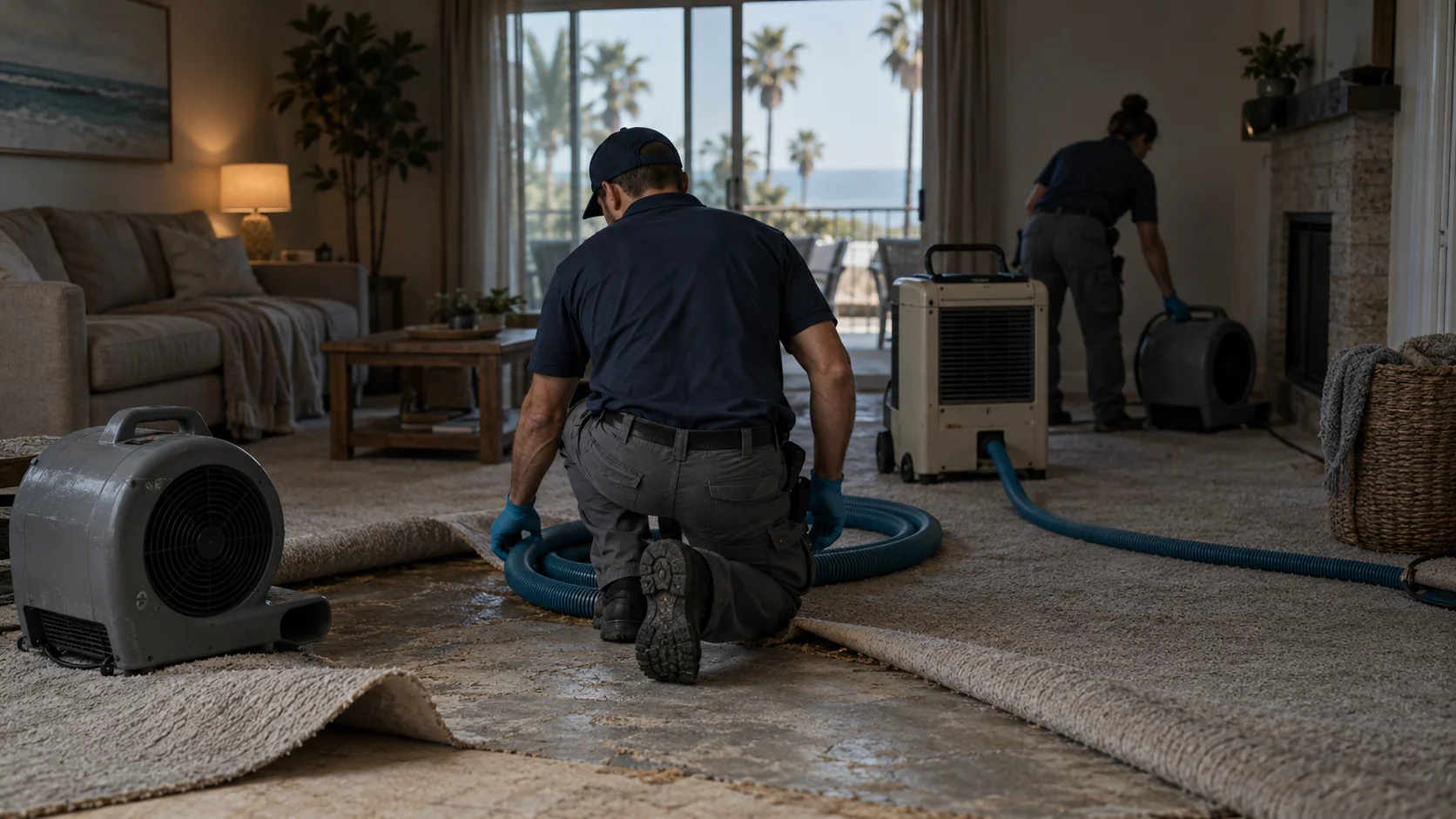
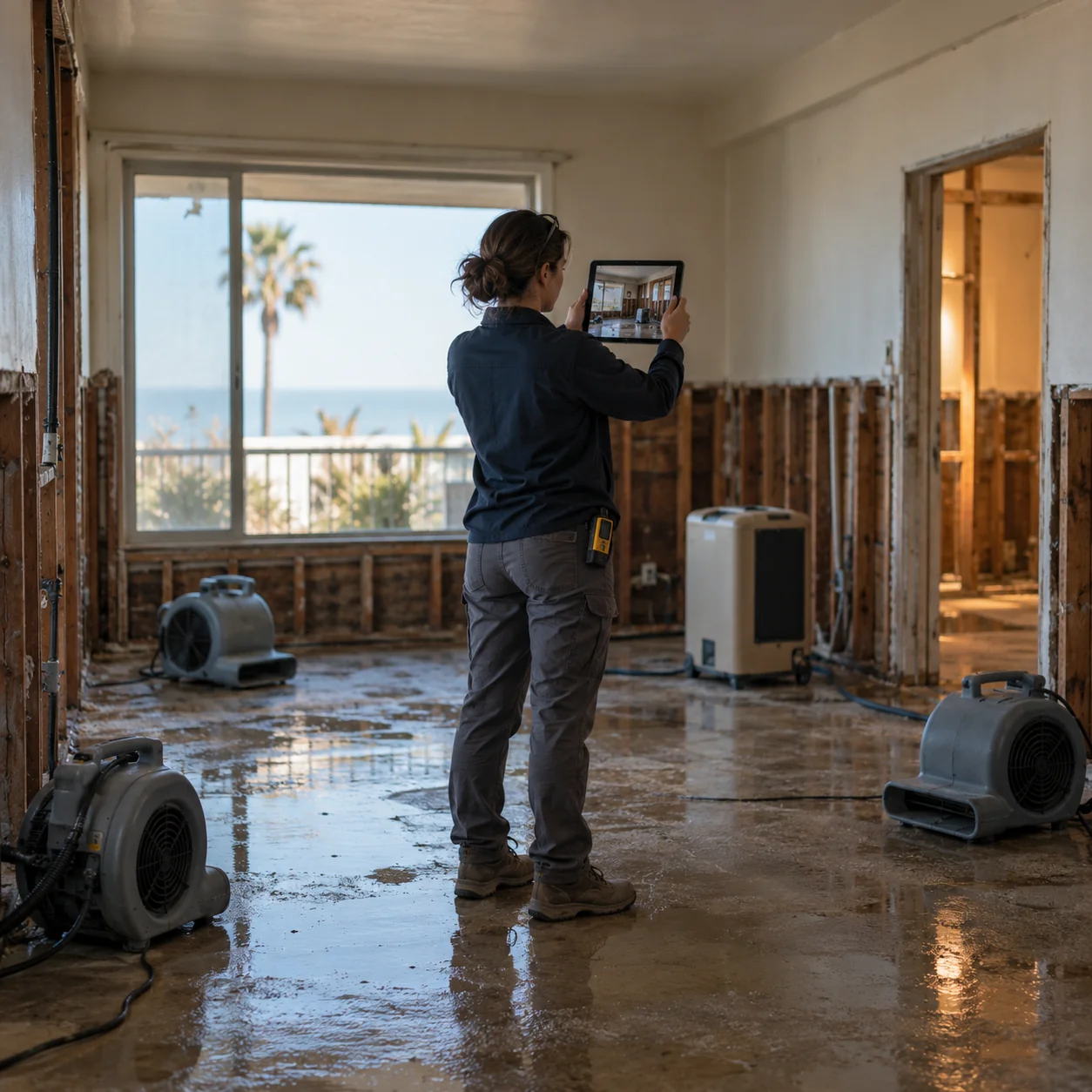
Water mitigation is everything done in the first days after a leak to limit the damage, from shutting off the water to running dehumidifiers until the framing reads dry. It does not put anything back. When mitigation ends you have a clean, dry, open structure: studs showing where drywall was cut, a bare subfloor where carpet was, and a written record of the moisture readings.
The word comes from insurance. United Policyholders, a consumer group, notes that most California property policies impose a duty to mitigate: to take reasonable steps after discovering a loss to prevent further damage. Shutting off the water, calling a plumber and calling a water mitigation contractor are those steps. Waiting for the adjuster to arrive before anything is dried is not.
What does a water mitigation company do?
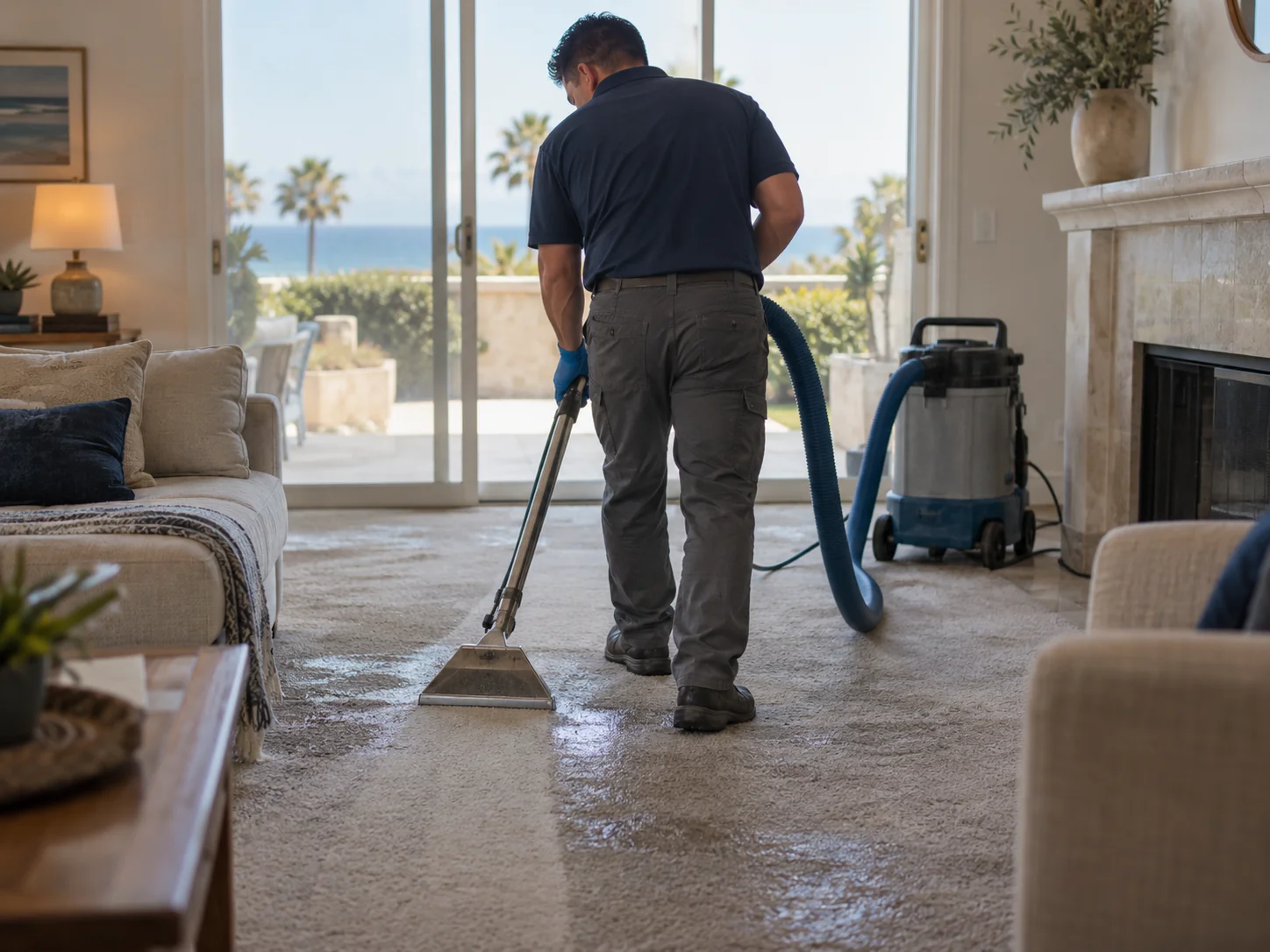
A water mitigation company extracts the water, removes the materials that cannot be dried, sets and monitors drying equipment, and documents the job for your insurer. The industry standard for the work is the ANSI/IICRC S500, which covers subjects from drying technology and building science to safety and the evaluation of contents. The standard also assumes that finding and fixing the source of the water is the property owner's job, so a mitigation crew will dry around a repaired pipe but will not usually repair it.
A first visit normally runs like this:
- Walk-through and moisture mapping. A moisture meter, and often a thermal camera, shows how far the water has traveled behind and under what you can see.
- Category check. The contractor decides whether the water is clean, gray or black, which sets how much can be dried in place and what protective gear the crew wears.
- Extraction. Standing water is pumped or vacuumed out of floors and carpet.
- Removal. Wet carpet pad, swollen drywall, soaked insulation and anything touched by contaminated water is cut out, bagged and listed.
- Equipment. Air movers and dehumidifiers go in. Their number and placement are recorded.
- Monitoring. The crew returns to take readings, move equipment and pull it when the materials reach their drying targets.
- Documentation. Photos, the moisture log, the equipment list and the list of removed materials go to you and to your insurer.
What the mitigation company does not do is decide that the loss is covered. That is the insurer's call, and the paperwork from step 7 is what the insurer reads to make it.
Mitigation vs restoration: what is the difference?
Mitigation takes the building back to dry and clean; restoration takes it back to finished. Everything else follows from that.
| Mitigation | Restoration (rebuild) | |
|---|---|---|
| Goal | Stop the damage spreading, dry the structure | Return the home to its pre-loss condition |
| When | Starts the day of the loss | Starts after drying is confirmed and the scope is approved |
| Typical tasks | Extraction, removal of wet materials, drying, cleaning, antimicrobial treatment | Drywall, insulation, flooring, cabinets, paint, trim |
| Equipment | Extractors, air movers, dehumidifiers, moisture meters | Standard construction tools |
| Ends when | Moisture readings match unaffected materials | The last coat of paint is on |
| Measured in | Days | Weeks |
| Who | A water mitigation or restoration contractor | A general building contractor, sometimes the same company |
| On the claim | Often billed and reviewed first, as an emergency service | A separate estimate reviewed against the policy |
Many companies advertise both and will do both. That is convenient, but you are not obliged to use the same contractor for the rebuild, and you should read the rebuild estimate as a separate document from the mitigation invoice. The water damage restoration cost page explains how the two scopes are priced.
Does insurance pay for mitigation?
Standard California homeowners policies cover sudden and accidental water damage, and mitigation costs for a covered loss are typically reimbursable, but whether your loss is covered turns on the cause and on your policy wording. This guide is general information, not legal, insurance or medical advice.
The California Department of Insurance lists "sudden and accidental water damage" among the perils a standard homeowners policy covers, and lists water damage caused by seepage or leaks, and flood, among the perils it does not. A burst supply line is the textbook sudden and accidental loss. A shower pan that leaked for months is the textbook gradual one.
If the loss is covered, the mitigation bill is normally part of the claim. United Policyholders puts it plainly: mitigation costs are typically reimbursable under most policies, so keep all receipts, including for extraction, drying, board-up and temporary repairs. Three habits protect you:
- Photograph and video the damage before anything is moved or removed.
- Keep every receipt and every page the mitigation contractor gives you, including the moisture log.
- Report the loss to your insurer on the day you call the contractor, and tell the contractor a claim is open.
For what is and is not covered in more detail, including the deductible and mold, see does homeowners insurance cover water damage in California.
How long does mitigation take?
Mitigation runs from the first visit until the drying log shows target readings, which is measured in days rather than weeks, with the length set by how much water there was, how long it sat and what it soaked into. A contractor cannot honestly promise a number of days on the phone, because the moisture meter has not been in the wall yet.
Two clocks matter more than the total. The EPA says that if wet materials are dried within 24 to 48 hours of a leak, in most cases mold will not grow. And under the S500 categories, clean Category 1 water that sits for 24 to 48 hours can degrade to Category 2, which means more removal and less drying in place. Both clocks start when the water arrives, not when you find it. That is why the first call is worth making on the day you find the water, even if you have not yet heard from your insurer.
What this means in Huntington Beach
The city separates the water it is responsible for from the water you are responsible for at the meter. For a water main break in the street or a loss of water service, the City of Huntington Beach Utilities Division takes calls at (714) 536-5921 during business hours, and after hours the city directs water emergencies to the Police Department at (714) 960-8825. Everything past the meter is private plumbing, and drying it out is a private mitigation job.
Flood is the other local line. The city's flood information page lists the Santa Ana River, the East Garden Grove-Wintersburg Channel, the Talbert Channel, the Huntington Beach Channel and the Pacific Ocean as the city's flood sources. Water from any of them is flood water, which a standard homeowners policy does not cover, and mitigation for it is treated differently from a burst pipe.
When to call a contractor
Call a mitigation contractor when water has reached a wall, a ceiling, a subfloor or a slab, when it came from a drain, a toilet or outside, or when it has been sitting longer than a day. Towels and a box fan handle a clean spill on tile. They do not handle a wet wall cavity.
HB Water Damage is an independent referral service, contractor-neutral: your call is answered and connected to an independent restoration contractor who serves Huntington Beach. To reach an independent contractor for water damage mitigation in Huntington Beach, start on the home page. The what to do after water damage page covers the shut-off and safety steps to take before the crew arrives.
Water in your home right now? Call and get connected to an independent restoration contractor who covers your street.
Questions homeowners ask about water mitigation
Is water mitigation the same as water damage restoration?
Mitigation is the emergency phase of restoration: extraction, removal of wet materials and drying. Restoration in full adds the rebuild. Some companies use the words interchangeably, so ask which scope an estimate covers.
Do I need a mitigation company if the water was clean?
Clean water still soaks drywall, insulation and subfloor, and it can degrade to Category 2 within 24 to 48 hours. If the water reached anything you cannot dry fully within that window, mitigation is the right call.
Does the mitigation company fix the leak?
Mitigation crews dry the building; they do not usually repair plumbing. Call a plumber for the pipe and a mitigation contractor for the drying, and tell each that the other is coming.
Can I start mitigation before the adjuster comes?
Policies generally require you to prevent further damage, and consumer guidance treats drying as part of that duty. Photograph everything first, keep every receipt and report the loss without delay so the insurer has notice.
Will the mitigation company also rebuild?
Many do both, but the rebuild is a separate scope and estimate. You can use the same company or a different licensed contractor, and you should read the rebuild estimate on its own terms.
Related guides
Last reviewed October 1, 2026.
Water in your home? Talk to someone now.
One call reaches an independent restoration contractor who covers your area. The contractor handles the inspection, the estimate and the work.
Independent line. No charge to you. Calls may be recorded.