
Housing age
The City describes tract after tract being built from the late 1950s through the 1970s. Supply lines, angle stops, water heater connectors and washing-machine hoses in homes that age fail far more often than in new construction.
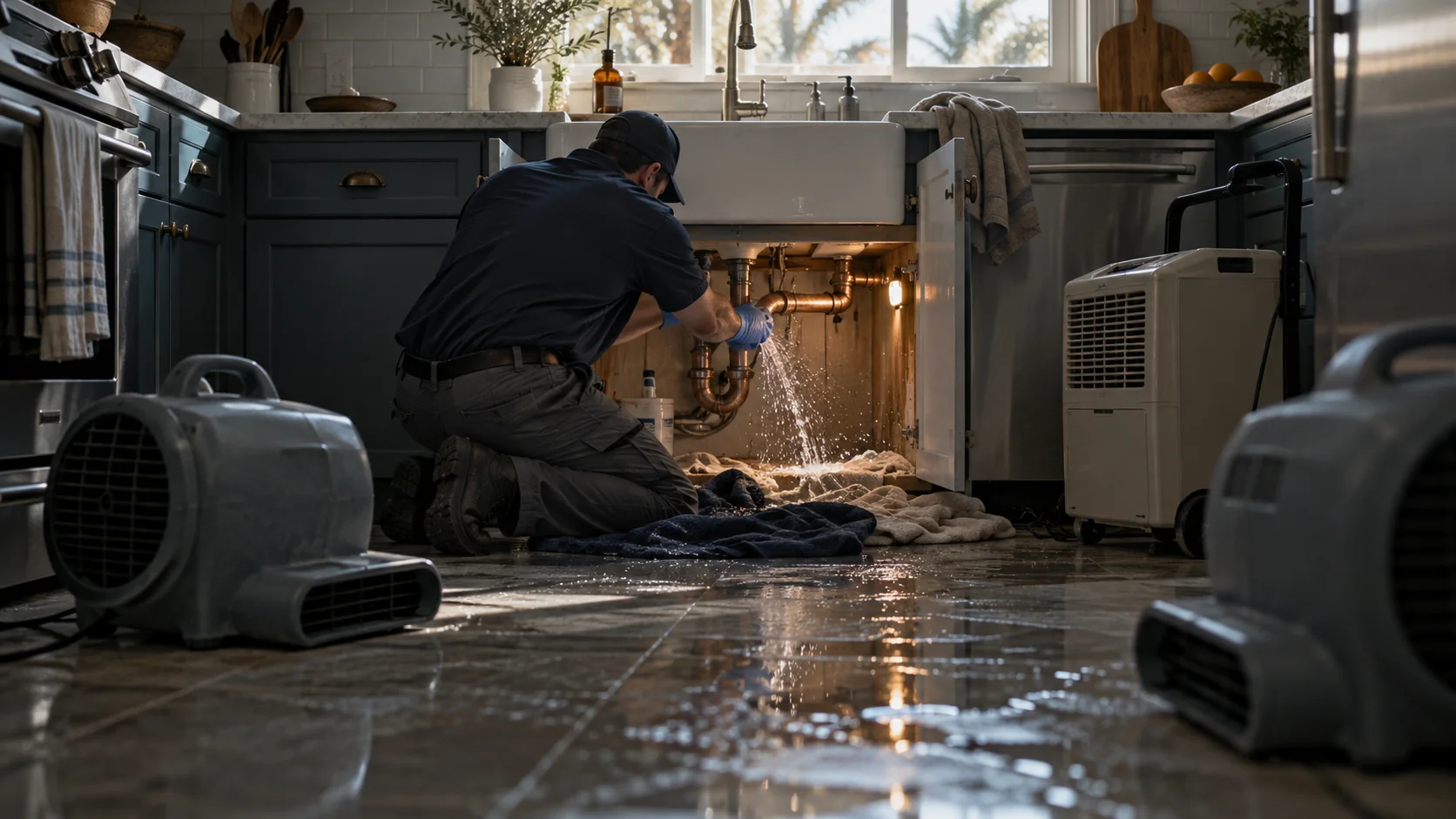
A pipe let go, the water heater failed, or the floor is wet and warm with no leak in sight?
Shut off the main and call (888) 217-4707, 7 a.m. to 11 p.m. Pacific. HB Water Damage is an independent referral line connecting Huntington Beach homeowners with independent restoration contractors.
IndependentNot owned by a contractor.
Check any licenseVerify at cslb.ca.gov.
Answered daily7 a.m. to 11 p.m. Pacific
Huntington Beach areaPlus 20 nearby cities
In short
Burst pipe, water heater and slab leak water damage is usually clean (Category 1) water that must be extracted and dried within 24 to 48 hours. After that it can degrade to Category 2, and wet drywall, carpet pad and cabinets become far more likely to need replacing.
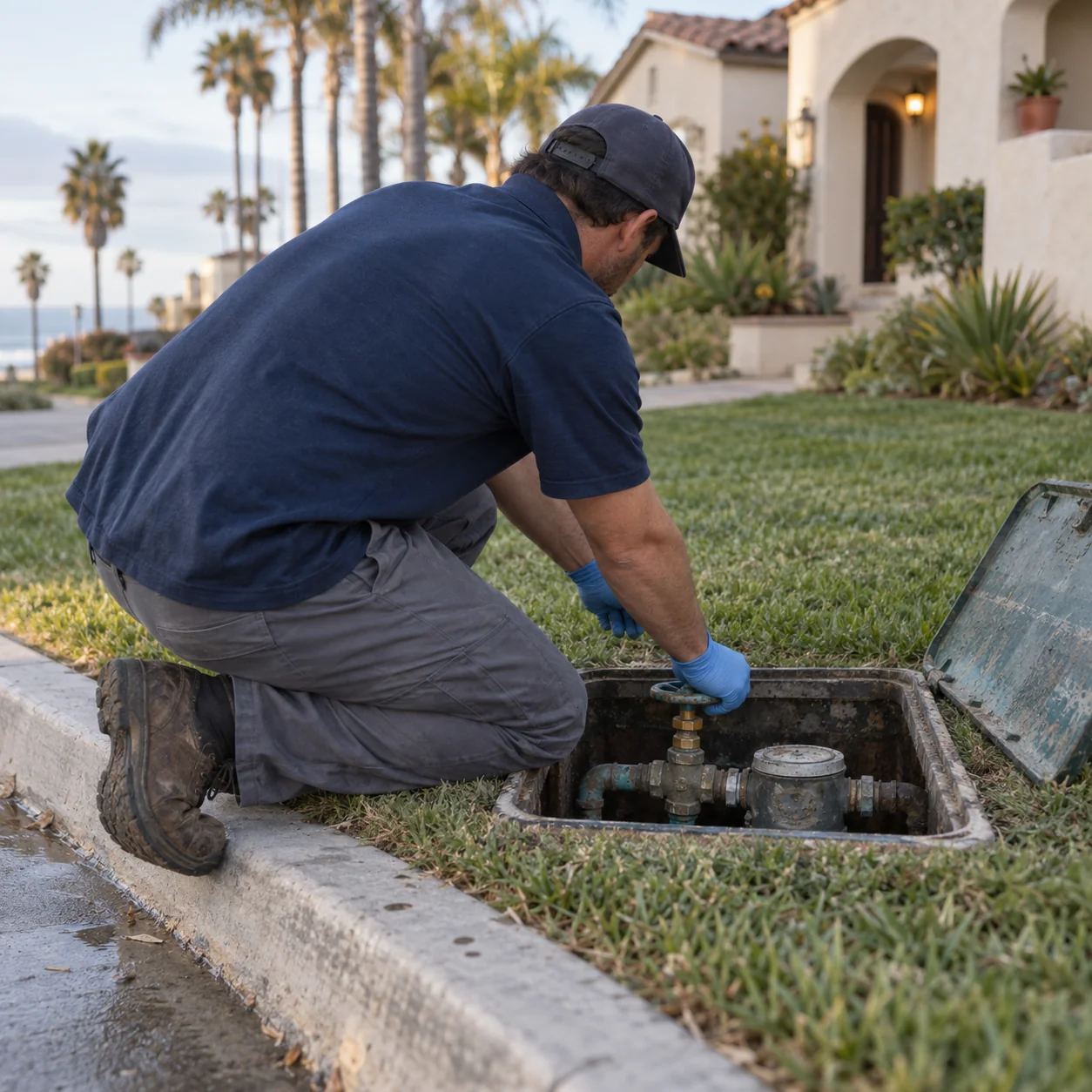
The City describes tract after tract being built from the late 1950s through the 1970s. Supply lines, angle stops, water heater connectors and washing-machine hoses in homes that age fail far more often than in new construction.
Many postwar tract homes in Southern California were built on concrete slabs, with supply pipes running under or through the slab. A pinhole in one of those lines leaks into the soil and under flooring, where it can run for weeks before anyone sees water.
A tank that finally corrodes through can empty 40 to 50 gallons into a hallway or garage before anyone notices, and keeps refilling until the cold-water valve is closed.
Salt air corrodes exposed metal fittings, hose bibs and outdoor lines faster in beach neighborhoods.
A leak-detection specialist or plumber confirms a slab leak with acoustic or pressure testing. The restoration contractor then dries the flooring and walls; the plumber repairs or re-routes the line.
Water in your home right now? Call and get connected to an independent restoration contractor who covers your street.
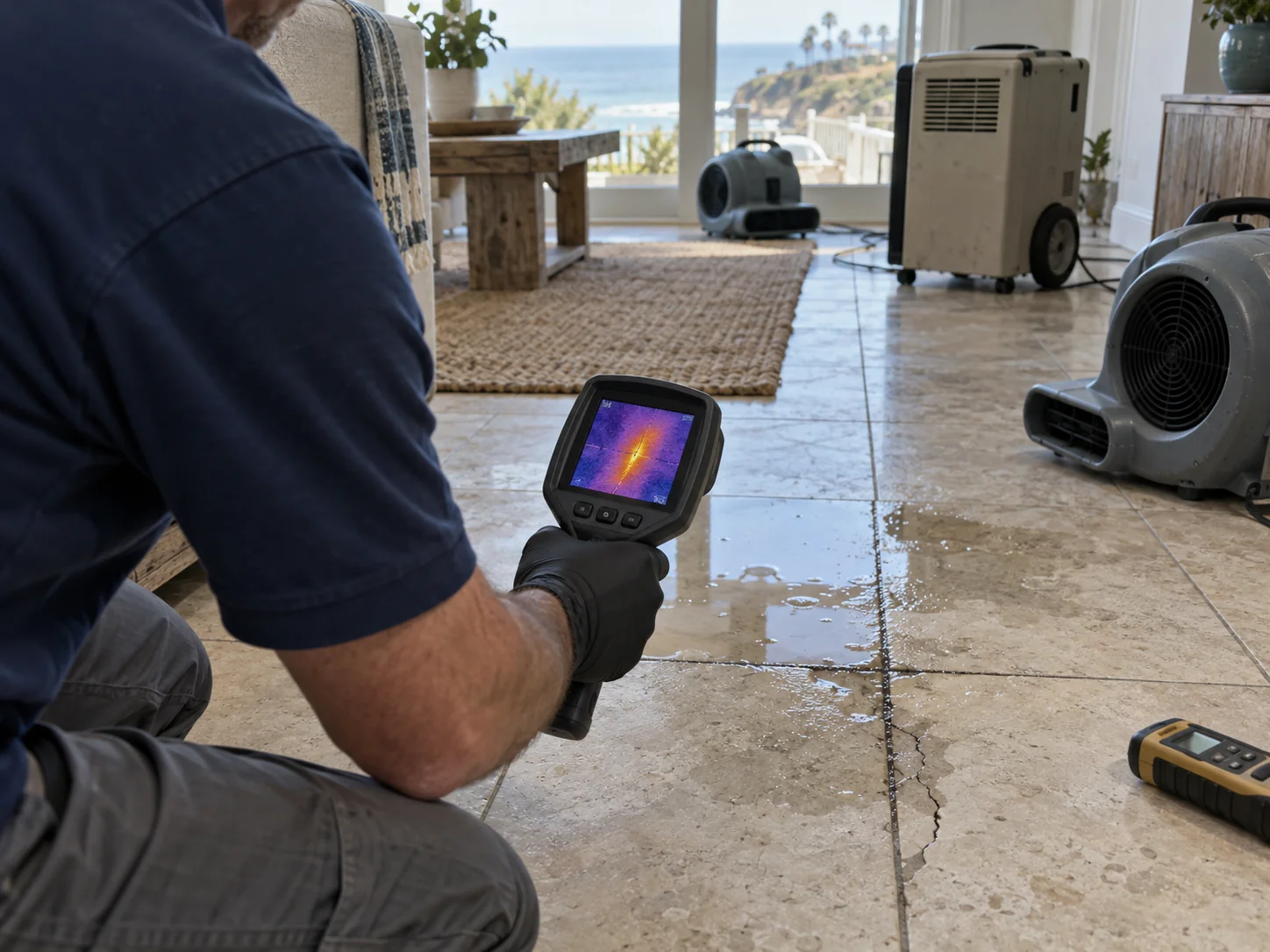
National 2026 cost data puts mitigation at about $3 to $7.50 per square foot, with an average job around $3,867 (full cost breakdown). The plumbing repair is billed separately.
Insurance usually covers the water damage from a sudden failure, such as a burst line or a tank that ruptures, but usually not the failed part itself. A leak that ran for a long time can be treated as gradual and excluded: in Brown v. Mid-Century Insurance Co. (2013), a California appeals court held that a long-running discharge was not "sudden" even though the pipe failed at one moment. Note the date you first noticed the problem, and report it promptly.
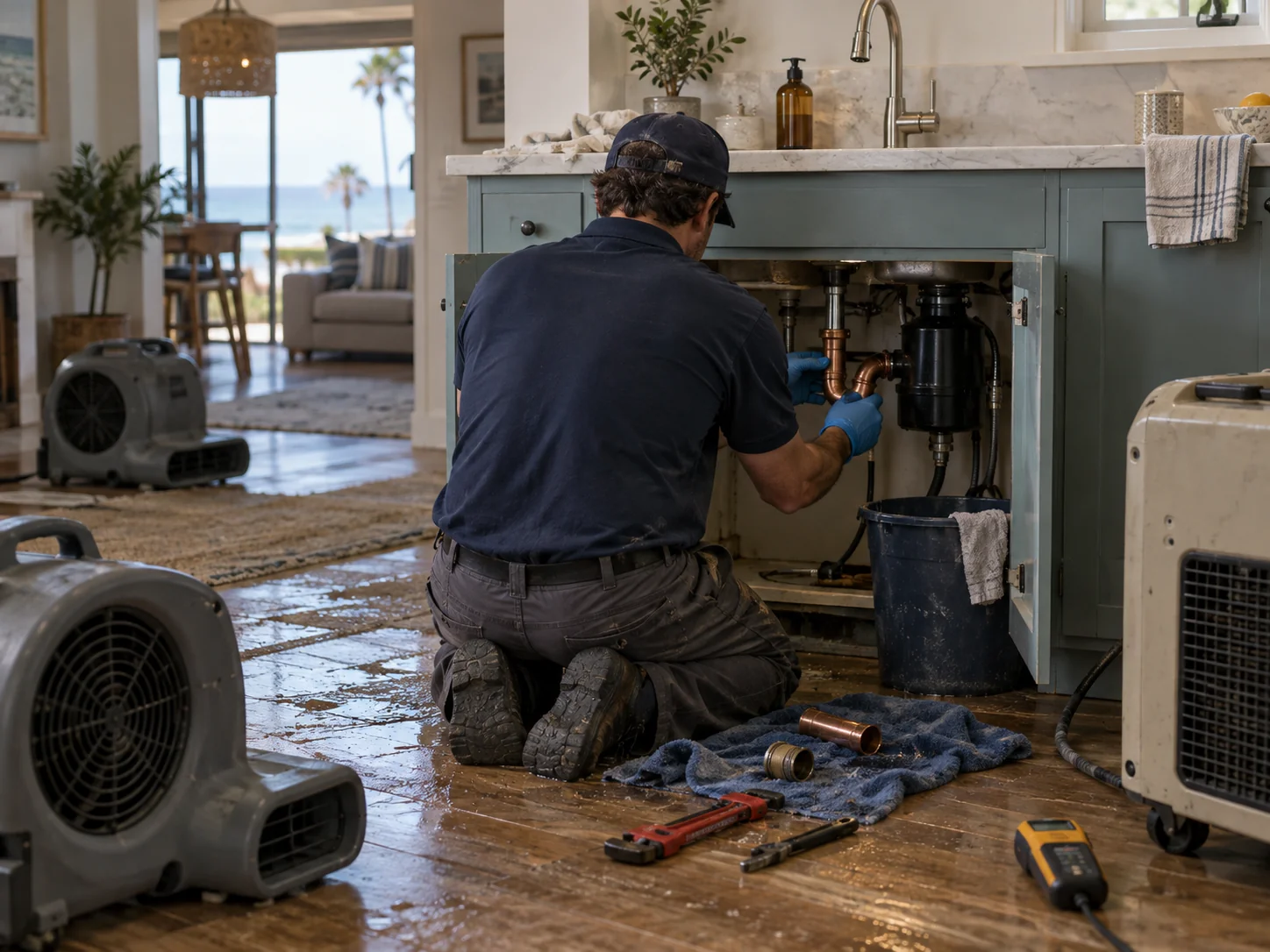
Close the main water valve, switch off power to wet rooms if it is safe, and photograph the damage. Then call a restoration contractor and your insurer.
Household fans dry surfaces, not the water inside walls, under flooring or in cabinet bases. Anything beyond a small spill on tile needs moisture readings and commercial drying equipment.
Policies often cover the resulting water damage and sometimes access to the pipe, but not always the pipe itself, and not a leak judged gradual. Read the water damage section of your policy.
Most clean-water jobs dry in three to five days once equipment is set. Slab leaks and hardwood floors often take longer because concrete and wood release moisture slowly.
An independent restoration contractor who covers your area. HB Water Damage is the referral line; it does not own crews. See How it works.
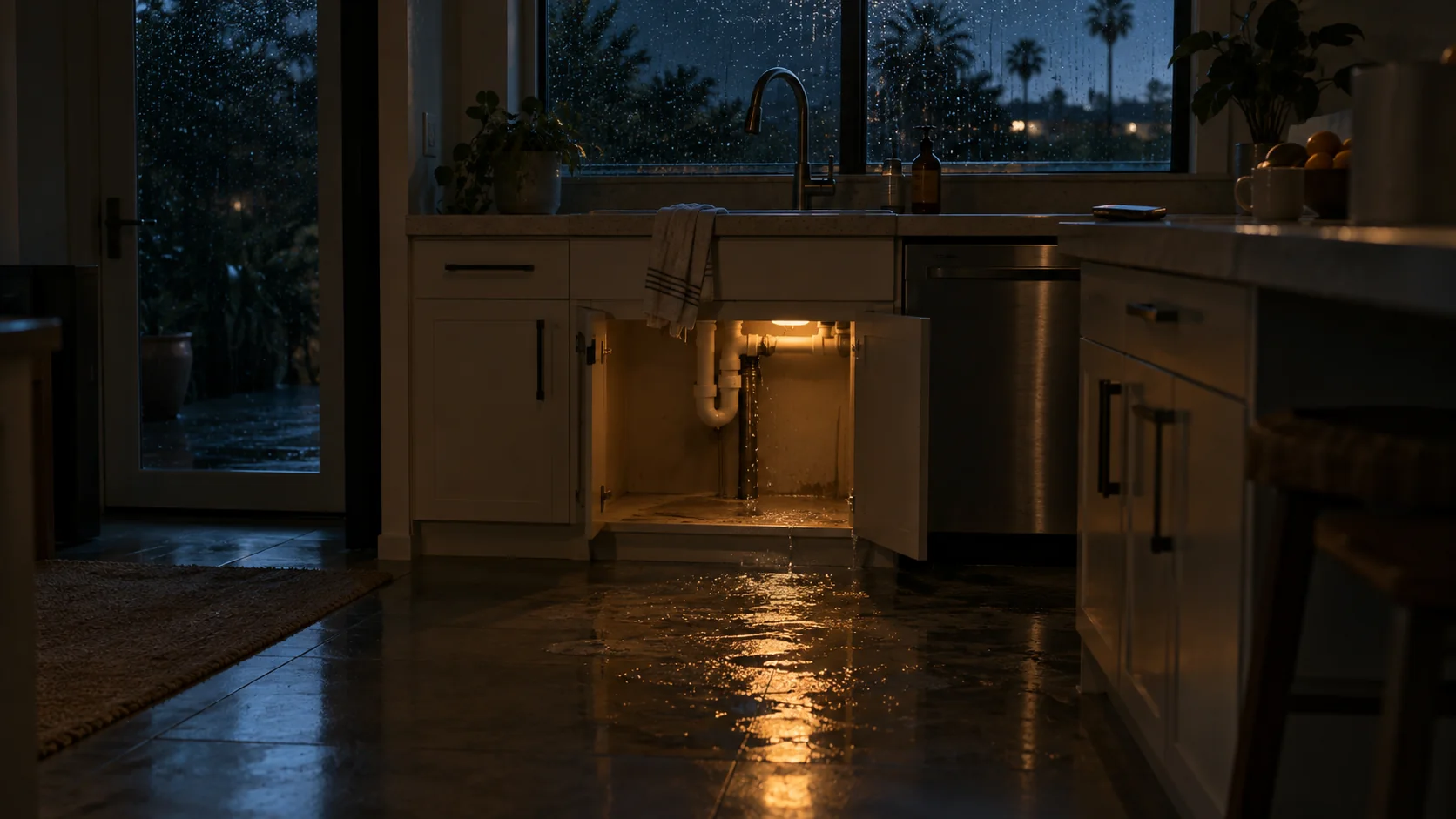
One call reaches an independent restoration contractor who covers your area. The contractor handles the inspection, the estimate and the work.
Independent line. No charge to you. Calls may be recorded.