
No gush
The first sign is often a water bill, a warm spot on tile, or the sound of running water with everything off.
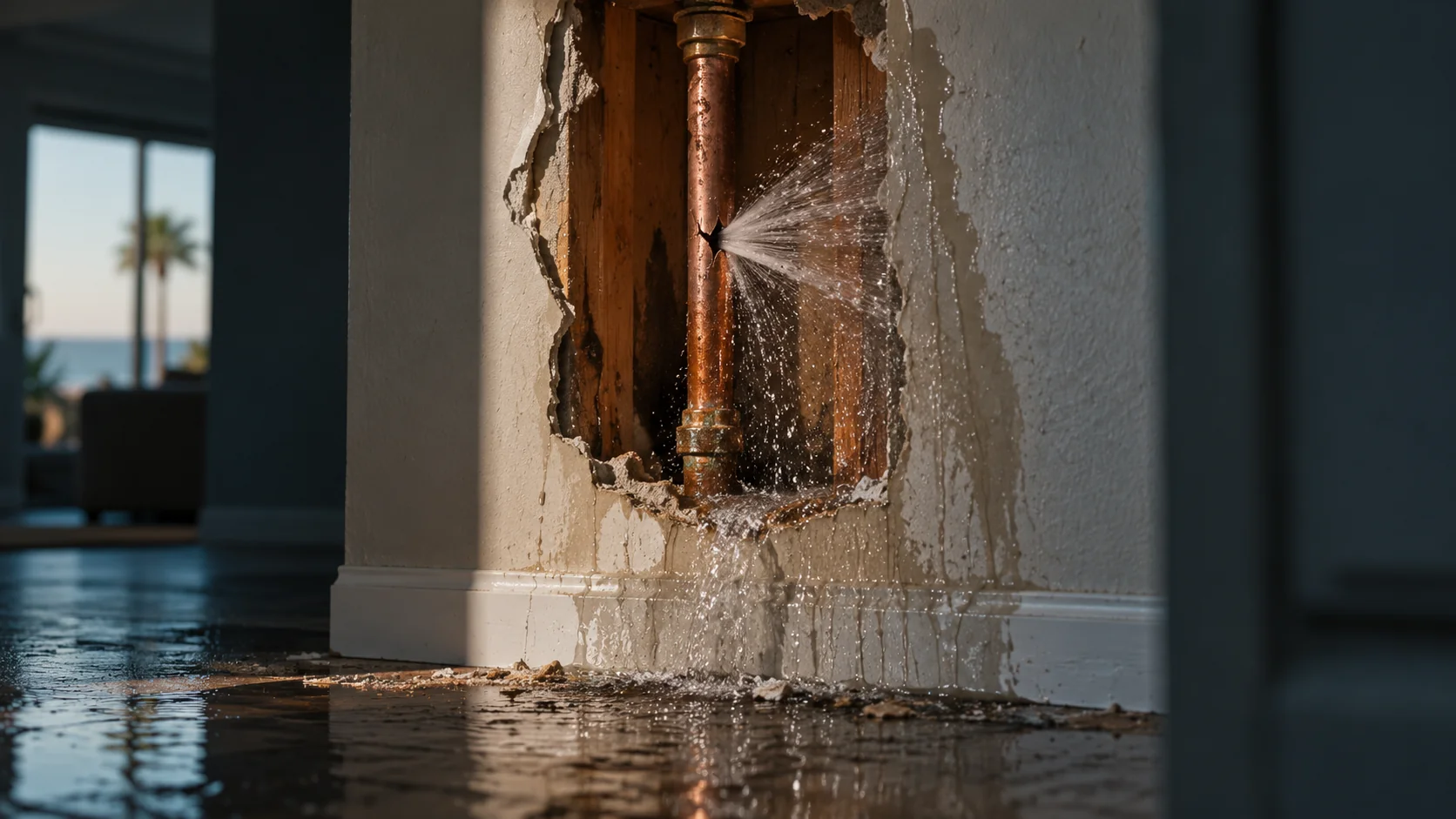
Water is pouring out of a wall, a ceiling or a fitting under the sink, and it is not stopping.
A burst supply line is one of the faster-moving causes of water damage in a home, and the first ten minutes decide how much of the house gets wet.
IndependentNot owned by a contractor.
Check any licenseVerify at cslb.ca.gov.
Answered daily7 a.m. to 11 p.m. Pacific
Huntington Beach areaPlus 20 nearby cities
In short
When a pipe bursts, shut off the water at the main valve first, then switch off power to any wet room at the breaker, then start moving water and belongings. Photograph everything as you go. Call a restoration contractor and your insurer once the water has stopped.
Stop the water, make the area safe, then limit the spread, in that order.
The first hour, step by step:
Call a restoration contractor, then your insurer. The EPA advises drying water-damaged areas within 24 to 48 hours to prevent mold growth, and that window is already running.
Everything on that list is safe to do yourself. The line is water inside walls, under flooring or in a ceiling cavity. Household fans dry surfaces, not wet framing or a subfloor. If more than a small patch of floor is wet, or any drywall is wet, you need moisture readings and commercial drying equipment. What to do after water damage covers the days that follow.
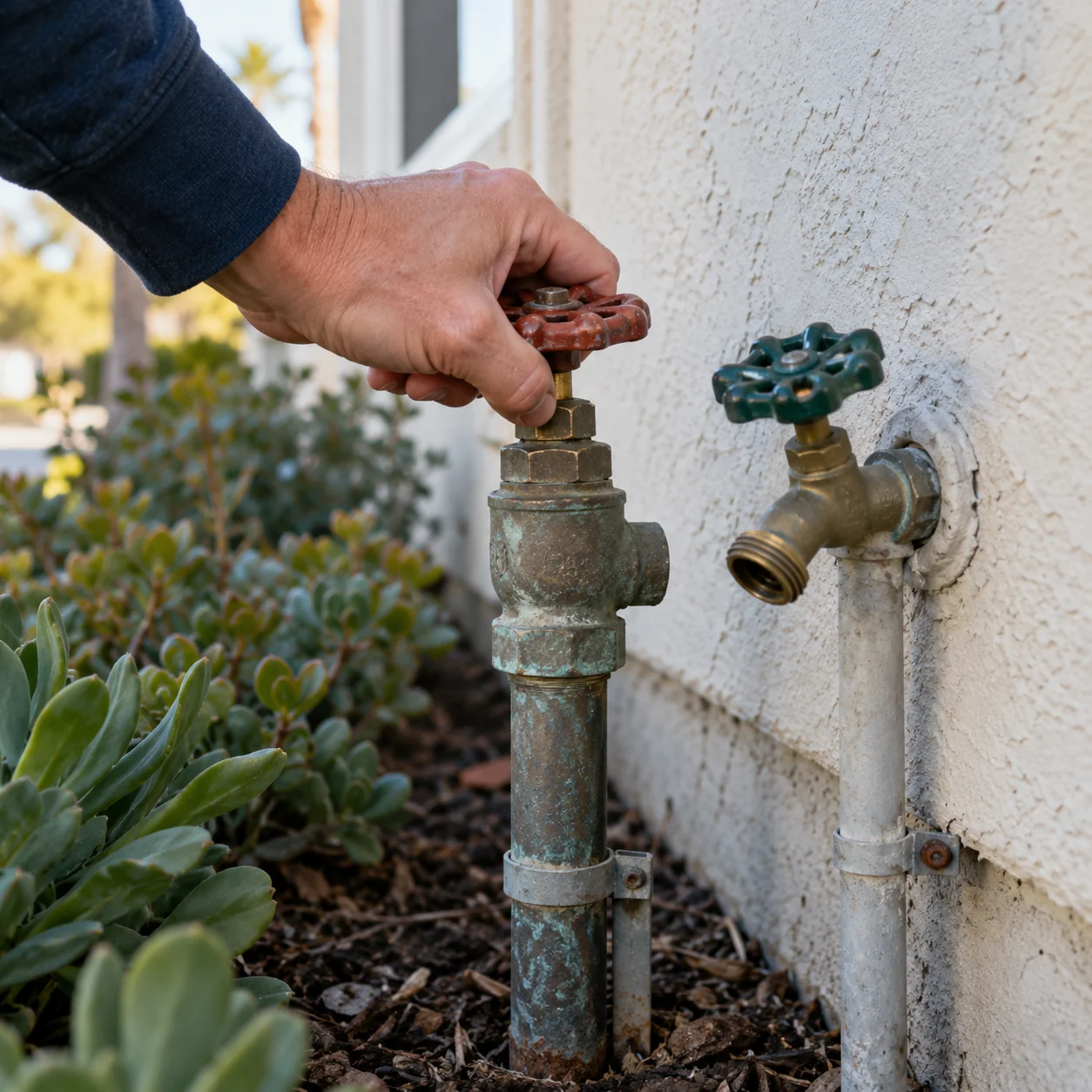
Close the main shutoff valve, which in most single-family homes is on an outside wall facing the street, in the garage, or in a box near the curb.
| Location | What it looks like | How to close it |
|---|---|---|
| Outside wall nearest the street, often by a hose bib | A lever handle (ball valve) or a round wheel (gate valve) on the pipe entering the house | Lever: a quarter turn so it sits across the pipe. Wheel: clockwise until it stops |
| Garage, near the water heater or where the main enters | Same two valve types, sometimes next to a bell-shaped pressure regulator | Same as above |
| Meter box at the curb or sidewalk | A concrete or plastic lid marked “water”; the valve is on the street side of the meter | Usually needs a meter key or a long adjustable wrench; a quarter turn |
| Condo or apartment | A valve inside the unit, often under the kitchen sink or in a utility closet | Close it; if there is none, call the HOA or building manager |
If the burst is at one fixture, you may not need the main. Every toilet, sink and washing machine has its own angle stop, a small valve where the supply line comes out of the wall. Turn it clockwise to close it.
Before anything bursts, find your main valve, turn it off and on once to make sure it moves, and keep a meter key in the garage.
If the break is in the street or at the meter itself, it is the city's pipe. The City of Huntington Beach says to call the Police Department at (714) 960-8825 for water main breaks or loss of service after hours, and the Utilities Division at (714) 536-5921 during business hours.
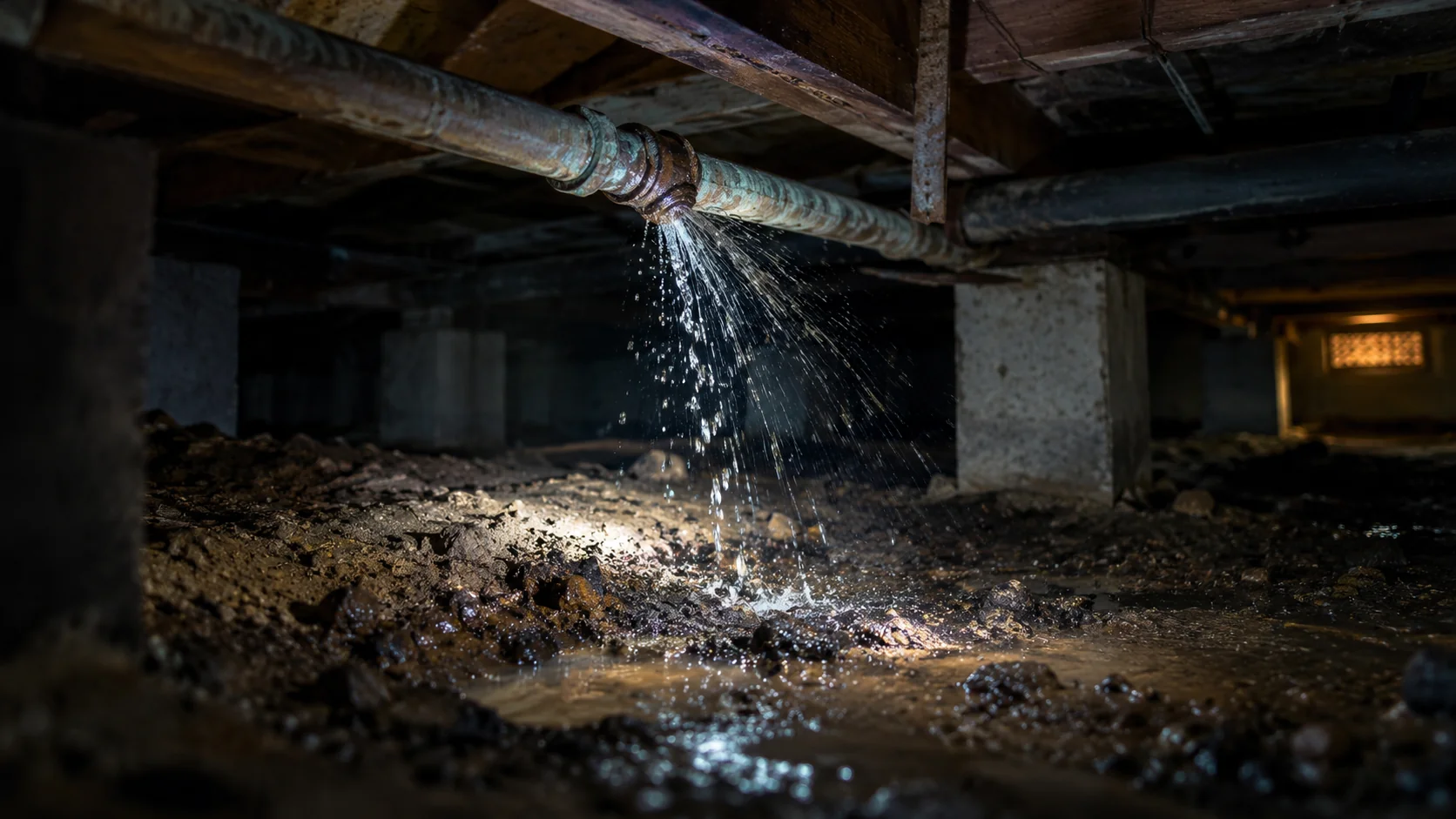
A pipe that bursts under a concrete slab does not flood the house; it soaks the soil and the slab, and you see the water only when the floor turns warm, damp or lifted.
The pattern is different from a burst in a wall:
The first sign is often a water bill, a warm spot on tile, or the sound of running water with everything off.
Concrete holds water and releases it slowly, so a slab and the flooring on it take longer to dry than a wall opened the morning it got wet.
A plumber or leak-detection specialist locates the line and repairs, reroutes or repipes it. A restoration contractor dries the slab and floors.
If you suspect a leak under the slab rather than a burst you can see, run the water meter test before calling anyone. The EPA WaterSense program's advice is to check the meter before and after a two-hour period with no water in use; if the reading changes, something is leaking. Our slab leak guide walks through the signs and the repair options.
Most burst pipes here come from age and corrosion, not freezing.
The usual causes, roughly in order:
Freezing is rare on the coast. The fix for most of the causes above is plain maintenance: replace rubber washer hoses with braided steel ones, check under-sink connectors for green crust or damp, and test the house pressure with a gauge on a hose bib.
Much of Huntington Beach was built in the two decades when the pipes now failing were installed. Census ACS estimates put the city's median year built at 1974. In the 92647 zip, about 68 percent of housing units were built between 1960 and 1979, and in 92646 it is about 78 percent.
The city side of the system is aging as well. The city's 2023 Water Master Plan reports about 610 miles of water pipe, 76 percent of it asbestos cement, most of it 45 to 55 years old, with a program to replace about 200 miles over 20 years. A break on the street side of the meter is the city's to fix; anything on the house side is yours.
Call as soon as the water is off and you can see that more than a small area of floor, any drywall or any cabinet base is wet. HB Water Damage is an independent referral service, contractor-neutral, and your call is answered and connected to an independent restoration contractor who covers Huntington Beach. What the drying work involves, and how insurance treats a sudden failure, is on the burst pipe water damage page.
Water in your home right now? Call and get connected to an independent restoration contractor who covers your street.
The California Department of Insurance guide lists sudden and accidental water damage among perils typically covered, and seepage or leaks among those generally not. The resulting damage is usually covered; the pipe repair often is not. See our insurance guide.
Cut power at the breaker to any room with water near outlets, appliances or wiring. If the panel itself is wet or standing in water, do not touch it; leave the house and call the electric utility.
Fans dry the surface of a floor or wall, not the framing, insulation or subfloor behind it. A small spill on tile is fine to mop and fan. Wet drywall, wet carpet pad or water that reached a wall cavity needs moisture readings and commercial drying equipment.
Once the main is off, call the restoration contractor first so drying starts within the 24 to 48 hour window, then the plumber to repair the line, then your insurer.
Keep the failed pipe, hose or fitting. Your insurer may want to see it, and it tells the plumber whether the rest of the plumbing is likely to fail the same way. Our guide to what can be saved after water damage covers belongings and materials.
Last reviewed October 1, 2026.
One call reaches an independent restoration contractor who covers your area. The contractor handles the inspection, the estimate and the work.
Independent line. No charge to you. Calls may be recorded.