
Photograph before you move anything
Each room from the doorway, the water line on walls and cabinets, the source, and each damaged item. A narrated video works too.
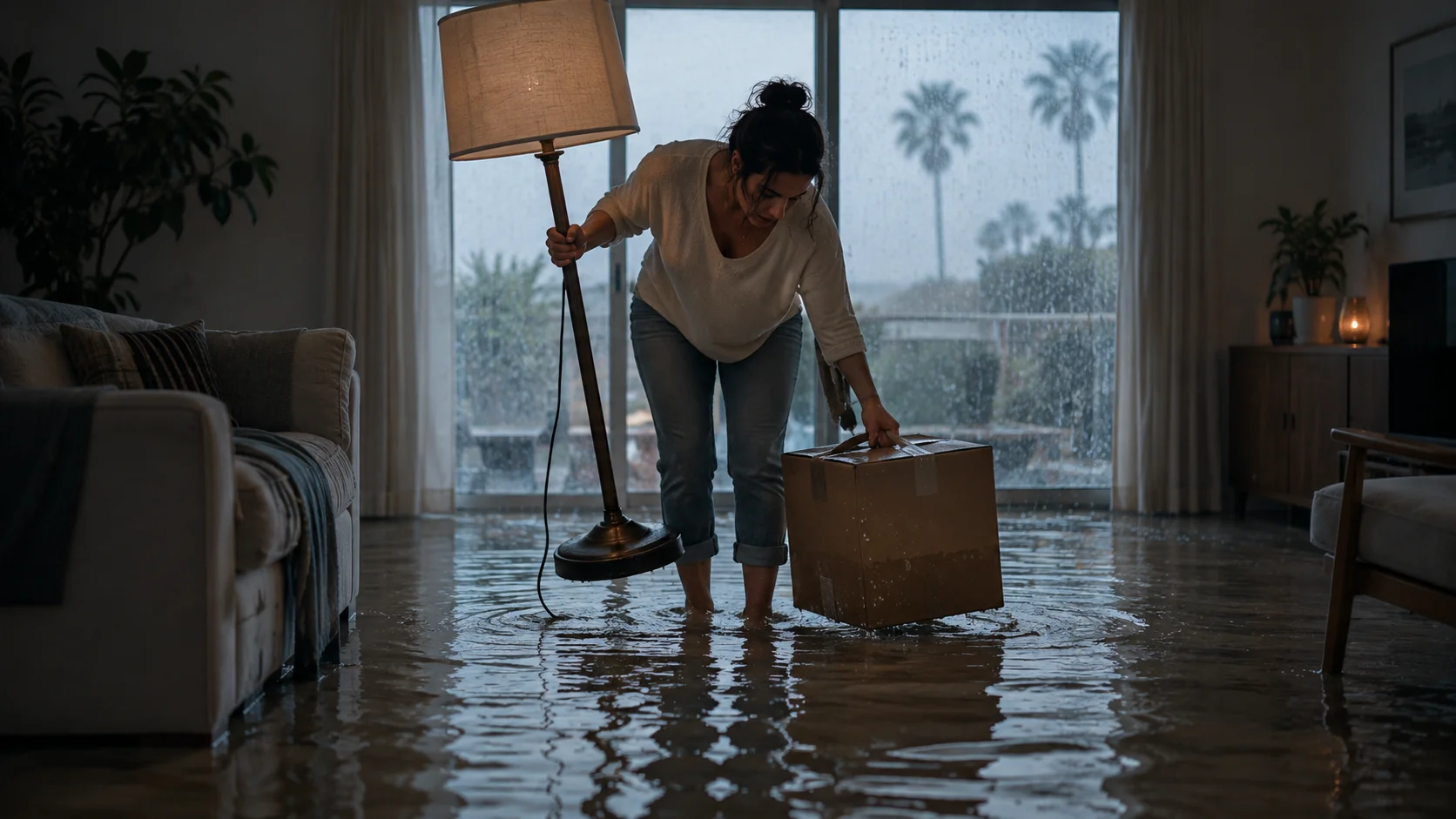
Standing in water right now?
Work through this page in order, and call (888) 217-4707, 7 a.m. to 11 p.m. Pacific, when you reach the "call" step. HB Water Damage is an independent referral line that connects Huntington Beach homeowners with independent restoration contractors.
IndependentNot owned by a contractor.
Check any licenseVerify at cslb.ca.gov.
Answered daily7 a.m. to 11 p.m. Pacific
Huntington Beach areaPlus 20 nearby cities
In short
In the first hour after water damage, keep people away from water near electricity or sewage, stop the source at the nearest valve, photograph everything before moving it, then call a restoration contractor and your insurer. Drying within 24 to 48 hours usually prevents mold.
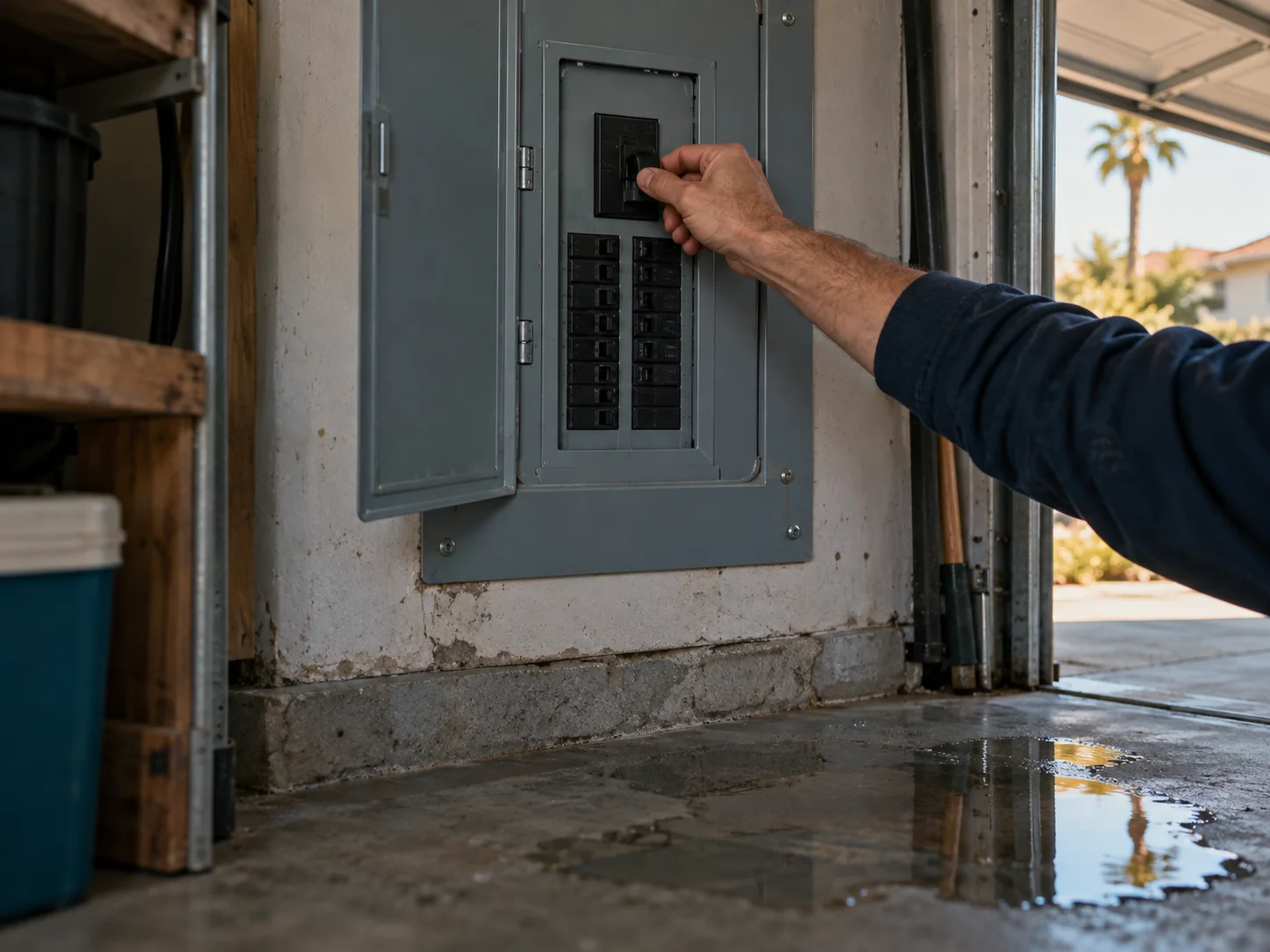
If the water is coming from a broken main in the street, contact the City of Huntington Beach Utilities Division (after hours, the City directs water emergencies to the Police Department). If the water is rain or runoff, there is no valve; block door thresholds with sandbags or rolled towels and move to the next step.
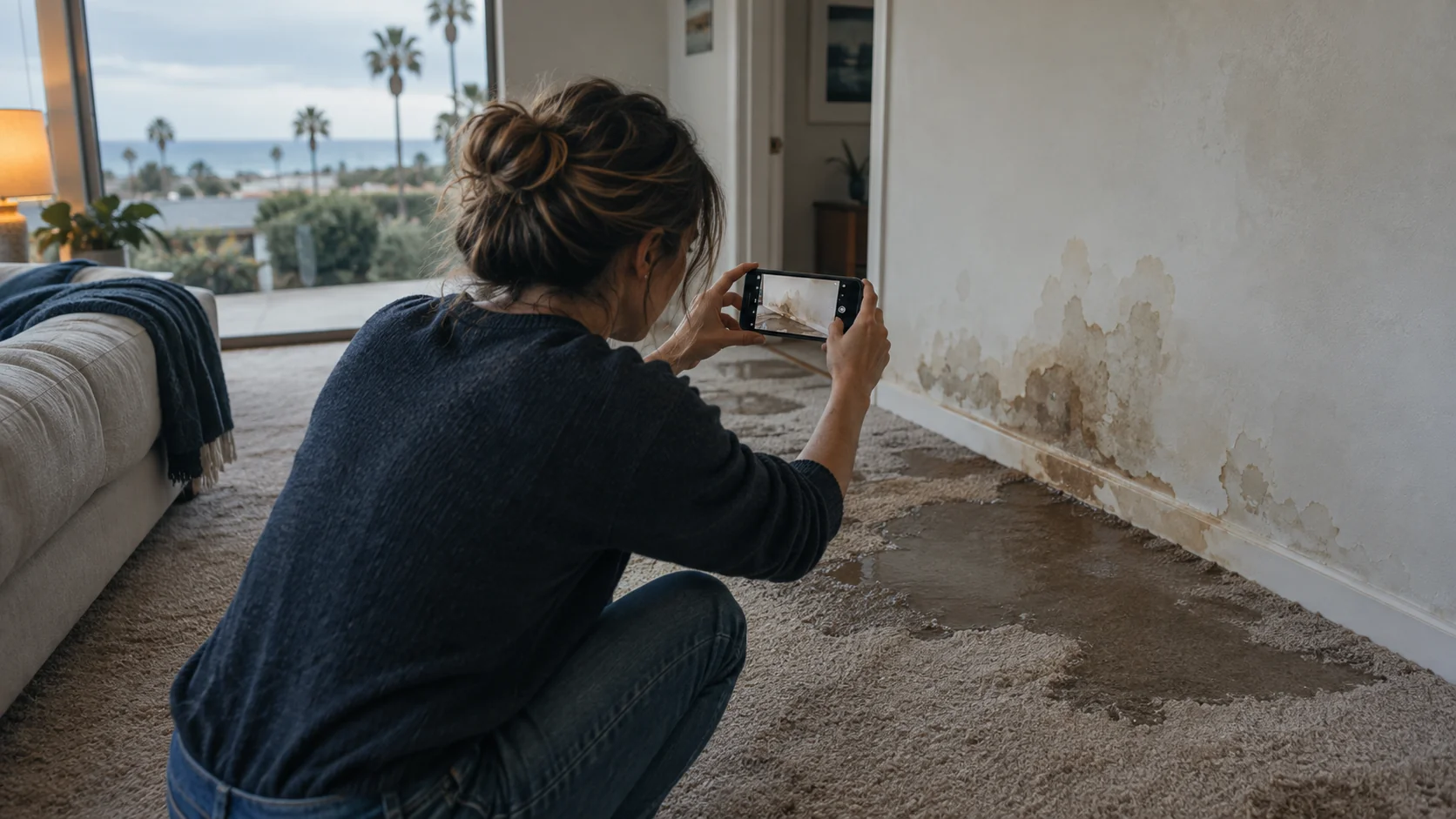
Each room from the doorway, the water line on walls and cabinets, the source, and each damaged item. A narrated video works too.
Rugs, electronics, papers, furniture. Put aluminum foil or plastic under the legs of furniture you cannot move.
Until the adjuster has seen them or approved disposal in writing.
When you found the water, when you stopped it, and who you called.
A restoration contractor. Extraction and drying equipment running within the first day is what keeps a clean-water loss from turning into a demolition job. (888) 217-4707 connects you with an independent contractor who covers your area.
Your insurer. Report the loss promptly. Describe what you saw; do not guess at causes you have not confirmed. Sudden losses such as a burst pipe are usually covered; gradual leaks, flood and sewer backup usually are not without extra coverage. See cost and insurance.
Water in your home right now? Call and get connected to an independent restoration contractor who covers your street.
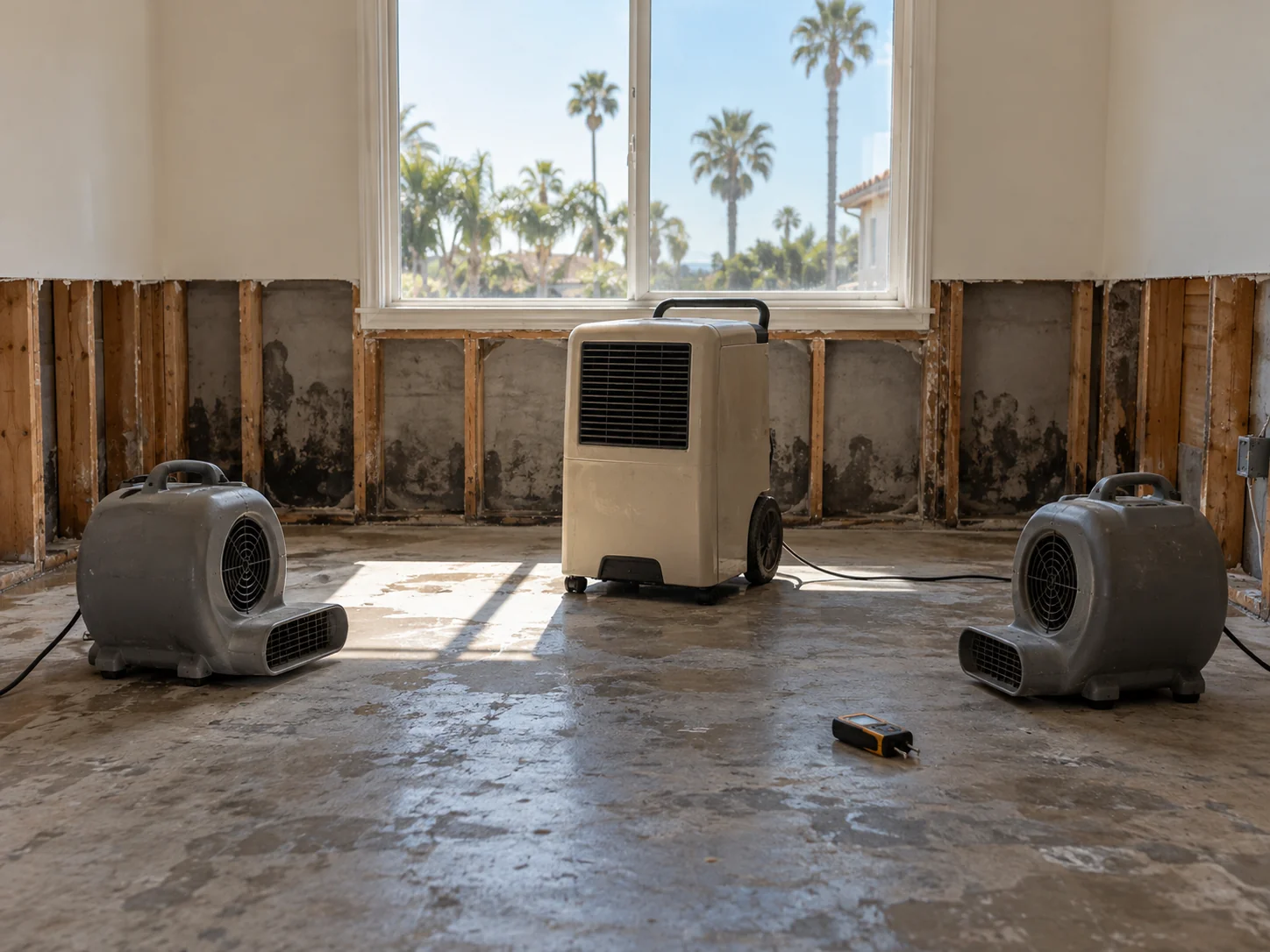
The EPA advises drying water-damaged areas and items within 24 to 48 hours to prevent mold growth. In practice, that means extraction and drying equipment running by the end of the first day, then several days of drying with daily moisture readings. Material that cannot reach its dry standard in that time, such as saturated carpet pad or drywall below the water line, is removed. If mold has already appeared, see mold remediation.
Photograph first, then call both within the hour. The contractor stops the damage from growing; the insurer needs to be told promptly.
Only if the failed line is isolated by its own valve. If you had to close the main, leave it off until a plumber has checked the leak.
A small spill on tile can be mopped up. Water that reached carpet, drywall, cabinets or subfloor needs moisture readings, because the hidden wet material is what grows mold.
Photograph it, notify the HOA or landlord in writing, and get the damage in your unit dried. Responsibility is settled afterwards; drying cannot wait for it.
Check the CSLB license number at cslb.ca.gov, ask for liability and workers' compensation insurance certificates, and get a written scope before work starts. More on How it works.
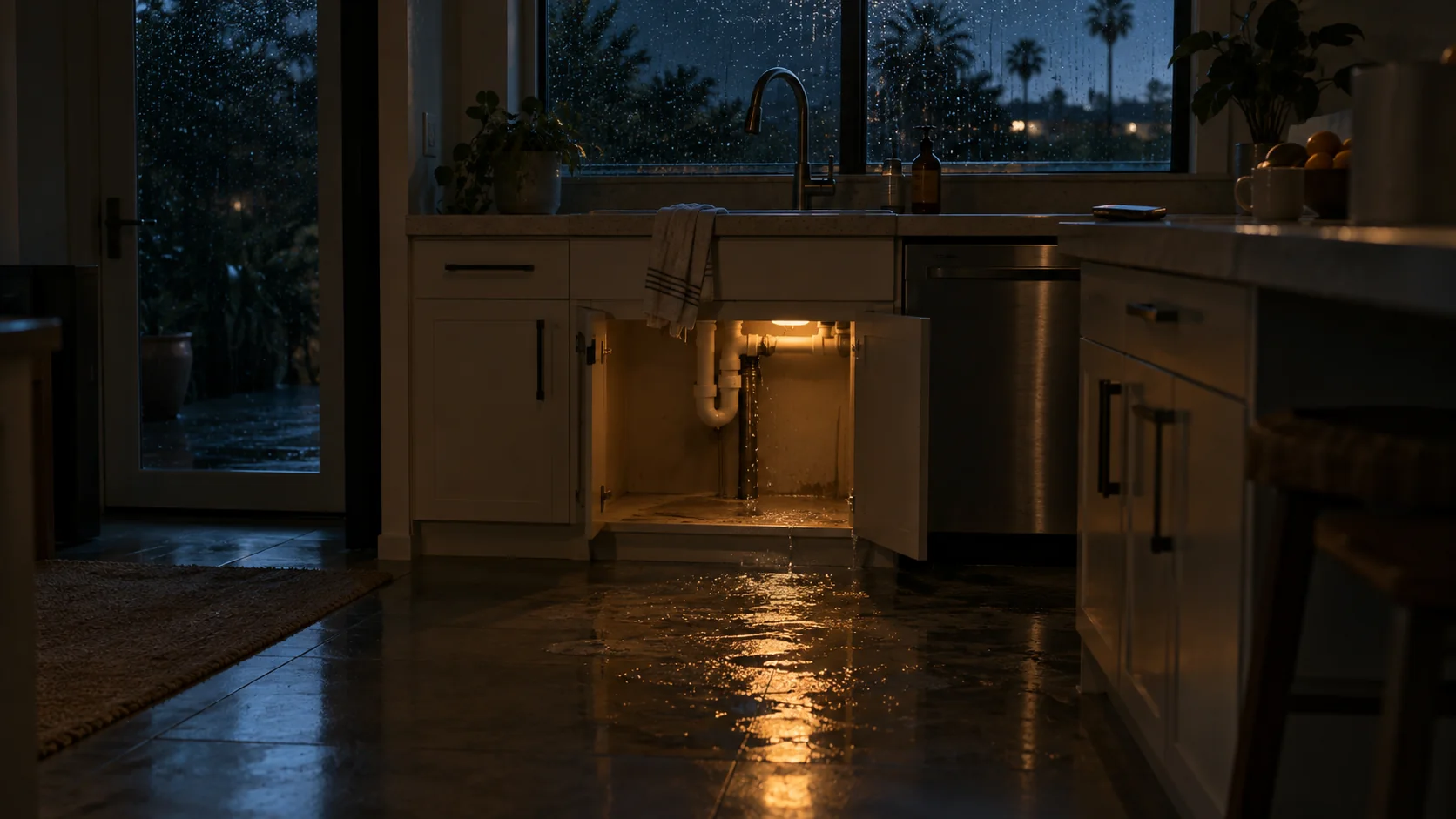
One call reaches an independent restoration contractor who covers your area. The contractor handles the inspection, the estimate and the work.
Independent line. No charge to you. Calls may be recorded.