
Hidden leaks
Under slabs, behind walls or under sinks in older tract homes, found only after weeks.
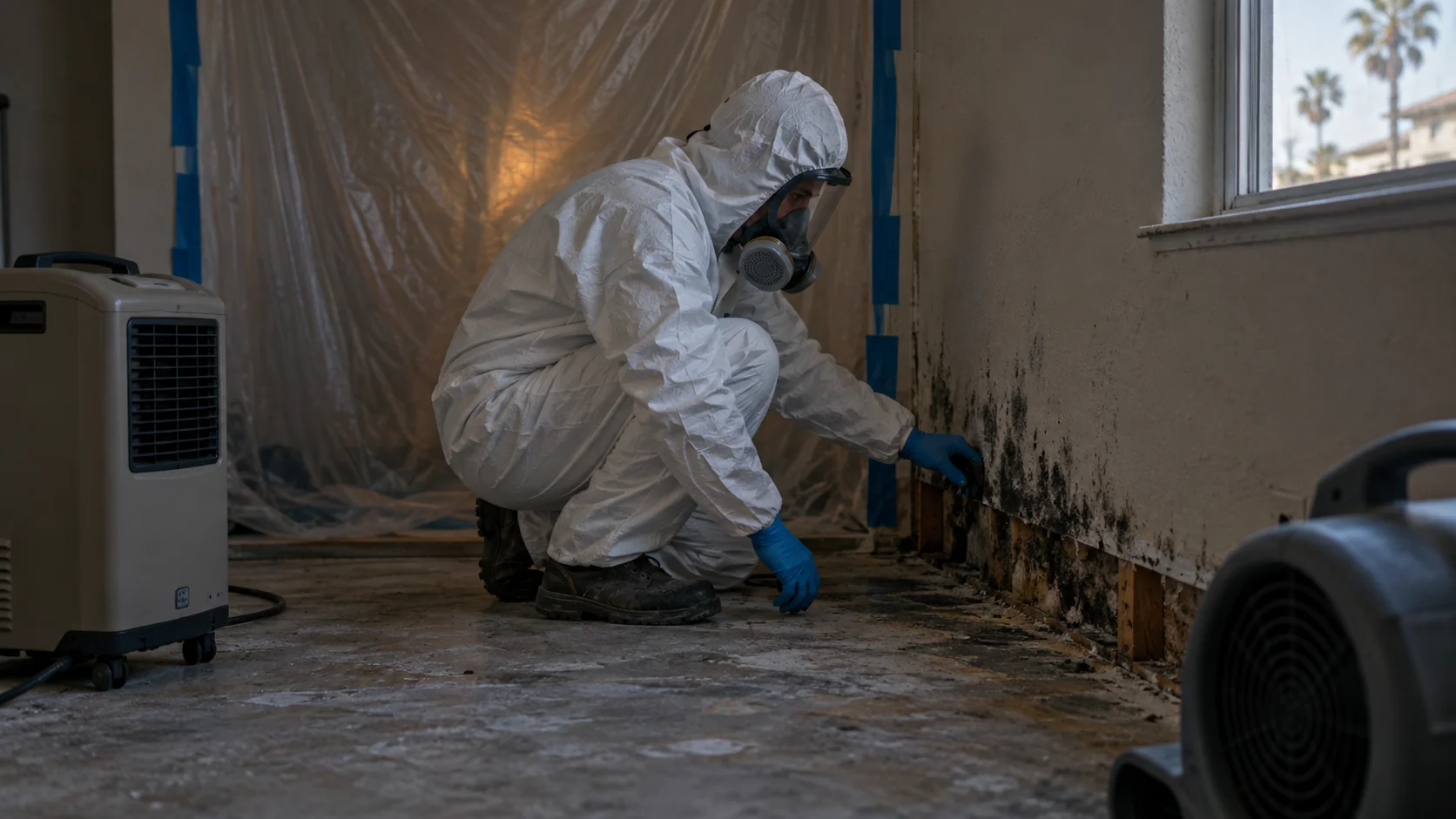
Found mold after a leak, or a musty smell that will not go away?
Call (888) 217-4707. HB Water Damage is an independent referral line that connects Huntington Beach homeowners with independent water damage restoration contractors. This line is for mold that follows water damage, such as a leak, a flood or a sewage backup; the contractor dries the source and removes the mold as one job.
IndependentNot owned by a contractor.
Check any licenseVerify at cslb.ca.gov.
Water damage and moldFor mold caused by a leak or flood
Huntington Beach areaPlus 20 nearby cities
In short
Mold remediation is the removal of mold-contaminated materials and the correction of the moisture that caused them. The EPA advises drying water-damaged materials within 24 to 48 hours to prevent mold; areas larger than about 10 square feet call for a professional.
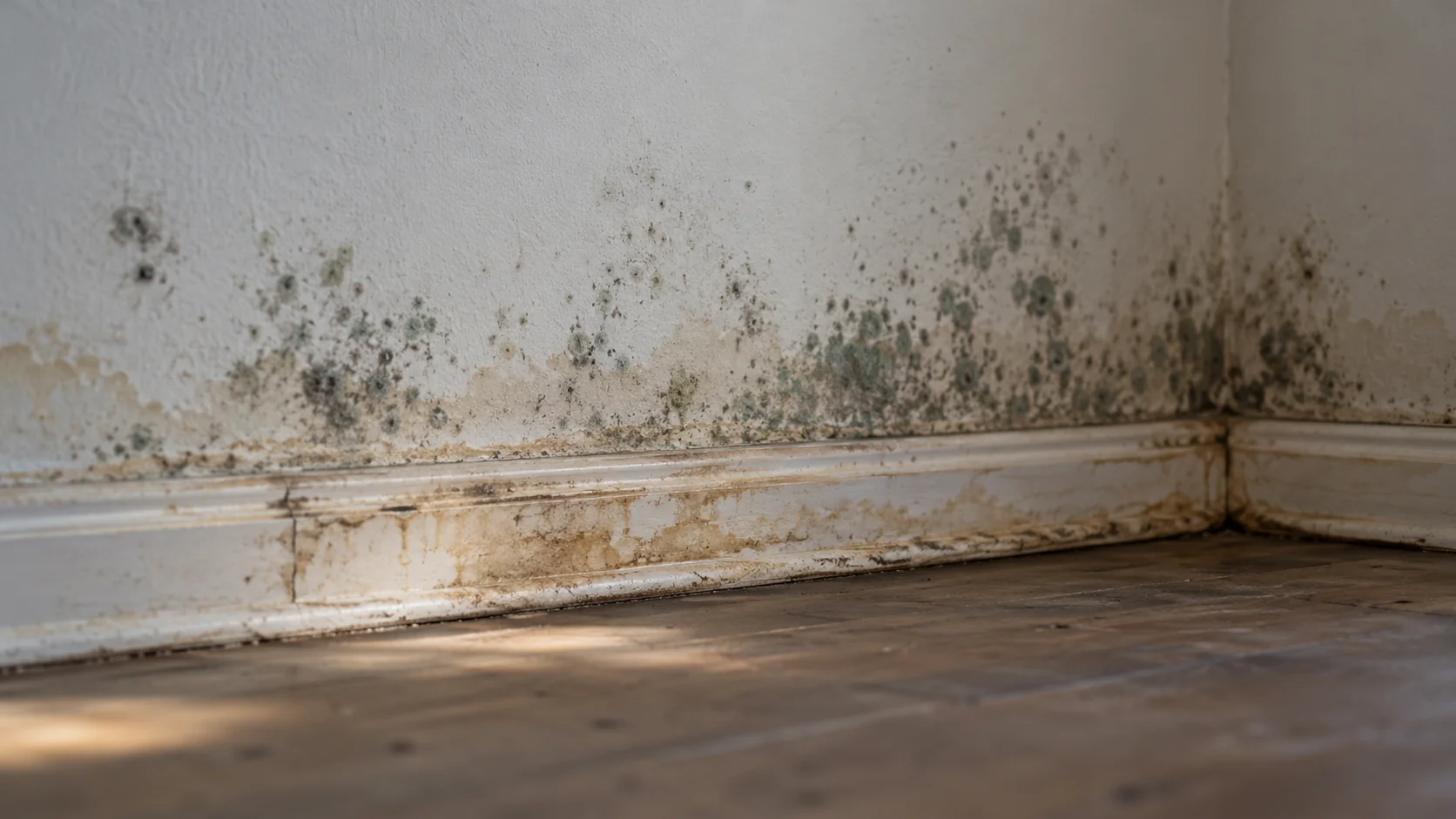
Mold spores are present in every home. They grow when a material stays wet: drywall behind a leaking supply line, carpet pad that was never fully dried, a cabinet base under a slow drip, a ceiling below a roof leak. The EPA's guidance is to dry water-damaged areas and items within 24 to 48 hours; after that, growth becomes likely.
In Huntington Beach, three situations produce most mold calls:
Under slabs, behind walls or under sinks in older tract homes, found only after weeks.
With wet pad, subfloor or wall cavities left behind.
In homes near the beach and the harbour, where poorly ventilated bathrooms and closets stay damp.
The EPA says an area of mold smaller than about 10 square feet (roughly a 3-by-3-foot patch) can usually be cleaned by the homeowner: fix the water problem, wear gloves, goggles and an N-95 respirator, scrub hard surfaces with detergent and water, and dry them completely. Absorbent materials such as ceiling tiles and carpet that are moldy may need to be thrown away.
Call a professional when:
The industry standard is ANSI/IICRC S520 for professional mold remediation. California does not license mold assessors or remediators, according to the California Department of Public Health, but any demolition or rebuilding above $1,000 requires a CSLB-licensed contractor.
Mold after a leak? Call to be connected with an independent water damage restoration contractor who handles mold in your area.
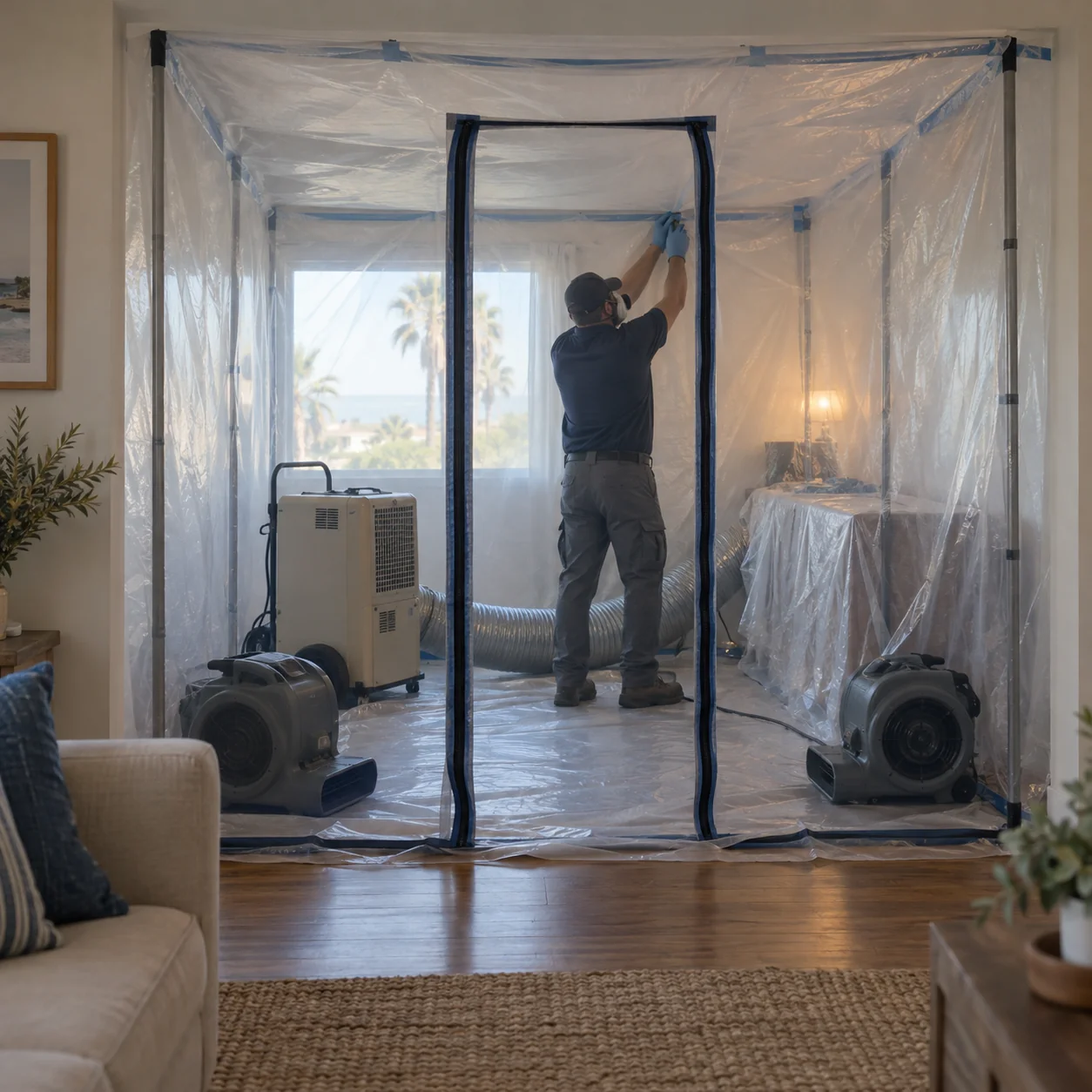
Mold remediation cost depends on how much material has to be removed and whether containment is needed; small, contained jobs cost far less than whole-room work. Many homeowners policies cover mold only when it results from a covered sudden water loss, and often cap mold at a sub-limit. Check the mold section of your policy before work starts. See also the water damage cost page.
The EPA advises drying water-damaged materials within 24 to 48 hours to prevent mold growth. Materials that stay wet longer are at high risk.
Mold can cause allergic reactions and asthma symptoms in sensitive people, according to the EPA. People with respiratory conditions should stay out of affected areas.
Visible mold usually does not need testing to be removed. Testing helps when mold is suspected but not visible, or to confirm clearance after the work.
California does not license mold assessors or remediators, per the California Department of Public Health. Ask for IICRC training (AMRT) and a CSLB license if walls or floors will be rebuilt.
An independent referral line. The call is connected to an independent contractor, who is responsible for the inspection, estimate and work. See How it works.
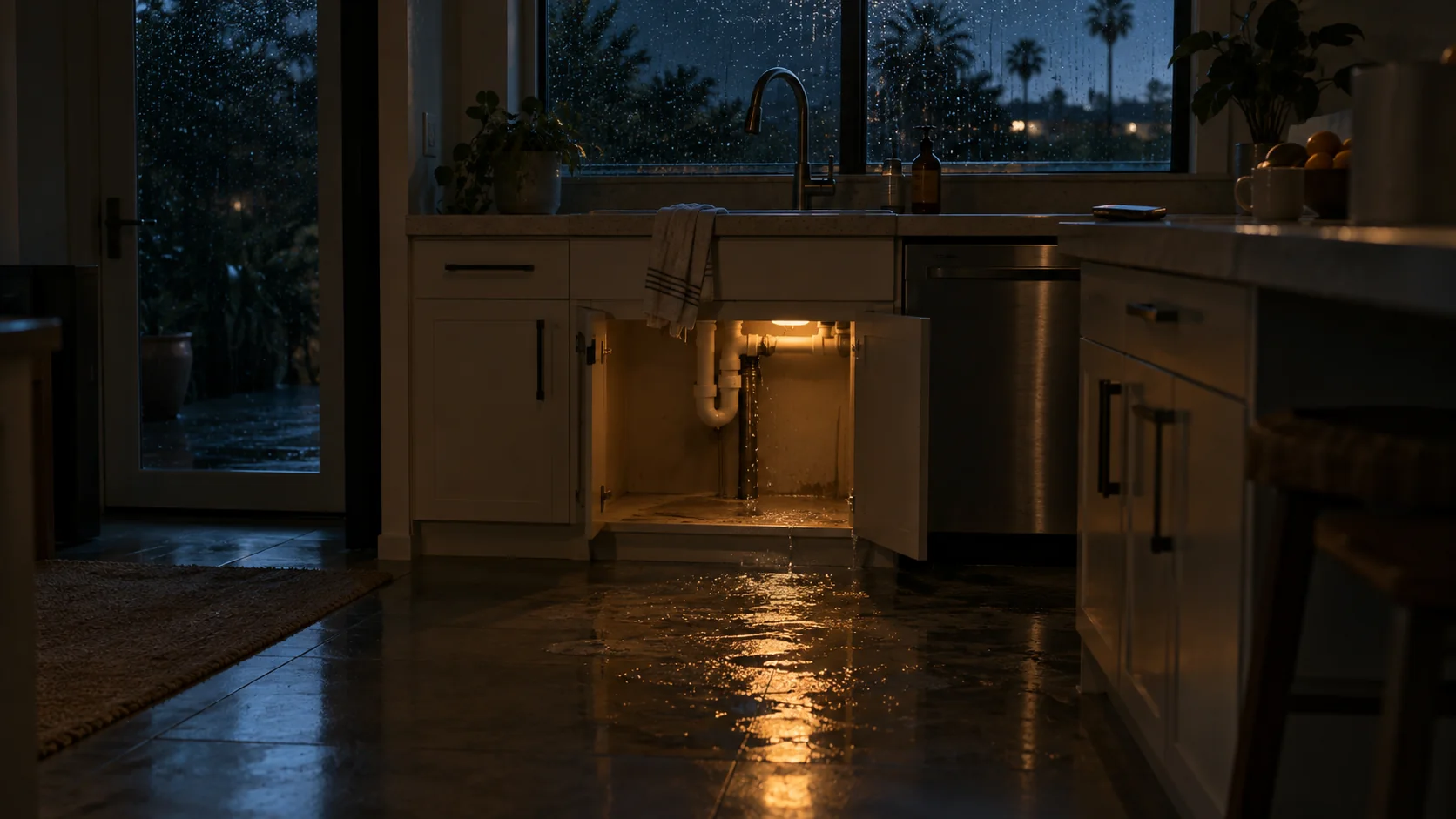
One call reaches an independent water damage restoration contractor who handles mold in your area. The contractor handles the inspection, the estimate and the work.
Independent line. No charge to you. Calls may be recorded.