
Stains and discoloration
On drywall, ceilings and around baseboards, especially spots that grow or darken over a few days.
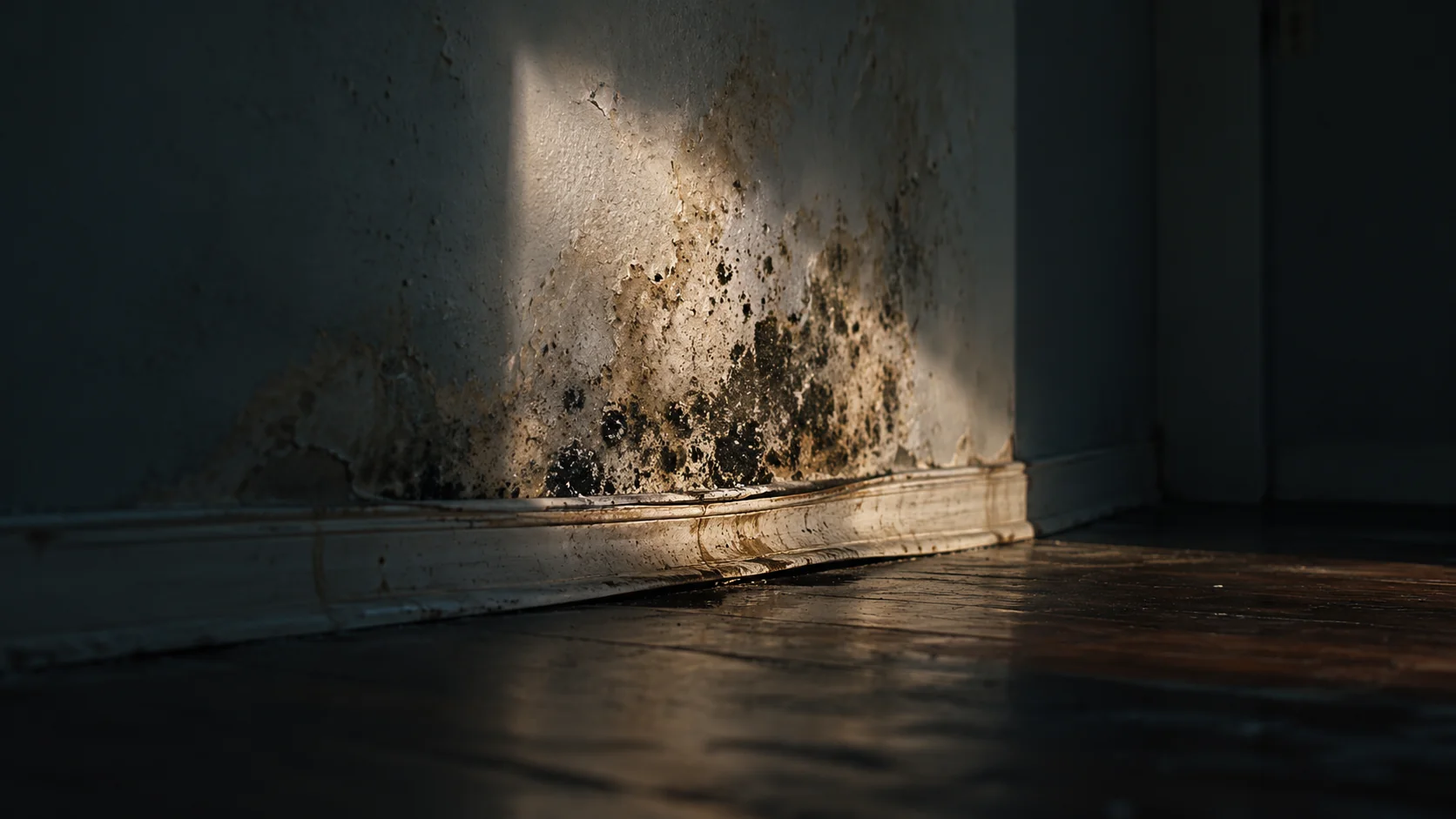
A leak is fixed, the floor is drying, and now you are wondering what is happening inside the wall.
This guide covers how quickly mold can follow water damage, how to keep it from starting, and how to check whether it already has. It is part of the water damage guides for Huntington Beach homeowners.
IndependentNot owned by a contractor.
Check any licenseVerify at cslb.ca.gov.
Answered daily7 a.m. to 11 p.m. Pacific
Huntington Beach areaPlus 20 nearby cities
In short
Mold after water damage is prevented by drying wet materials within 24 to 48 hours. The EPA says that if damp areas are dried in that window, in most cases mold will not grow. After that, absorbent materials such as drywall and carpet pad may need removal rather than drying.
This guide is general information, not legal, insurance or medical advice.
Water damage causes mold whenever wet material stays wet long enough for spores that are already present to grow. The California Department of Public Health puts it simply: mold needs food and moisture, organic matter is almost always available in a building, so whether mold grows depends mostly on whether there is moisture. Drywall paper, wood framing, carpet backing and the dust on any surface are all food.
That is why the water source matters less than the drying. A clean supply-line burst and a slow roof drip can both end in mold if the wet material is left alone. What changes is the cleanup: the EPA's mold cleanup page says that if the water or mold damage was caused by sewage or other contaminated water, you should call in a professional. The sewer backup guide covers that case.
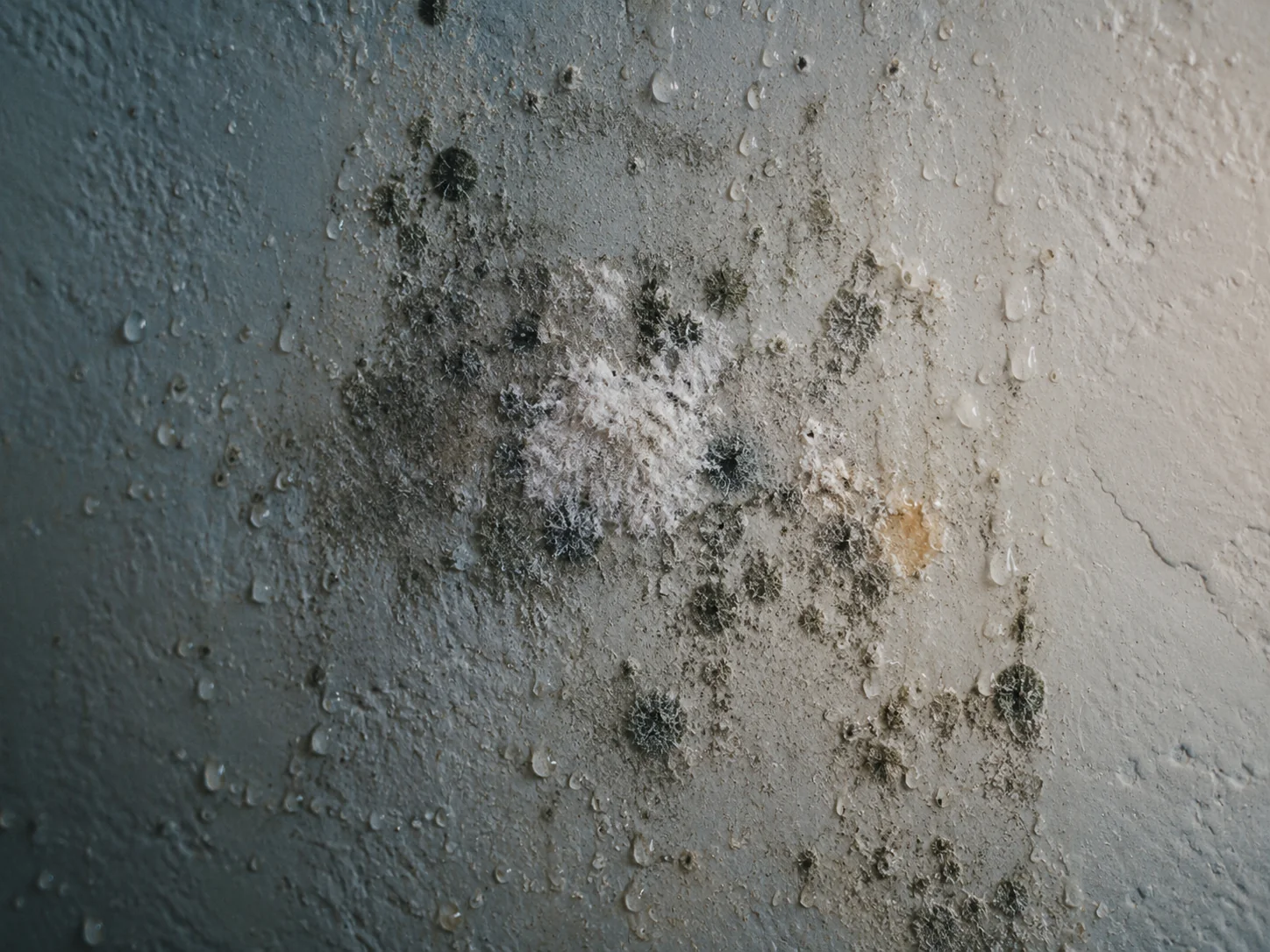
Mold can begin to grow within one to two days of a leak if materials stay wet. The EPA's brief guide to mold and moisture states that if wet or damp materials or areas are dried 24 to 48 hours after a leak or spill happens, in most cases mold will not grow.
The clock starts when the material got wet, not when you found the leak. A supply line that dripped inside a wall for a week has already used up the window before anyone notices. That is one reason restoration contractors open walls and pull baseboards early instead of waiting to see whether a stain appears. The restoration process guide explains what happens in those first days.
Two things slow drying and push a home past the window:
You prevent mold by removing the water, opening up wet spaces and drying everything to normal moisture levels within about two days. The steps below follow the EPA's guidance.
| Step | What to do | Why it matters |
|---|---|---|
| 1. Stop the source | Shut the supply valve or the main, or stop the roof leak with a tarp | Nothing dries while water keeps coming in |
| 2. Remove standing water | Mop, wet vacuum or extract; pull up wet rugs | Standing water keeps materials saturated |
| 3. Move wet contents out | Lift furniture, box up wet papers and fabrics, take out wet rugs | Stops moisture transferring to floors and walls |
| 4. Open closed spaces | Remove baseboards, open cabinet toe kicks, lift carpet off the pad | Trapped water inside cavities is what grows mold |
| 5. Dry with air movement and dehumidification | Fans across surfaces plus a dehumidifier in the room | Moves moisture out of materials and out of the air |
| 6. Check with a meter | Test drywall, subfloor and framing, not just the surface | Materials can feel dry while still wet inside |
| 7. Keep humidity down | Aim for indoor humidity below 60 percent, ideally 30 to 50 percent | The EPA’s range for keeping mold from returning |
The humidity figure comes from the EPA guide, which says to keep indoor humidity below 60 percent, ideally between 30 and 50 percent relative humidity.
Some materials should not be dried at all. The what can be saved guide lists what is normally dried in place and what is normally removed. As a rule, wet carpet pad, wet insulation and drywall that has been saturated for more than two days are removed. Drying them slowly inside a closed wall is how hidden mold starts.
One more EPA rule: do not paint or caulk moldy surfaces. Clean up the mold and dry the surface before painting. Paint over a damp stain traps the moisture and hides the problem.
You check by looking and smelling, not by testing. The CDPH says that if you know you have a dampness or mold problem because you can see it or smell it, you do not need to measure the amount or identify the type of mold, and that testing does not give you any more useful information. The CDC says the same: it does not recommend mold testing, because health effects differ from person to person and there are no set standards for what is an acceptable amount of mold in a home.
What to look for after a leak:
On drywall, ceilings and around baseboards, especially spots that grow or darken over a few days.
In a room, closet or cabinet. The CDPH calls mold odor one of the strongest indicators of a dampness problem and says not to ignore it.
To the touch. Drywall paper lifts and wallpaper bubbles when the material behind it is wet.
The EPA lists the back side of drywall, wallpaper or paneling, the upper side of ceiling tiles and the underside of carpets and pads as places mold hides.
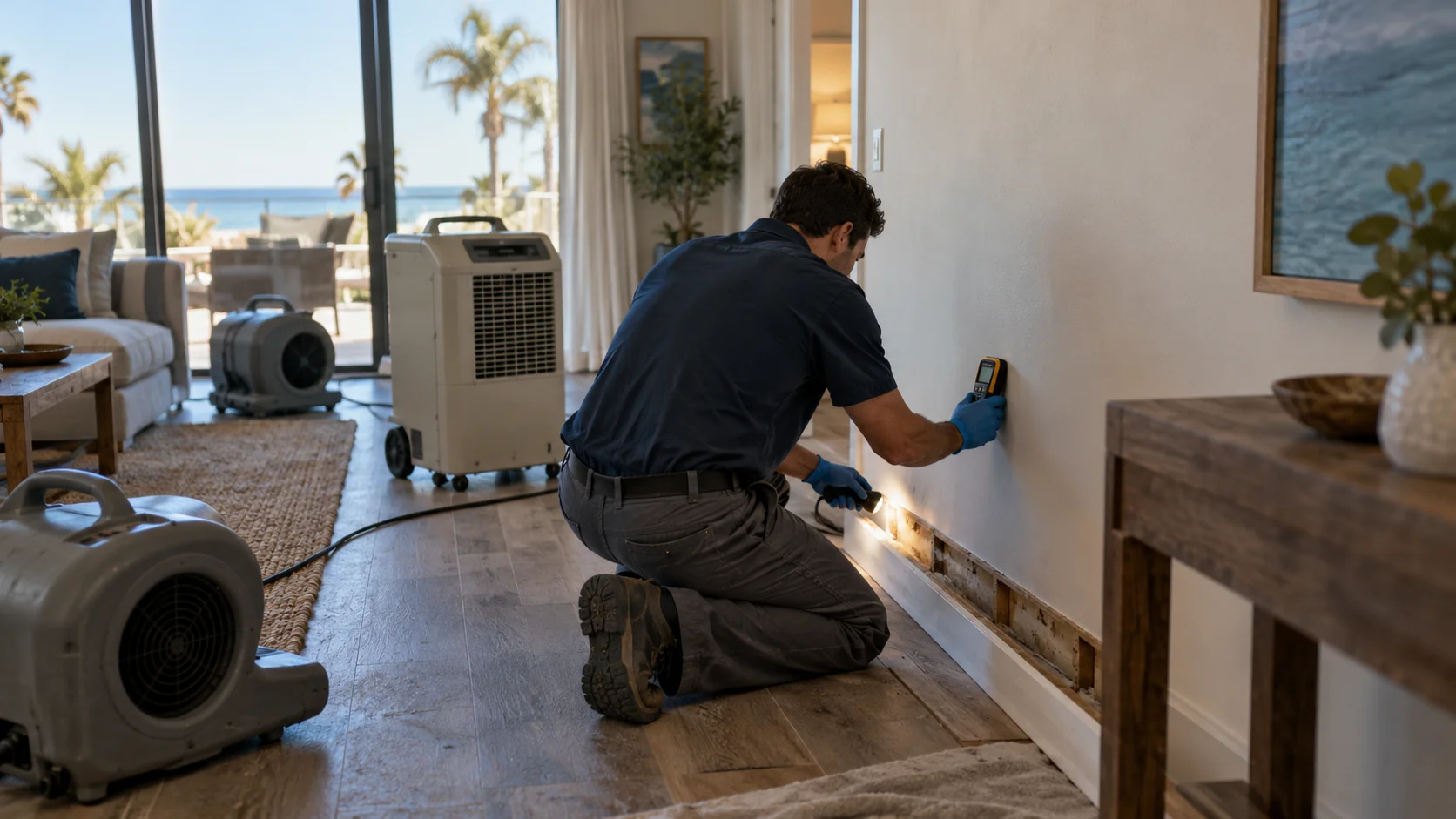
If you can smell mold but cannot find it, the CDPH suggests a general contractor experienced with water damage assessment to find the source, and warns that a thorough investigation may require some damage to building materials to reach hidden spaces. That is normal. A moisture meter and a small inspection hole find in minutes what a visual check cannot.
Testing has one narrow use. The CDPH notes that in some cases mold testing may identify hidden moisture that is not obvious. It does not tell you whether the mold is a health problem, and the CDPH says there are no recommended unhealthy levels for spore counts or for particular kinds of mold.
Mold from water damage can affect health, and the effect depends on the person and on how much mold there is. The CDC says exposure to damp and moldy environments may cause a variety of health effects, or none at all. For some people it causes a stuffy nose, sore throat, coughing or wheezing, burning eyes or a skin rash. People with asthma or who are allergic to mold may have severe reactions, and immune-compromised people and people with chronic lung disease may get infections in their lungs from mold.
The CDPH links the presence of visible mold, visible moisture, water-damaged materials or mold odor in a building to increased risk of respiratory effects, including asthma development, asthma exacerbation, allergies and respiratory infections, and says the more extensive the dampness and mold, the greater the risk.
Color does not change that advice. Asked whether you need to know if the mold in your building is "toxic mold" or "black mold", the CDPH answers no: any mold you can see or smell is a risk and should be fixed, and there is currently no evidence that the particular kind of mold in your building matters.
Nothing on this page can tell you whether the mold in your home is affecting you. The CDPH and the EPA both say to speak to your doctor if you have concerns, and the EPA adds that if you have health concerns you should consult a health professional before starting cleanup.
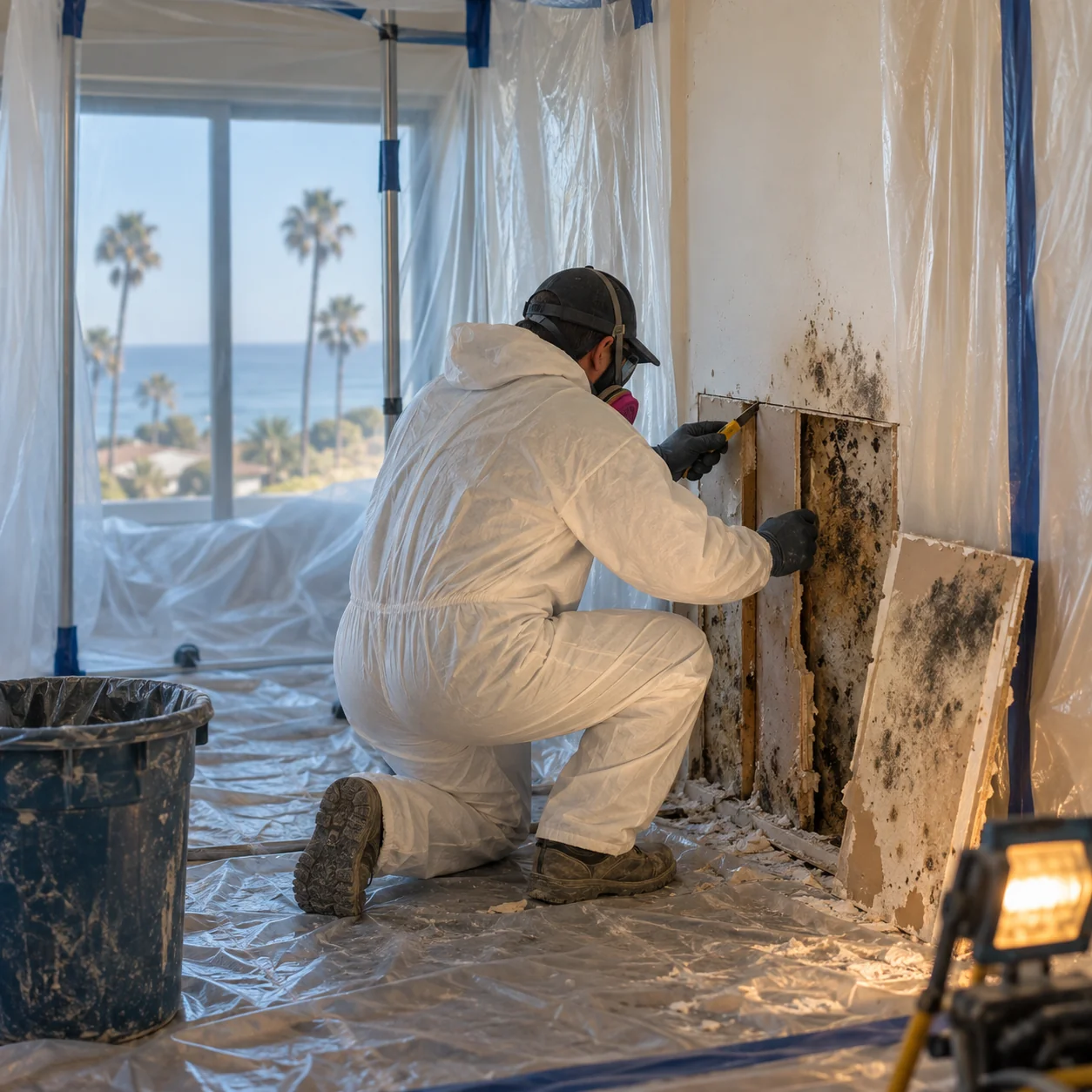
Small patches can be cleaned by the occupant; large or contaminated areas need a contractor. The EPA's line is about 10 square feet: if the moldy area is less than about 10 square feet, roughly a 3 foot by 3 foot patch, in most cases you can handle the job yourself. Above that, or where there has been a lot of water damage, the EPA points you to its professional remediation guidance.
California does not license mold remediators. The CDPH says there are no California regulations for licensing mold remediators, that some licensed contractors have expertise with mold and moisture, and that the Contractors State License Board lists currently licensed contractors. Any work that removes drywall or rebuilds still needs a licensed contractor. The industry standard for the work is the IICRC S520.
The CDPH also describes what a finished job looks like: the source of moisture is fixed, all damaged materials have been cleaned or removed, and all remaining materials are dry with no visible mold and no mold odor. It adds that no mold test or measurement can show when remediation has succeeded. Ask for those four things in writing rather than a clearance test.
If the leak was covered by insurance, mold coverage is often limited to a small sublimit. The insurance guide explains how that works.
Much of Huntington Beach's housing dates from the 1960s and 1970s; the city's median year built is 1974. Groundwater sits close to the surface in much of the city. The 2023 Water Master Plan says high groundwater weakens the city's asbestos cement water mains and that pipe replacement starts in the highest-groundwater areas, and the city's General Plan technical report ties the liquefaction zone south of Adams Avenue to saturated soil and shallow groundwater. For a homeowner, that means a wet slab in these areas can give up moisture slowly, so flooring and the bottom of walls should be checked with a meter, not by touch, before anything is closed back up.
Call when wet material is inside a wall, under a floor or across more than one room, when the water was sewage, when the moldy area is larger than about 10 square feet, or when you can smell mold and cannot find it. HB Water Damage is an independent referral service: it is contractor-neutral and connects callers with independent restoration contractors who handle drying and mold remediation in Huntington Beach.
Water in your home right now? Call and get connected to an independent restoration contractor who covers your street.
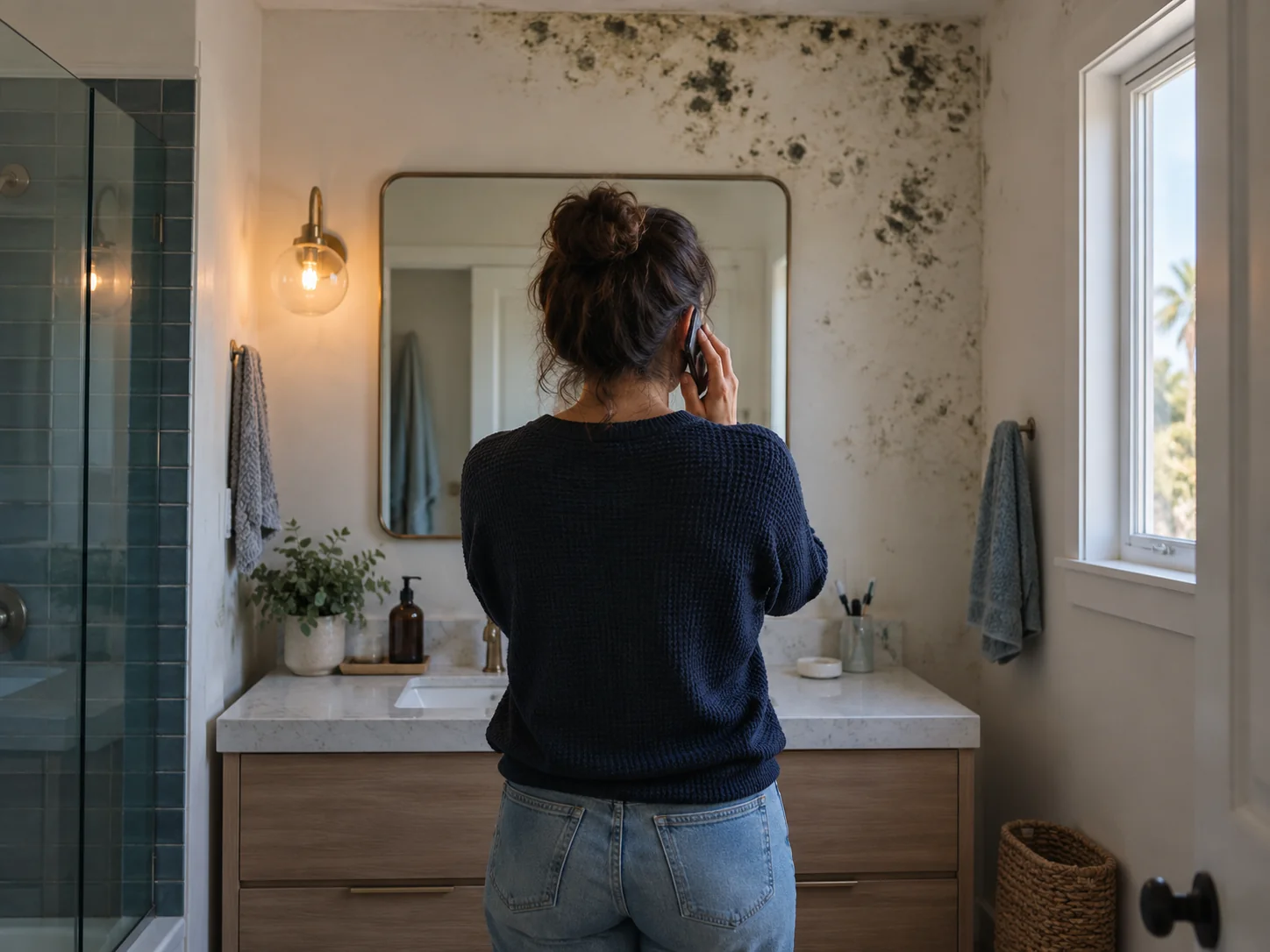
The EPA says that if wet materials are dried within 24 to 48 hours, in most cases mold will not grow. After that window, growth on wet drywall, carpet pad and wood becomes likely.
Drywall that got wet briefly and dried within about two days can often stay. Drywall that stayed saturated, swelled or shows mold on the back is usually removed, because the paper face and the cavity behind it hold moisture.
The CDC does not recommend mold testing, and the CDPH says testing adds no useful information if you can see or smell the problem. Fix the moisture and remove the mold instead.
The CDPH says there is no evidence that the particular kind of mold matters: any mold you can see or smell is a risk and should be fixed. Talk to your doctor about symptoms.
A dehumidifier lowers room humidity but does not dry water trapped under flooring or inside walls. Those spaces need to be opened and dried with air movement, then checked with a meter.
Many policies exclude mold but give back a limited amount when the mold follows a covered sudden leak. Check the mold section of your policy for a dollar limit.
One call reaches an independent restoration contractor who covers your area. The contractor handles the inspection, the estimate and the work.
Independent line. No charge to you. Calls may be recorded.