Opens in a new tab
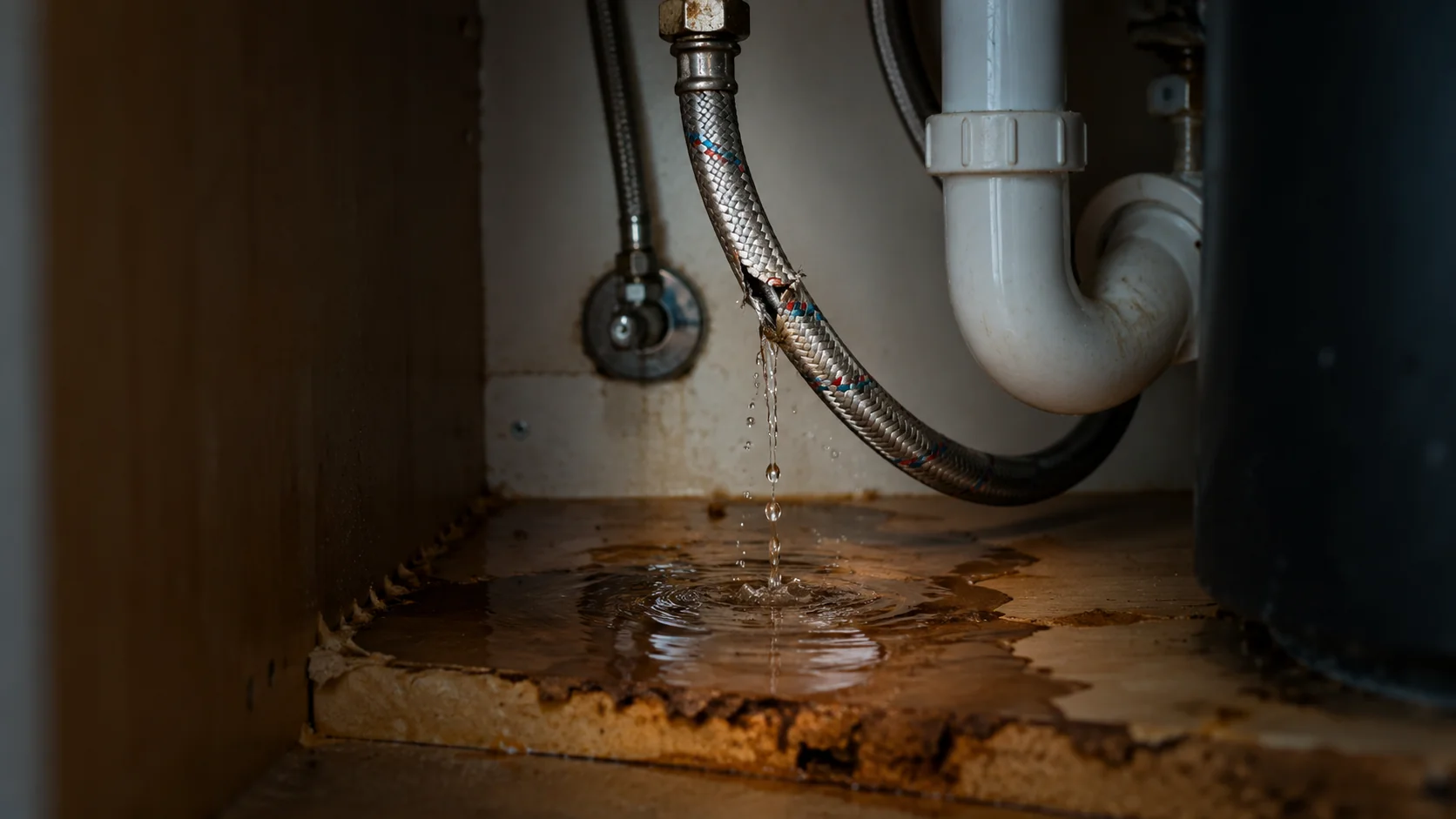
Cracked braided supply hose leaking under a kitchen sink and swelling the cabinet floor

The Most Common Causes of Water Damage in Homes

Most water damage in a house starts small: a hose, a valve, a seal or a pipe that has been failing for weeks before the floor gets wet.

This guide is the starting point for the cluster on where leaks begin in the Huntington Beach water damage guides. It covers the sources behind most claims, how to catch each one early, and which ones mean shutting off the water right now.

IndependentNot owned by a contractor.

Check any licenseVerify at cslb.ca.gov.

Answered daily7 a.m. to 11 p.m. Pacific

Huntington Beach areaPlus 20 nearby cities

In short

Household water damage most often comes from supply lines, water heaters, washer and dishwasher hoses, toilets, leaks under sinks, slab leaks under the foundation, and roof leaks in rain. Most start as slow drips. A burst line or a failed tank can flood a room in minutes.

What causes most household water damage?

Most household water damage comes from the pressurized supply plumbing and the appliances attached to it, not from storms. A supply line carries water under pressure every hour of the day, so any weak point, whether a corroded pipe, a rubber hose or a worn valve, keeps pushing water out until someone closes it. Rain and floodwater matter on the coast, and other guides in this series cover them, but on an ordinary week the leak is inside the house.

Small leaks are also more common than most people expect. EPA WaterSense says the average household's leaks waste more than 9,300 gallons of water a year, and that about nine percent of homes have leaks wasting 50 gallons or more a day. Those figures describe wasted water, not damage, but the same drips are where damage begins: a toilet flapper, a weeping valve or a slow fitting under a sink.

The table below lists the sources in the order a restoration contractor is most likely to find them, with the sign that usually shows first.

Cause Where it starts First sign Guide
Burst or split supply pipe Copper or galvanized lines in walls, ceilings and the garage Sudden loss of pressure, the sound of running water, a wet floor What to do when a pipe bursts
Water heater A corroded tank, the drain valve, the relief valve or the fittings above the tank A puddle under the tank, rust at the base, water in the drain pan Why is my water heater leaking?
Toilet A clog, a backup from the drain line, a worn supply line or a failed wax ring Water around the base, a bowl that rises after a flush Toilet overflowing? What to do
Washing machine Rubber supply hoses, the drain hose, the pump seal Water in front of or behind the machine, damp drywall behind it See below
Dishwasher and refrigerator Door seal, drain line, ice maker line A warped floor at the kickplate, a damp cabinet floor See below
Under the sink The trap, the supply valves, the disposal A soft or stained cabinet floor, a musty smell See below
Slab leak A hot or cold line under the concrete foundation A warm floor spot, a meter that runs with everything off What is a slab leak?
Roof, windows and flashing Cracked tile, failed flashing, blocked gutters A ceiling stain after rain See below
Sewer backup A blocked private lateral or city main Water rising in the tub or the lowest drain Sewer backup

Which appliances leak most often?

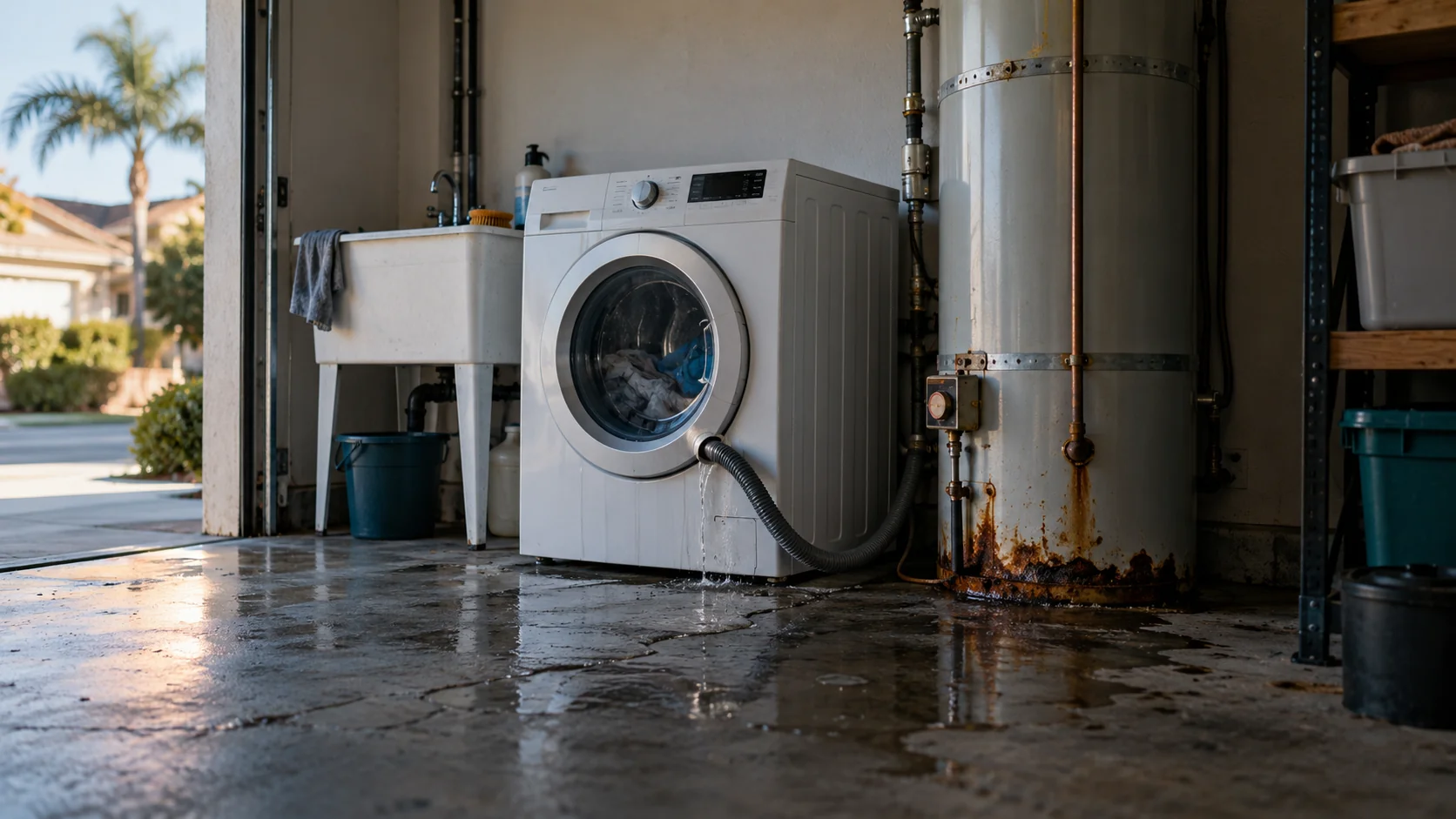
Garage laundry corner with a bulging washing machine hose and a rusty water heater over a wet floor
Laundry room with a washer, dryer and wall-mounted water heater

Water heaters, washing machines and refrigerator ice makers cause more appliance water damage than anything else in the house, because each one sits on a pressurized line day and night. A dishwasher is close behind. What they share is a rubber or plastic part that ages faster than the pipe it connects to.

Water heaters

A tank water heater rusts from the inside. Once the steel is gone, the leak starts at the base and cannot be repaired; the tank has to be replaced. Before that point, the drain valve near the bottom, the temperature and pressure relief valve on the side, and the fittings above the tank can all drip. A tank in a garage or a hall closet often leaks for days before anyone notices. The water heater guide covers each leak point and how to shut the unit off.

Washing machines

The two rubber supply hoses behind the washer are under full pressure whether the machine is running or not. When one splits, the water runs until you find it. A cracked drain hose or a worn door seal on a front loader leaks only during a cycle, which makes it easier to catch.

Dishwashers

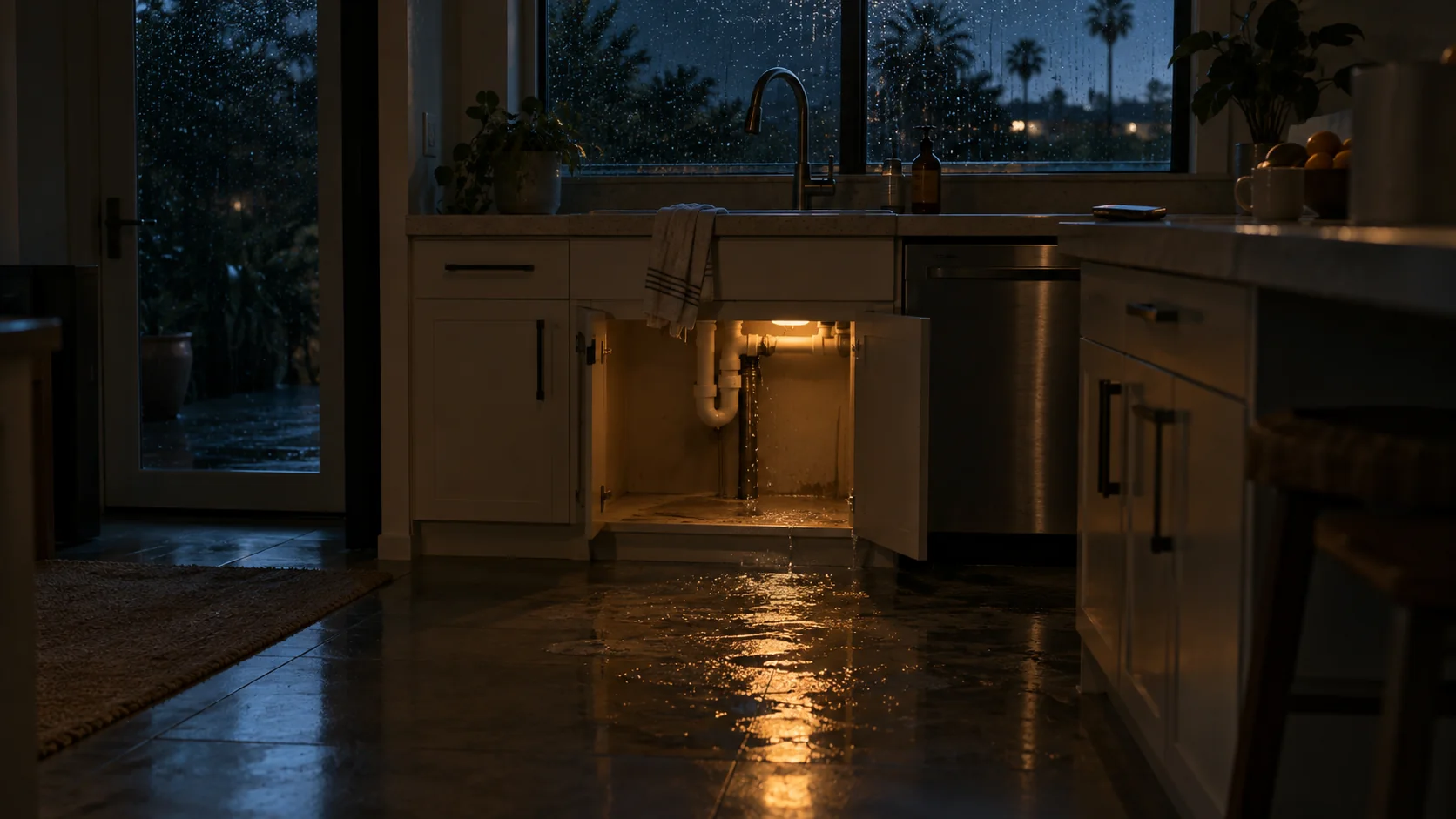
A worn door gasket leaks onto the floor in front of the machine. A failed drain line or a loose fitting under the sink leaks into the cabinet or under the flooring, where it can go unseen for months.

Refrigerators

The thin plastic or copper line feeding the ice maker runs behind the fridge and along the wall. A pinhole in it soaks the floor behind the appliance and the drywall behind that.

A five-minute appliance check, twice a year:

  1. Pull the washer forward and look at both hoses for bulges, cracks or rust at the fittings. Look at the floor behind it.
  2. Look under the water heater for water, rust stains or a wet drain pan. Feel the fittings above the tank.
  3. Open the cabinet under the kitchen sink and press on the cabinet floor. Soft board means it has been wet.
  4. Slide the refrigerator out and check the floor and the ice maker line.
  5. Look at the dishwasher kickplate for warped or lifted flooring.

How do you spot each leak early?

The earliest signs of a leak are a water bill that climbs, a meter that moves when nothing is running, and stains or soft spots near plumbing. Most leaks are quiet for weeks. The point of a monthly check is to find them while they are still a plumber's job rather than a restoration job.

Read the meter

EPA WaterSense gives a simple test: read the water meter, use no water for two hours, then read it again. If the number changed at all, you probably have a leak. In a slab-on-grade house that is also the first test for a slab leak.

Test the toilets

Put a few drops of food coloring in the toilet tank. If color shows up in the bowl after 10 minutes, the flapper is leaking. That is a wasted-water problem more than a damage problem, but a toilet that runs is also one whose parts are worn.

Look and smell

A yellow or brown ring on a ceiling, paint that bubbles, a baseboard that pulls away, a floor that feels soft or warm, or a musty smell in a closet all point to water behind the surface. The EPA notes that mold can grow hidden on the back side of drywall, under wallpaper or paneling, and on the underside of carpets and pads, so a smell with no visible stain still deserves a look.

Listen

Water hissing inside a wall with every fixture off is a pressurized leak, and it is not going to stop on its own.

A monthly walk covers the whole list:

  1. Read the meter with the water off.
  2. Look under every sink and behind every toilet.
  3. Check the water heater base and the washer hoses.
  4. Walk the ceilings after a heavy rain.
  5. Look at the exterior walls and the slab edge for damp patches.

Which leaks are emergencies?

A leak is an emergency when water is still flowing, when it is near electricity, or when it is sewage. Everything else is urgent but gives you time to make a phone call before you touch anything.

Situation What to do first How urgent
Water running from a burst pipe, hose or tank Close the main shutoff, then the fixture valve Emergency: every minute adds water
Water pooling near outlets, the panel or appliances Turn off power at the main breaker before you step in Emergency: shock risk
Water coming up a tub, shower or floor drain Stop using every drain and toilet; do not touch the water Emergency: sewage
Ceiling sagging or dripping Move things out, put a bucket down, and poke a small hole to relieve the weight if it bulges Urgent: it can collapse
Slow drip under a sink or at a valve Close the fixture valve, dry the area This week
Stain on a ceiling after rain, now dry Photograph it and find the roof entry point before the next storm This month

For the electrical rule, OSHA puts it plainly: if water has been present anywhere near electrical circuits and equipment, turn off the power at the main breaker, and never enter a flooded area or touch electrical equipment if the ground is wet. If the panel itself is wet, or you would have to stand in water to reach it, leave it and call the utility or an electrician.

Sewage is its own category. Water that rises from a drain has been past the trap, and it carries whatever the sewer carries. The sewer backup guide covers what to do. The short version is that you do not clean it up yourself.

The clock matters even for clean water. The EPA says to dry water-damaged areas and items within 24 to 48 hours to prevent mold growth. A leak found on Friday and dried on Monday has already missed that window.

What this means in Huntington Beach

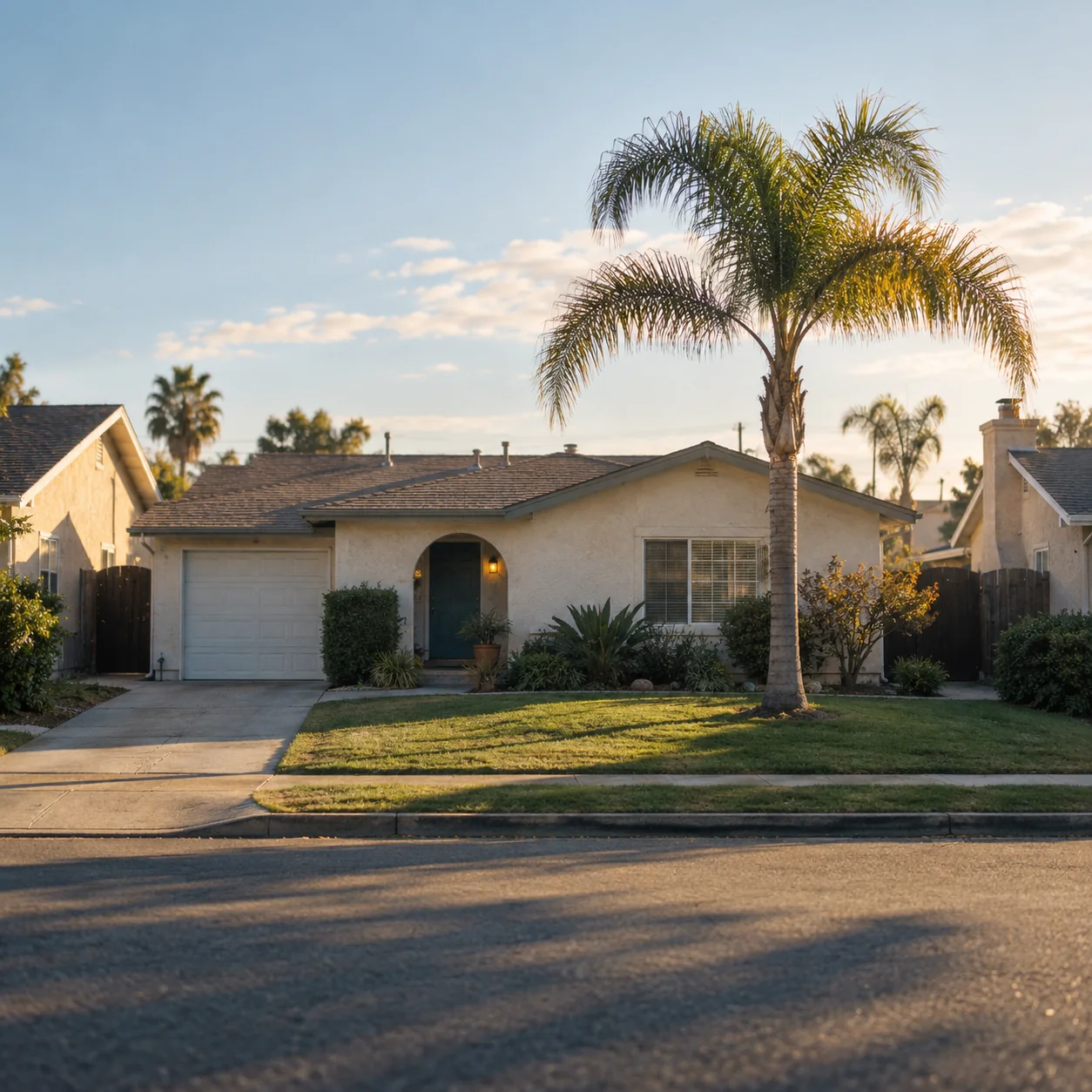
Huntington Beach is a city of mid-century tract homes, and the plumbing inside them is the same age. American Community Survey estimates put the median year built for the city's roughly 82,600 housing units at 1974; in the 92646 zip code, about 78 percent of homes were built between 1960 and 1979. Water heaters, supply lines and angle stops in those houses have usually been replaced piecemeal, so one original fitting can sit next to a new one.

The city side is aging too. The City's 2023 Water Master Plan reports about 610 miles of water pipe, 76 percent of it asbestos cement and most of that 45 to 55 years old, and it plans to replace about 10 miles a year for 20 years, starting where groundwater is highest. For a break in the street, the City's Utilities Division takes calls at (714) 536-5921 during business hours; after hours, main breaks go to the Police Department at (714) 960-8825. For sewer laterals, the City's Sewer Lateral Program says the City is responsible for the section from the sewer main to the private property line, and the owner for the section on private property.

Storms add a third source. The City's flood information page lists the Santa Ana River, the East Garden Grove-Wintersburg, Talbert and Huntington Beach channels and the Pacific Ocean as flood sources, and records that the storm of February 6 and 7, 1998 closed streets and put 2 to 3 feet of water in a mobile home park. Roof and window leaks are the everyday version of that risk.

Older one-story Huntington Beach slab home with a stucco front, small lawn and palm tree

When to call a contractor

Call a plumber when the leak is small and you can see it. Call a restoration contractor when water has reached materials it can soak into: drywall, insulation, carpet pad, cabinet bases, subfloor or a ceiling. Those need moisture readings and drying equipment, and the decision on what to remove is easier to make on the first day than the third. HB Water Damage is an independent referral service: a call connects you with an independent restoration contractor who handles burst pipe and slab leak water damage in Huntington Beach. The site does not do the work or set prices, and the contractor's license can be checked with the state before work starts.

Water in your home right now? Call and get connected to an independent restoration contractor who covers your street.

Call
(888) 217-4707

Questions homeowners ask about the causes of water damage

What is the single most common cause of water damage in a house?

Failed plumbing supply parts: pipes, fittings, valves and appliance hoses. They carry pressurized water all day, so a small failure keeps flowing until someone closes a valve.

Can a small leak cause serious damage?

A small leak can rot a cabinet floor, swell a subfloor and grow mold inside a wall. The EPA advises drying wet materials within 24 to 48 hours, and a hidden drip never gets dried at all.

How do I know if the leak is under the slab?

Read the water meter with every fixture off. If it moves and you can find no leak above the floor, a warm spot on the floor or a damp slab edge points below. A plumber can pressure-test the lines to confirm it.

Does homeowners insurance cover these leaks?

Sudden and accidental discharge, such as a burst line, is usually covered; gradual leaks and seepage usually are not. The insurance guide explains the difference and what to document.

Should I turn off the water when I leave for a trip?

Closing the main shutoff before a trip removes the pressure that drives most leaks. Turn the water heater down or off first, and open a tap to release the pressure in the lines.

Water spreading across a kitchen floor from under the sink at night with a phone on the counter
7 a.m. to 11 p.m. Pacific

Water in your home? Talk to someone now.

One call reaches an independent restoration contractor who covers your area. The contractor handles the inspection, the estimate and the work.

Call
(888) 217-4707

Independent line. No charge to you. Calls may be recorded.