
Dollar or percentage
Most homeowners deductibles are a flat dollar amount. Some are a percentage of the home's insured value, which can be far larger. The Institute notes most insurers offer a minimum $500 or $1,000 deductible.
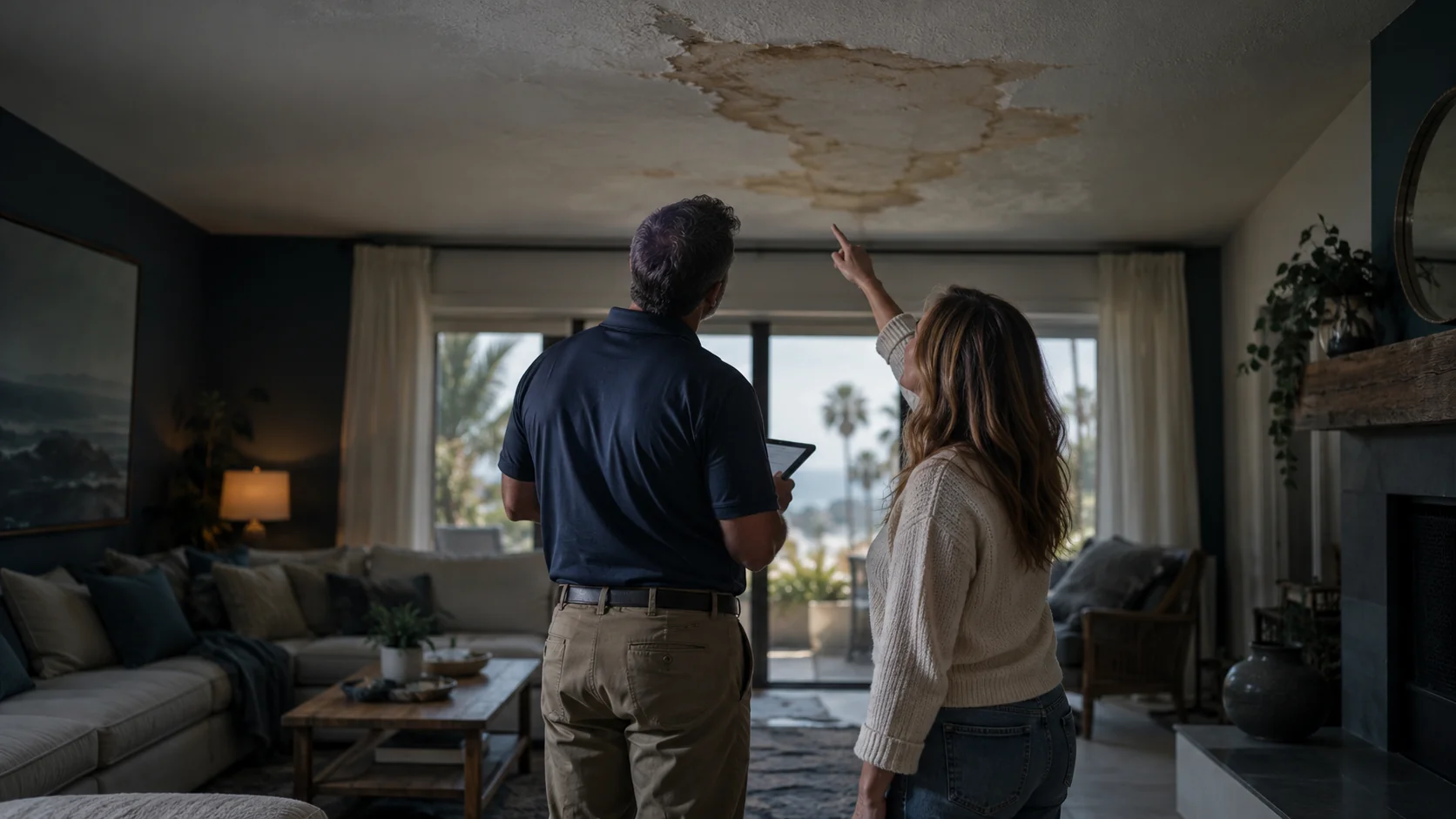
You have water on the floor and a policy you have never read closely.
This guide explains what a standard California homeowners policy usually pays for after water damage, what it leaves out, and what the state's claim rules require from your insurer. It is one of the water damage guides for Huntington Beach homeowners.
IndependentNot owned by a contractor.
Check any licenseVerify at cslb.ca.gov.
Answered daily7 a.m. to 11 p.m. Pacific
Huntington Beach areaPlus 20 nearby cities
In short
Homeowners insurance covers water damage that is sudden and accidental, such as a burst supply line, and usually excludes damage from gradual leaks, seepage, flood, wear and tear, and, in most policies, mold. Sewer backup needs its own endorsement. The exact answer is in your policy's covered perils and exclusions.
This guide is general information, not legal, insurance or medical advice.
A standard policy covers water damage that happens suddenly and by accident, such as a pipe that bursts or a washing machine hose that splits. The California Department of Insurance residential insurance guide lists sudden and accidental water damage among the perils a typical homeowners policy covers.
"Sudden and accidental" is the phrase that decides most water claims. It means the water escaped at one moment, from a source you did not expect to fail, and you found it within a reasonable time. Examples that usually fit:
Two details matter. First, the policy usually pays for the damage the water caused, such as wet drywall, flooring and cabinets, but not always for the part that failed. A burst pipe is often your cost to repair; the ruined floor around it may be covered. Second, the policy also expects you to stop the loss from getting worse, which is why insurers want drying to start quickly. The guide on water mitigation versus restoration explains what that first phase involves.
If the leak came from under the slab, the same test applies. The slab leak guide covers how insurers treat the pipe repair versus the water damage.
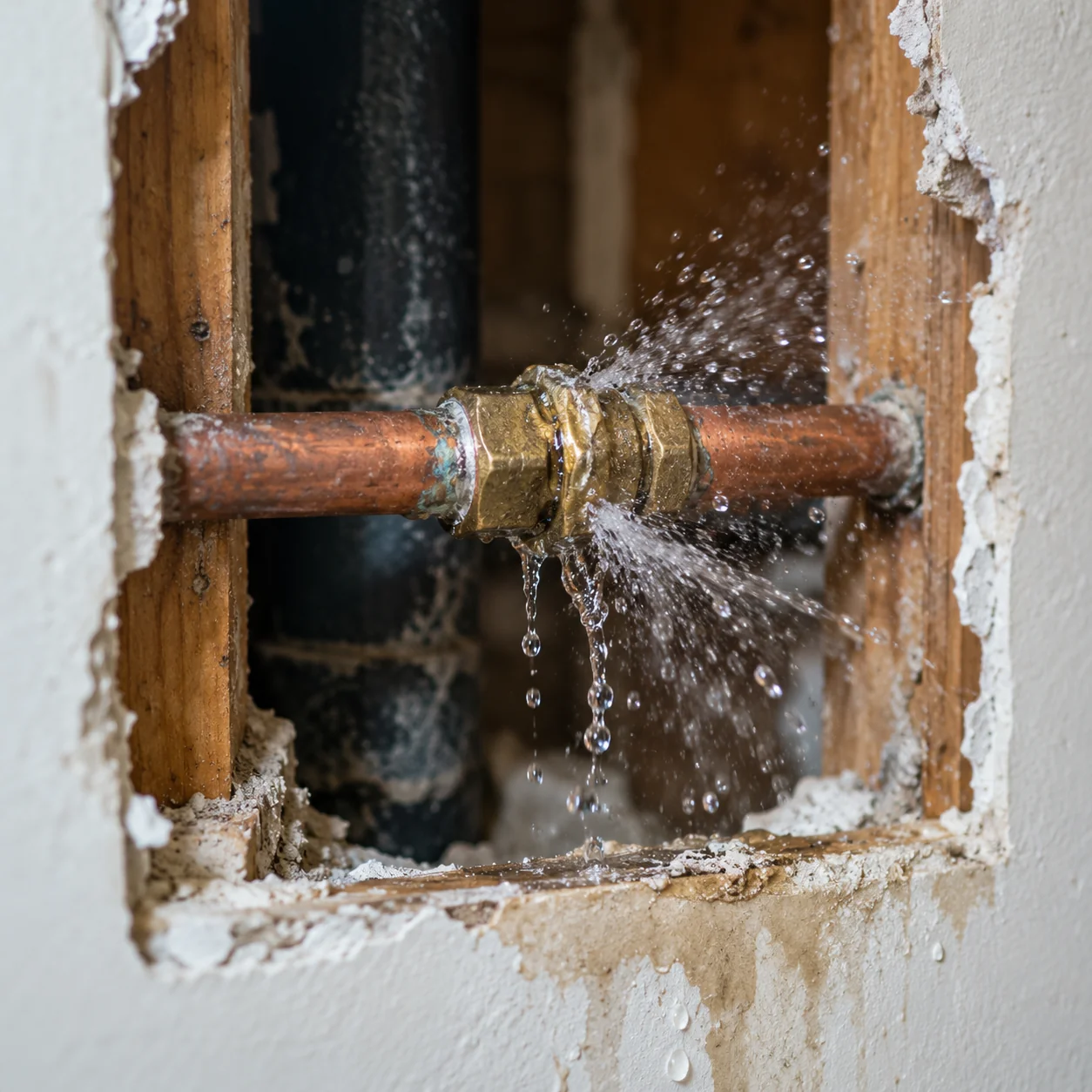
The same Department of Insurance guide lists flood, water damage from seepage or leaks, mold, and wear and tear or maintenance among the perils that are usually excluded. The table below sorts the common situations.
| Situation | Usually covered? | Why |
|---|---|---|
| Supply pipe bursts and floods a room | Usually covered | Sudden and accidental discharge |
| Water heater tank ruptures | Usually covered for the water damage | Sudden discharge; the heater itself often is not |
| Appliance hose splits during a cycle | Usually covered | Sudden and accidental |
| Storm tears the roof open and rain enters | Usually covered | Sudden storm damage |
| Slow drip under a sink for months | Usually not covered | Gradual leak or seepage |
| Old roof that has leaked for years | Usually not covered | Wear and tear, maintenance |
| Rising water from the street, a channel or the ocean | Not covered | Flood is excluded; needs a separate flood policy |
| Groundwater seeping through the slab | Not covered | Seepage and groundwater exclusions |
| Sewage backing up a drain | Not covered without an endorsement | Sewer and drain backup is a separate add-on |
| Mold growing after a covered leak | Sometimes, up to a small limit | Depends on the policy’s mold wording |
The line between sudden and gradual is where most disputes happen. The consumer guide at PolicyholderAid puts it plainly: the defining dispute on any contested water claim is which side of the sudden versus gradual line the loss falls on. A pipe can fail in one instant and still produce a gradual loss if it dripped for months before you noticed. In Brown v. Mid-Century Insurance Co. (2013) 215 Cal.App.4th 841, a California appeals court held that a corroded pipe that leaked over a long period was not a sudden discharge as a matter of law, even though the pipe went from sound to leaking at one moment.
That is why evidence of timing matters. A plumber's written finding, photos with dates, and moisture readings from a restoration contractor help show the loss was sudden.
Sewer backup deserves its own line. Water rising from a drain is excluded by most standard policies unless you bought a sewer or drain backup endorsement. If you have a backup right now, the sewer backup guide covers what to do first.
Mold is usually excluded, but many policies give back a limited amount when the mold follows a covered water loss. The Department of Insurance guide lists mold among the perils typically excluded. PolicyholderAid notes that mold following a covered water event is often covered subject to a sublimit, commonly $5,000 to $15,000, and that a gradual water loss does not trigger that mold coverage.
Three practical points follow from that:
Dry fast. The mold limit is small, so the mold claim you never have to make is the one that costs least. The mold after water damage guide explains the 24 to 48 hour window.
Nothing here promises that mold will be paid. Coverage depends on your policy's exact words and on whether the underlying leak was covered.
The deductible is the amount subtracted from what the insurer pays you on a covered claim. The Insurance Information Institute gives the example: with a $500 deductible and a $10,000 insured loss, you receive a claim check for $9,500.
Points to check on your declarations page:
Most homeowners deductibles are a flat dollar amount. Some are a percentage of the home's insured value, which can be far larger. The Institute notes most insurers offer a minimum $500 or $1,000 deductible.
If the loss is smaller than the deductible, there is nothing to collect.
A higher deductible lowers the premium, so many owners carry $1,000 or more.
For the cost side of the decision, the water damage restoration cost page explains what mitigation and rebuild typically involve, so you can compare the likely repair against your deductible before you file.
California's Fair Claims Settlement Practices Regulations set calendar-day deadlines for insurers once you report a loss. The figures below are from the regulations themselves.
| Insurer’s duty | Deadline | Rule |
|---|---|---|
| Acknowledge your claim, send forms and start investigating | Within 15 calendar days of notice of the claim | 10 CCR 2695.5(e) |
| Respond to your letter or email about the claim | Within 15 calendar days of receipt | 10 CCR 2695.5(b) |
| Accept or deny the claim after you submit proof of claim | Within 40 calendar days | 10 CCR 2695.7(b) |
| If more time is needed, explain in writing | Written notice every 30 calendar days until a decision | 10 CCR 2695.7(c) |
| Pay an accepted claim | Within 30 calendar days of acceptance | 10 CCR 2695.7(h) |
These are deadlines for the insurer, not for you. Your side of the deal is in the policy: report the loss promptly, protect the property from further damage, and document what happened. Keep receipts for everything, including fans, dehumidifiers, a plumber's visit and any hotel nights. The Department of Insurance guide says to keep receipts for additional living expenses and submit them to your company for reimbursement.
The California Department of Insurance runs a consumer hotline at 1-800-927-4357 and takes complaints against insurers through its Getting Help page. The Department recommends its electronic complaint form.
Use it when an insurer misses a deadline above, denies a claim without a written reason, or will not respond. Before you file, gather:
For a plain-language walkthrough of coverage and disputes, the PolicyholderAid water damage page linked above is written for California policyholders.

The flood exclusion is not abstract here. The City of Huntington Beach's flood information page lists the Santa Ana River, the East Garden Grove-Wintersburg Channel, the Talbert Channel, the Huntington Beach Channel and the Pacific Ocean as the city's flood sources, and records that a February 1998 storm put two to three feet of water into a mobile home park. The same page notes that FEMA's March 21, 2019 flood maps placed affected Huntington Harbour and Sunset Beach properties in special flood hazard zones AE or VE. Water that rises from a channel, the harbour or the street into a home is flood, and a homeowners policy will not pay for it. Owners in those areas need a separate flood policy, and a lender will usually require one on a federally backed loan in a mapped flood zone.
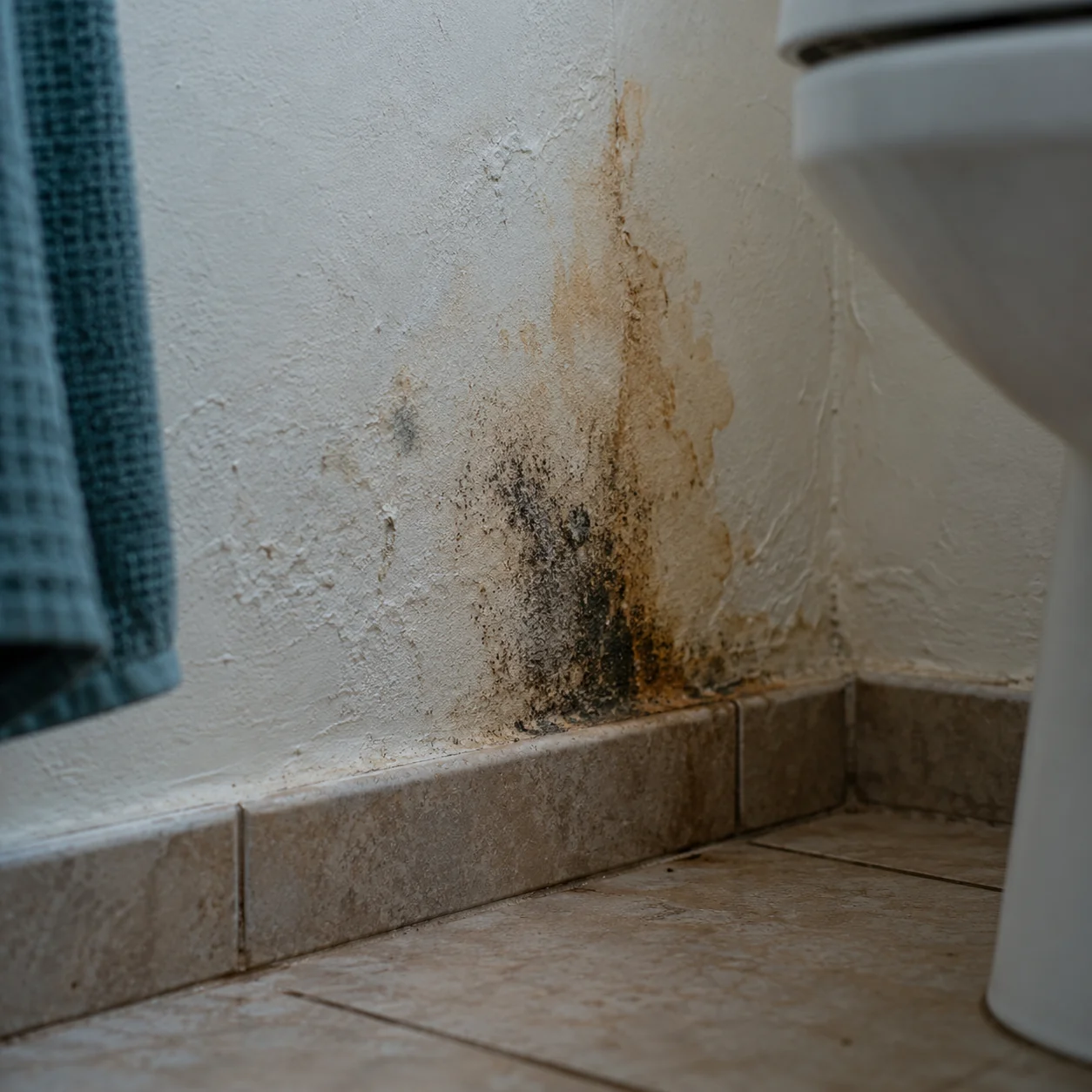
Call when the water has gone into walls, under flooring or across more than one room, when the source was sewage, or when you cannot find where the water came from. An independent restoration contractor documents moisture readings and the extent of the damage, which is also the evidence a claim needs. HB Water Damage is an independent referral service: it is contractor-neutral and connects callers with independent restoration contractors. It does not adjust claims or promise what an insurer will pay.
Water in your home right now? Call and get connected to an independent restoration contractor who covers your street.
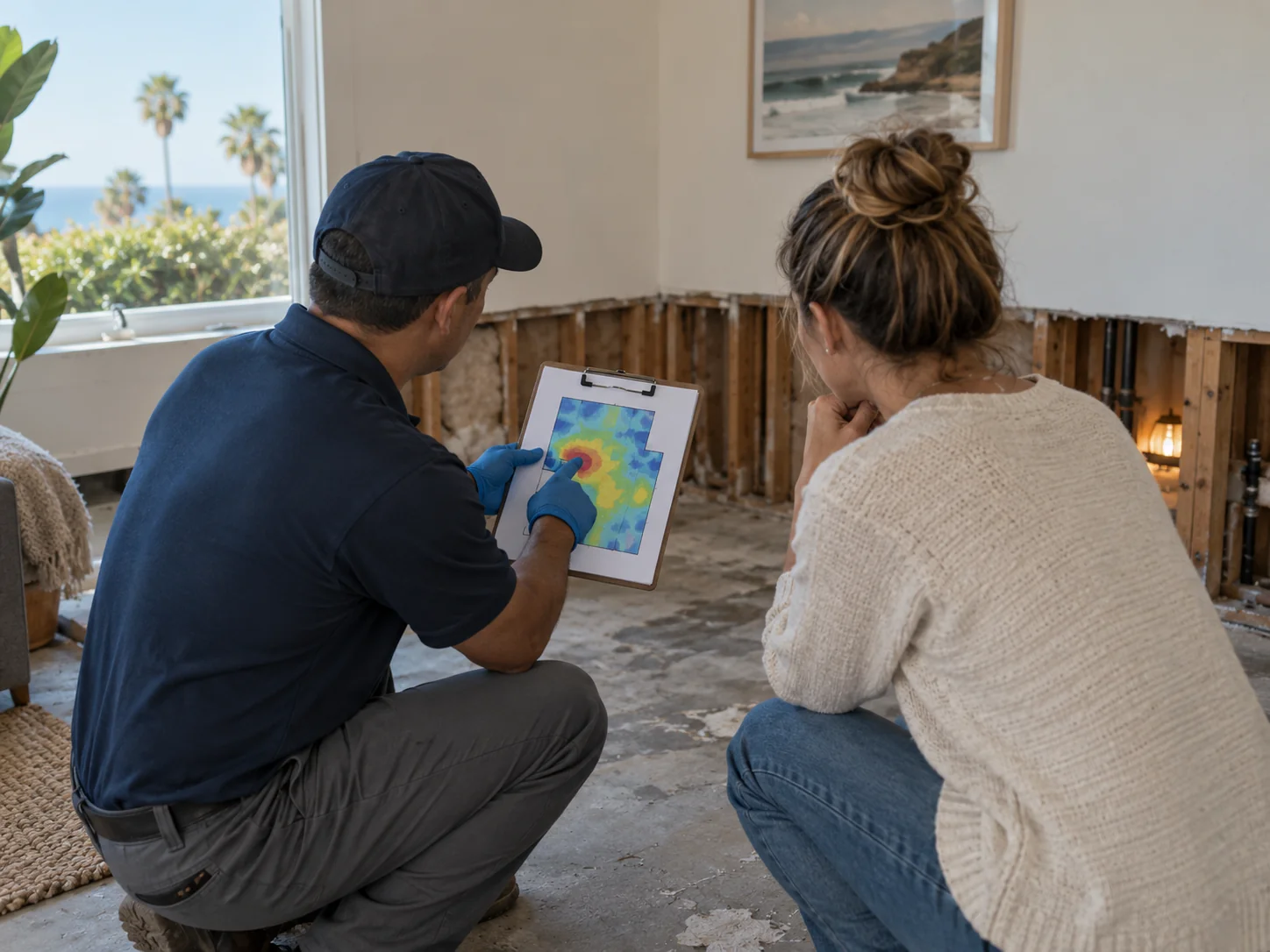
A burst supply pipe is the classic sudden and accidental loss, so the water damage it causes is usually covered. The pipe repair itself is often not. Check the policy's covered perils and any plumbing exclusion.
Long-running leaks are usually excluded as gradual seepage, wear and tear or maintenance, even if the pipe failed at one moment. Timing evidence from a plumber or contractor is what insurers look at.
Most standard policies exclude water that backs up through sewers or drains. A sewer or drain backup endorsement adds it for an extra premium. Check the declarations page for that endorsement.
State regulations give an insurer 15 calendar days to acknowledge a claim and 40 calendar days after proof of claim to accept or deny it, with written status notices every 30 days if it needs longer.
Policies expect you to protect the property from further damage, so drying can start right away. Photograph everything first, keep the failed part, and save every receipt for the adjuster.
Compare the likely repair cost against your deductible. If the loss is close to or below the deductible, filing may bring little and still count as a claim on your record. Get an estimate first.
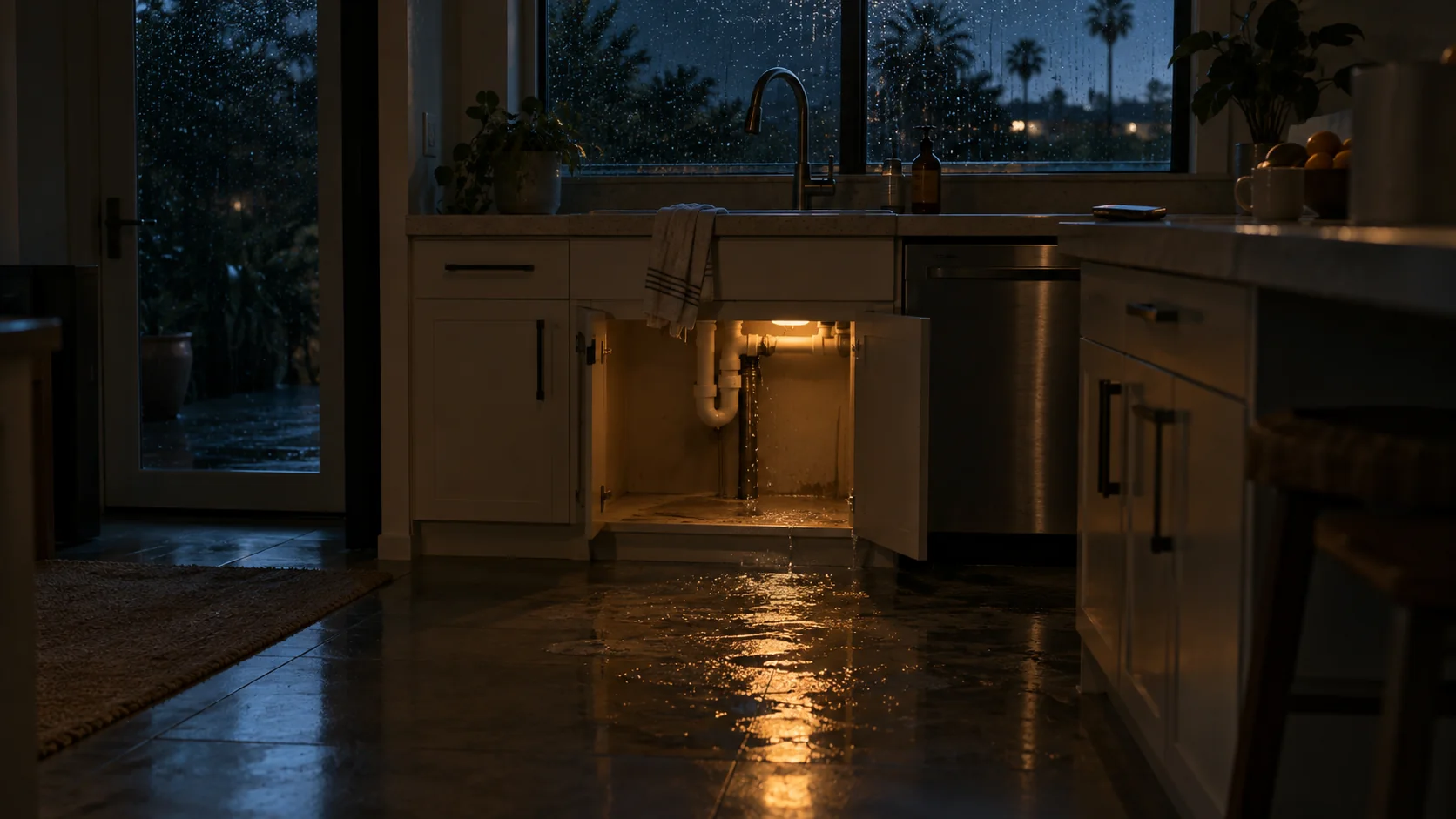
One call reaches an independent restoration contractor who covers your area. The contractor handles the inspection, the estimate and the work.
Independent line. No charge to you. Calls may be recorded.