Opens in a new tab
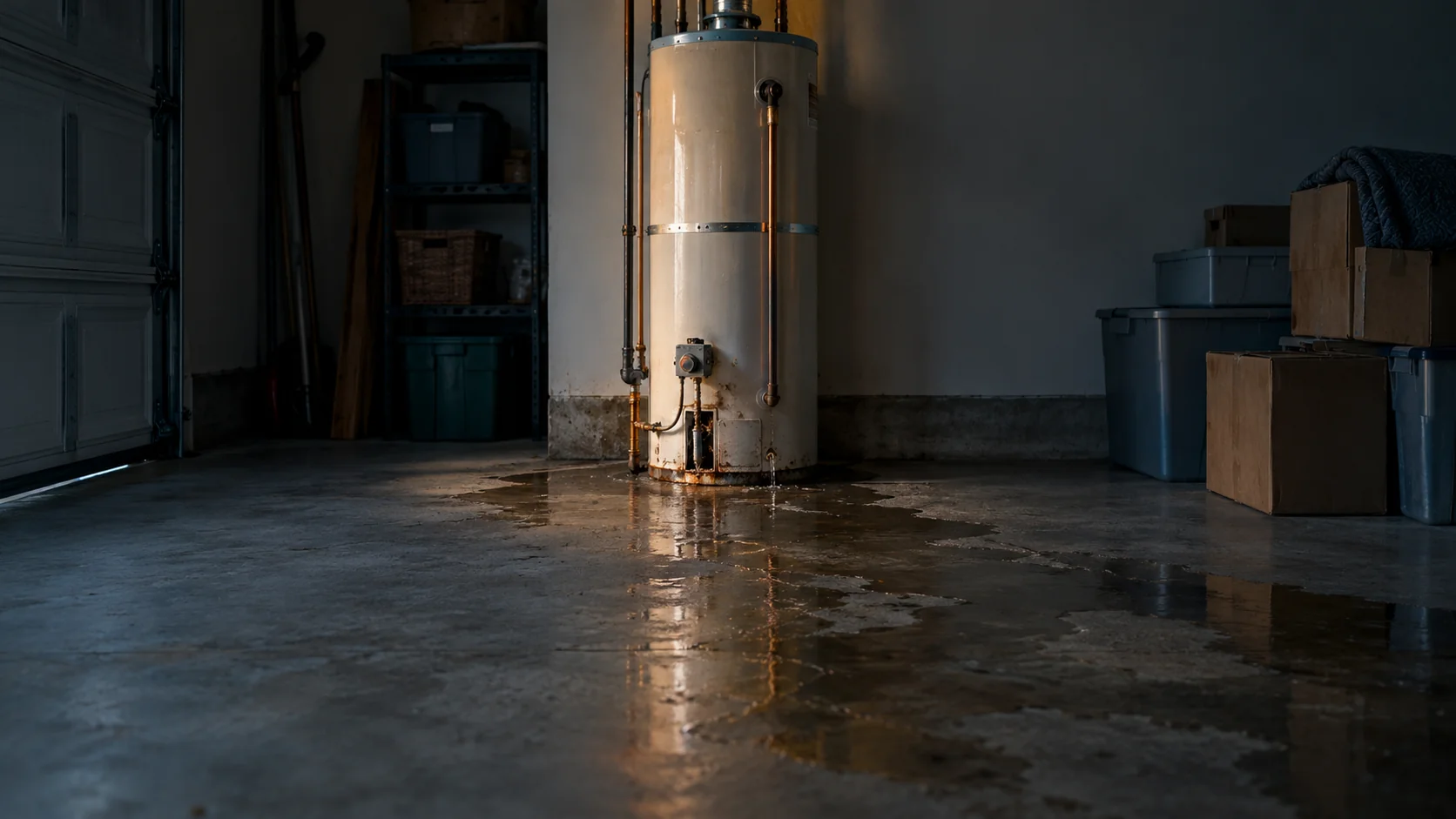
Tall gas water heater in a garage with water pooling at its base and spreading toward stored boxes

Why Is My Water Heater Leaking? Causes and What to Do Now

There is water under the water heater, and you need to know two things: whether it is safe, and whether the tank is finished.

This guide answers both, then walks through the shutoff. It is part of the guide to the common causes of water damage in a home.

IndependentNot owned by a contractor.

Check any licenseVerify at cslb.ca.gov.

Answered daily7 a.m. to 11 p.m. Pacific

Huntington Beach areaPlus 20 nearby cities

In short

A water heater usually leaks from a corroded tank, the drain valve, the temperature and pressure relief valve, or the fittings above it. Close the cold water valve, turn off the gas or breaker, keep water away from walls. A tank that leaks from its shell cannot be repaired.

Why is my water heater leaking from the bottom?

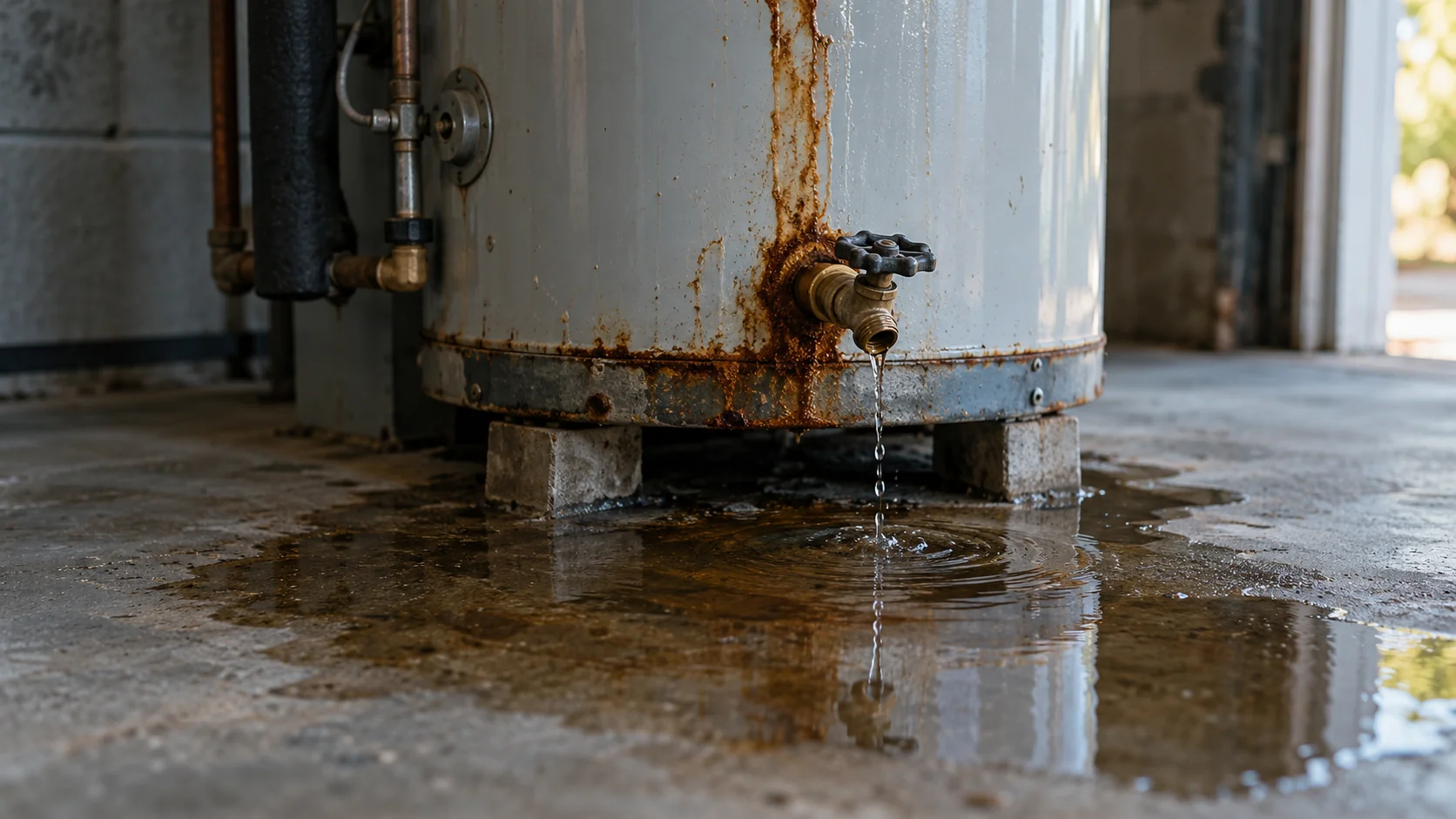
Bottom of a water heater tank with a dripping drain valve, rust streaks and a puddle
Water leaking from a brass pipe fitting

Water at the bottom of a water heater comes from one of three places: the drain valve, the discharge pipe from the relief valve, or the tank itself. Only the last one means the heater is done.

The drain valve

Is the small tap near the base, often plastic. It loosens with age and its seal fails after a few drainings. Tightening it a quarter turn or screwing a garden hose cap onto the outlet stops the drip until a plumber replaces the valve.

The relief valve's discharge pipe

Runs down the outside of the tank and ends a few inches off the floor. When the valve opens, the water shows up at the base and looks like a bottom leak. A valve that opens on its own is a warning, covered below.

The tank

Is a steel drum with a glass lining and a sacrificial anode rod that corrodes so the steel does not. Once the rod is used up, the steel rusts from the inside, and water weeps through the bottom, often with rust flakes. A tank that leaks from its shell cannot be patched. It is replaced.

Where the water shows Likely source Fix
Dripping from the small tap at the base Drain valve Tighten or cap; plumber replaces the valve
Wet at the end of a pipe running down the side Relief valve discharge Plumber checks pressure and temperature; never plug the pipe
Seeping from under the tank with rust flakes Tank corrosion Replace the water heater
Water on the burner of a gas heater, then it stops Condensation on a cold tank Nothing, if it stops within the hour
Drain pan full, tank dry inside the pan Drip from above Check the fittings above the tank

Why is the water heater leaking from above the tank?

A leak above the tank almost always comes from the hot and cold water connections, the relief valve body, or the anode rod port, and all of these can usually be repaired. Water from above runs down the jacket and collects at the base, so check above before you decide the tank is gone.

The inlet and outlet connections are the usual culprits: threads corrode, the rubber washer inside a flex line hardens, and a union loosens as the tank expands and contracts. The relief valve can leak at its threads, or at the valve itself if it has opened and not fully reseated. The anode rod screws in with a large hex head, and a poor seal there weeps around it.

Each of these is a plumber's job that leaves the heater in service. Catch them early: the EPA says water-damaged materials should be dried within 24 to 48 hours to prevent mold growth, and a closet wall beside a heater that has dripped for a week is already past that.

Is a leaking water heater dangerous?

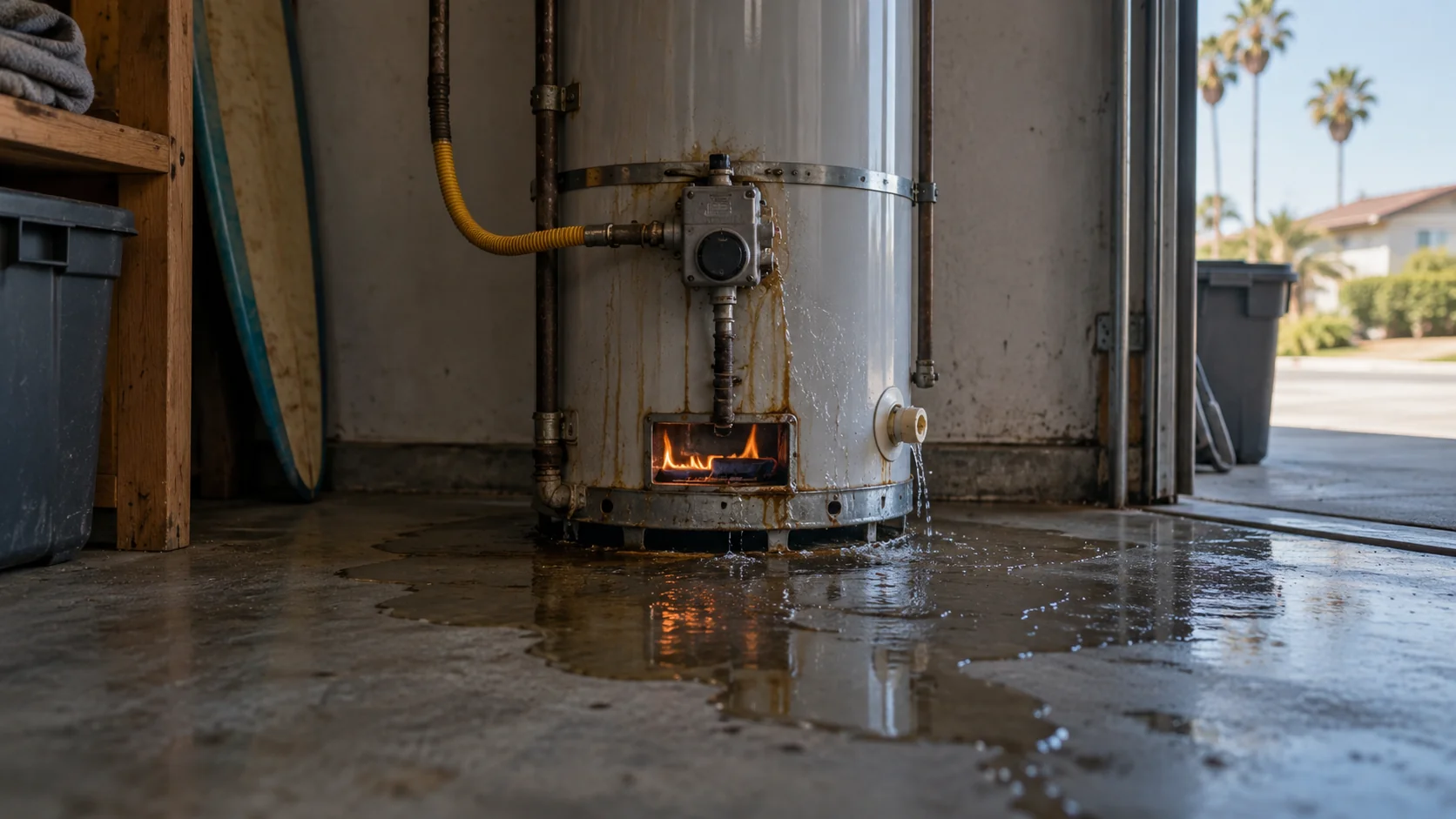
Leaking water heater in a garage with water near the gas valve and a flame visible in the burner window
Water dripping from a failed pipe joint wrapped in a rag

A leaking water heater is a water damage problem first, but it becomes a safety problem when the water reaches gas controls or electrical parts, when it is hot enough to scald, or when someone blocks the relief valve to stop the drip.

Hot water

The water in the tank can burn skin. Keep hands out of any stream and children out of the room.

Gas heaters

Water reaching the burner or the gas control can put out the pilot and corrode the control. Do not relight a heater whose burner compartment has been wet. If you smell gas, leave the house and call the gas utility from outside.

Electric heaters

The elements and their wiring sit inside the jacket. OSHA's flood guidance applies: if water has been present anywhere near electrical circuits and equipment, turn off the power at the main breaker, and never touch electrical equipment if the ground is wet.

The relief valve

It opens to release pressure when the temperature or pressure in the tank climbs too high. A valve that drips regularly is pointing at a pressure or thermostat problem. Capping it removes the tank's only pressure relief. Leave it and have a plumber find the cause.

Strapping is the other California rule. Health and Safety Code section 19211 says all new, replacement and existing residential water heaters must be braced, anchored or strapped to resist falling or horizontal displacement in an earthquake, following the California Plumbing Code. It covers standard heaters of not more than 120 gallons for which a strapping kit is readily available, and the seller of a property with a water heater must certify in writing to the buyer that the section has been complied with. A tank that tips in a quake tears its water lines and its gas connection at once. If yours has no straps, add that to the plumber's list.

How do you shut off a leaking water heater safely?

Shut off the fuel first, then the water, then relieve the pressure. It takes under five minutes.

  1. Turn off the fuel. Gas: turn the control knob on the gas valve to OFF, then close the shutoff on the gas pipe so the handle sits across the pipe. Electric: switch off the double breaker labeled for the water heater. If the floor at the panel is wet, do not touch it.
  2. Close the cold water valve on the pipe entering the heater from above, usually the cool one. Turn a round handle clockwise until it stops, or a lever across the pipe. If it is stuck or crumbling, close the main house shutoff instead.
  3. Open a hot tap somewhere in the house and leave it open, so the tank is no longer under pressure.
  4. Contain the water. Move stored items out of the closet or off the garage floor, put towels along the base of any wall the water is heading toward, and keep it off drywall and cardboard.
  5. Drain only if you are comfortable. A garden hose on the drain valve, run to a floor drain or outside, with the hot tap open. The water is hot and the valve may not reseal, so if a plumber is coming, leaving it to them is a fair choice.
  6. Photograph everything: the tank label with the serial number and date, the leak point, the floor and any wet wall.
  7. Do not relight a gas heater that has been wet. Wait for the plumber.

Who do you call for a leaking water heater?

Call a plumber for the heater, and a restoration contractor if water has soaked into drywall, flooring, a closet or a garage wall. The two jobs are separate, and the second one is the one people skip.

Situation Who to call
You smell gas Leave the house, then the gas utility from outside
A drip at a fitting, the drain valve or the relief valve A plumber
Water weeping from the tank itself A plumber, for replacement; the new heater must be strapped and usually needs a permit
Water has reached carpet, drywall, the subfloor or the room below An independent restoration contractor, in the first day
Water pooling near the electrical panel An electrician before anyone touches the panel

On insurance, the California insurance guide covers the pattern that applies here: a sudden discharge and the damage it causes are usually covered, the worn-out heater itself usually is not, and a tank that has dripped for months may be treated as a gradual leak.

What this means in Huntington Beach

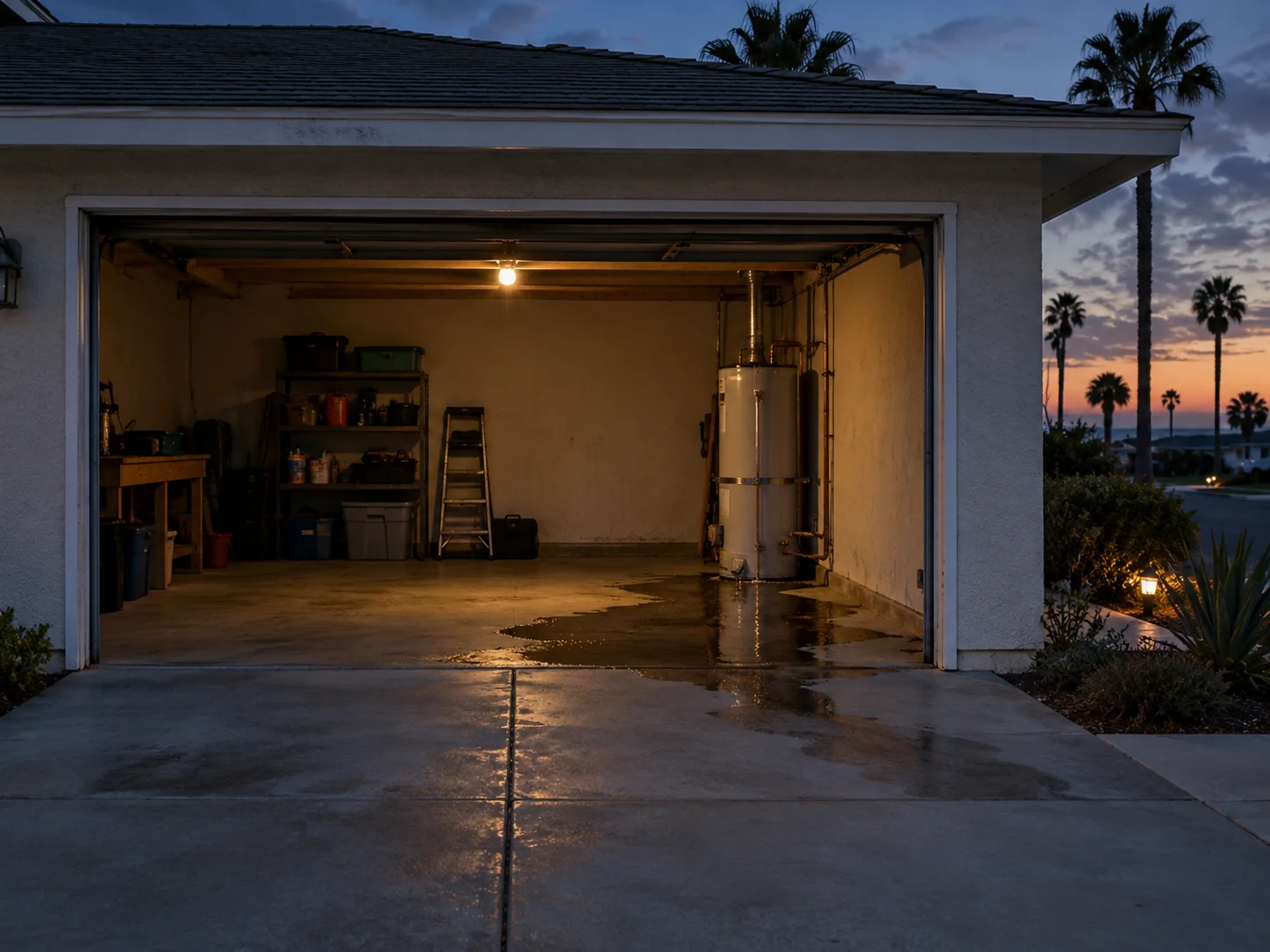
Huntington Beach housing is mostly from the tract boom. American Community Survey estimates put the median year built for the city's homes at 1974; in the 92647 zip code, about 68 percent of homes were built between 1960 and 1979, and in 92646 about 78 percent. In a tract house of that age the water heater is usually in the garage or a hall closet and has been replaced more than once. Each replacement is a chance for a fitting to be done well or badly, and for the straps required by Health and Safety Code 19211 to go back on or not. Because the seller must certify in writing that the heater is strapped, a house sold here should have that certification in the transfer paperwork. If you cannot find it, look at the heater: two straps, upper and lower, anchored to the wall studs.

Open garage of a one-story Huntington Beach home at dusk with a water heater and a wet patch on the floor

When to call a contractor

Call a restoration contractor when the water has gone past the pan. A closet heater backs onto bedrooms, and a garage heater sits against a wall shared with the house; in both cases water wicks into the drywall before it shows on the other side. HB Water Damage is an independent referral service: a call connects you with an independent restoration contractor for water heater, burst pipe and slab leak water damage in Huntington Beach. The contractor sets the scope and the price; the site does neither.

Water in your home right now? Call and get connected to an independent restoration contractor who covers your street.

Call
(888) 217-4707

Questions homeowners ask about leaking water heaters

Can a leaking water heater be repaired?

A leak at a valve, a fitting or the anode rod port can usually be repaired. A leak from the tank shell means the steel has rusted through, and the heater is replaced rather than fixed.

How long can I leave a leaking water heater?

Close the cold valve and turn off the fuel as soon as you see water. A tank leak only widens, and the EPA's 24 to 48 hour window for drying wet materials starts when the floor gets wet.

Does a replacement water heater have to be strapped in California?

Health and Safety Code 19211 requires new, replacement and existing residential water heaters to be braced, anchored or strapped against earthquake motion. It applies to standard heaters of 120 gallons or less where a strapping kit is available.

Why does the relief valve keep dripping?

The valve opens when pressure or temperature inside the tank is too high, or when debris keeps it from reseating. Never cap it. A plumber checks the house pressure, the thermostat and whether an expansion tank is needed.

Will insurance pay for a leaking water heater?

Policies usually pay for damage from a sudden discharge but not for the heater itself, and a slow rust leak may be excluded as gradual. Check your policy wording and photograph the leak before cleanup.

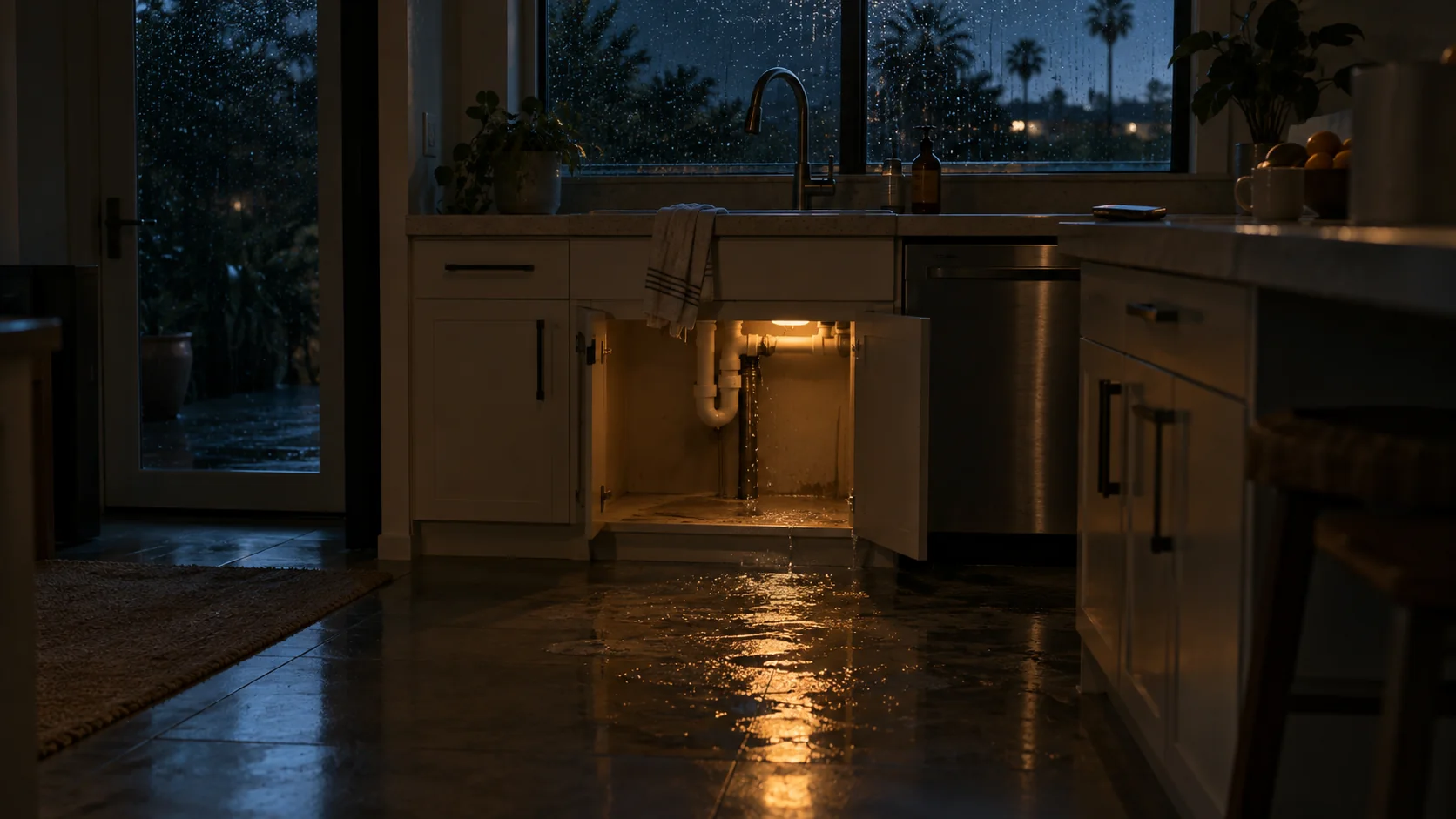
Water spreading across a kitchen floor from under the sink at night with a phone on the counter
7 a.m. to 11 p.m. Pacific

Water in your home? Talk to someone now.

One call reaches an independent restoration contractor who covers your area. The contractor handles the inspection, the estimate and the work.

Call
(888) 217-4707

Independent line. No charge to you. Calls may be recorded.