
Solid wood
The EPA table's advice is to remove moisture immediately and dry with dehumidifiers, gentle heat and fans. Wipe it down, lift it off the wet floor onto blocks or foil, and let it dry slowly. Fast heat cracks it.
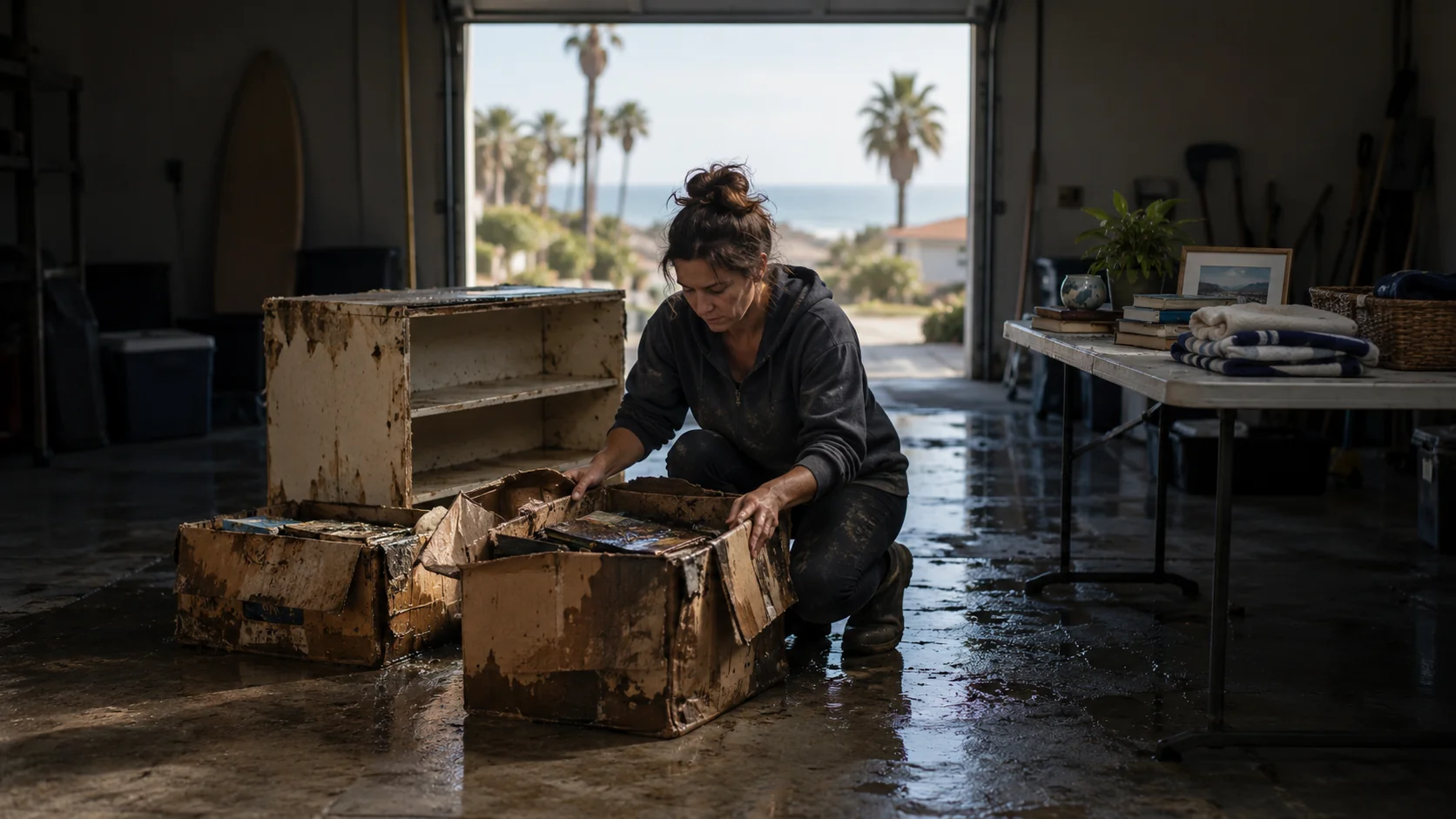
The water is out, or nearly out, and now every wet thing in the room is a decision: dry it or throw it away.
This guide gives you the rules by material and by type of water, so you can tell a contractor's reasonable call from an unreasonable one. It is part of the water damage guides and pairs with what is water damage restoration.
IndependentNot owned by a contractor.
Check any licenseVerify at cslb.ca.gov.
Answered daily7 a.m. to 11 p.m. Pacific
Huntington Beach areaPlus 20 nearby cities
In short
What can be saved after water damage depends on the material and the water. Hard, non-porous items like tile, metal and glass can usually be cleaned and kept. Porous materials that stayed wet or touched contaminated water, such as carpet pad, insulation and swollen drywall, are usually removed.
Materials that do not absorb water can be cleaned and kept; materials that soak it up are dried only if they were wet briefly, with clean water, and show no swelling or mold. The clearest public guidance by material is the EPA's water damage table in its mold remediation guide, which presents "strategies to respond to water damage within 24-48 hours". The table is written for schools and commercial buildings, but the materials are the same ones in your house.
| Material | What the EPA table says | What that means at home |
|---|---|---|
| Non-porous hard surfaces (tile, metal, glass, plastic) | Vacuum or damp wipe with water and mild detergent, allow to dry, scrub if necessary | Keep |
| Hard-surface porous flooring | Vacuum or damp wipe with water and mild detergent, allow to dry, scrub if necessary | Usually keep; check what is under it |
| Concrete or cinder block | Remove water with an extraction vacuum, speed drying with dehumidifiers, fans or heaters | Keep; slabs take time to read dry |
| Wood surfaces | Remove moisture immediately, use dehumidifiers, gentle heat and fans | Usually keep; solid wood may cup, then settle |
| Wallboard (drywall) | May be dried in place if there is no obvious swelling and the seams are intact; if not, remove, discard and replace | Dry in place or cut out, by inspection |
| Carpet and backing | Remove water with an extraction vacuum, reduce humidity with a dehumidifier, speed drying with fans | Carpet often dries; pad rarely does and is usually replaced |
| Upholstered furniture | Remove water with an extraction vacuum, speed drying with dehumidifiers, fans or heaters | Clean water only, and only if dried fast |
| Ceiling tiles | Discard and replace | Remove |
| Cellulose or fiberglass insulation | Discard and replace | Remove |
| Window drapes | Follow the manufacturer’s laundering or cleaning instructions | Wash or dry-clean |
| Books and papers | Discard non-valuable items; photocopy valuable ones and discard the originals; freeze or freeze-dry | See the documents section below |
Two EPA sentences explain the timing behind that table. In its brief guide to mold and moisture, the agency says that if wet materials are dried within 24 to 48 hours after a leak or spill, in most cases mold will not grow. It also says that absorbent or porous materials, such as ceiling tiles and carpet, may have to be thrown away if they become moldy. So the same drywall panel can be a keep on day one and a discard on day four.
The cleaner the water, the more you can keep; Category 3 water turns most porous materials into waste no matter how fast you dry them. The categories come from the ANSI/IICRC S500, the industry standard for water damage restoration, and contractors use them to set the scope. This guide is general information, not legal, insurance or medical advice.
| Water category | Examples | Porous materials (carpet, pad, drywall, insulation, upholstery) | Hard, non-porous surfaces |
|---|---|---|---|
| Category 1, from a sanitary source | Supply line, water heater tank, rain through the roof | Dry in place if dried fast and not swollen | Clean and keep |
| Category 2, significantly contaminated | Washer or dishwasher discharge, toilet overflow with urine, Category 1 water that sat | Most are removed; some carpet may be cleaned and dried by a contractor | Clean, disinfect and keep |
| Category 3, grossly contaminated | Sewage, rising flood water, water that sat long enough to reach Category 3 | Removed | Clean, disinfect and keep |
Category 1 water left in a building for 24 to 48 hours can degrade to Category 2. The clock does not care that the source was a clean pipe. The CDC gives the same practical rule from the health side: remove or replace carpets and upholstery that have been soaked and cannot be dried right away, and clean up and dry out the home fully and quickly, within 24 to 48 hours, after a flood.
Category 3 is a different job. Sewage and flood water carry pathogens, so anything porous that touched them is bagged, and the crew works in protective gear. The sewage backup cleanup page covers what that involves.
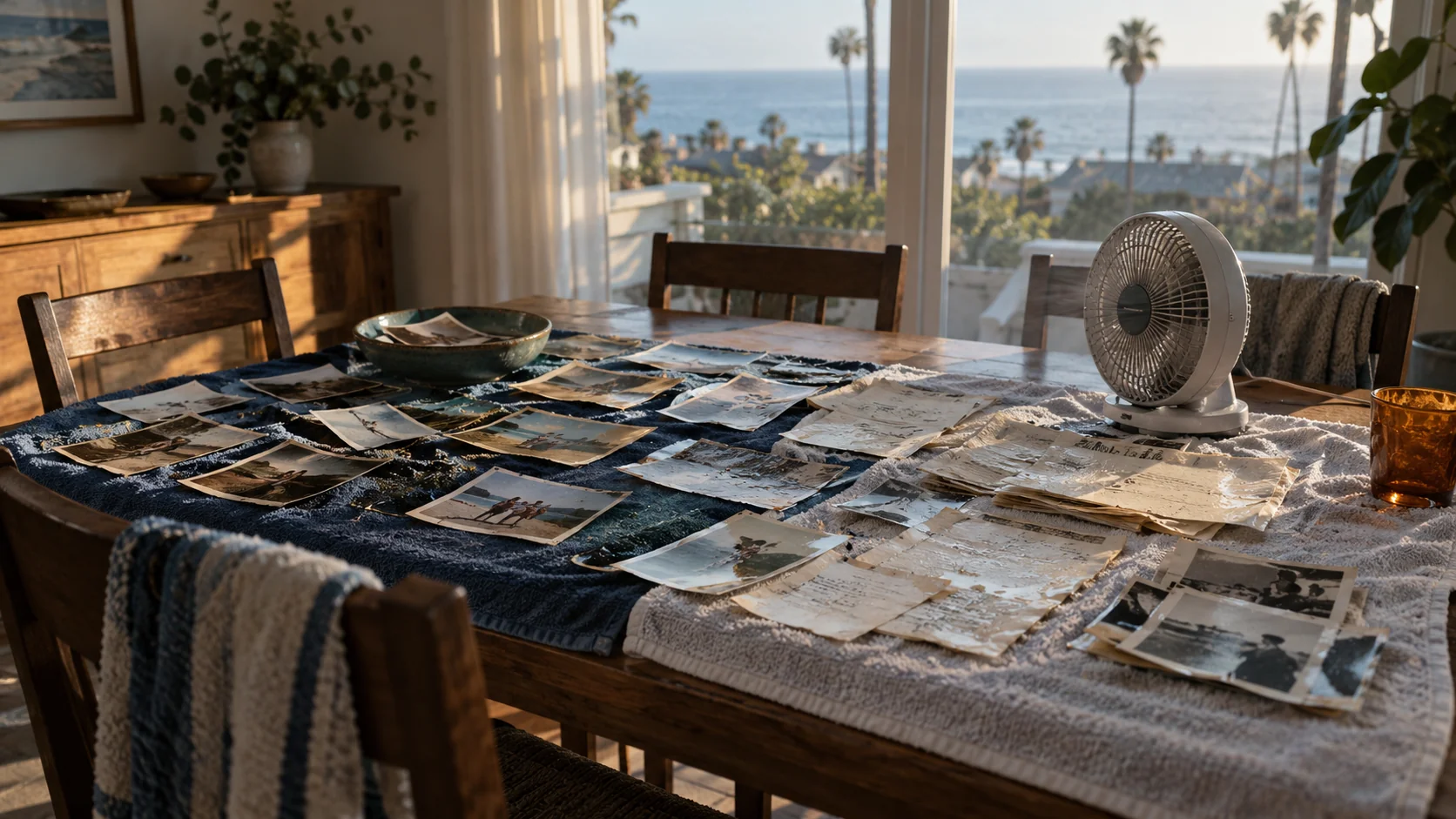
Solid wood and metal furniture usually survive; particleboard, upholstery wet with dirty water, and mattresses usually do not; papers and photos are a race against time that freezing can pause.
Furniture
The EPA table's advice is to remove moisture immediately and dry with dehumidifiers, gentle heat and fans. Wipe it down, lift it off the wet floor onto blocks or foil, and let it dry slowly. Fast heat cracks it.
These swell when wet and do not shrink back. Flat-pack shelving, cabinet boxes and the bottoms of many dressers are usually a loss once they have soaked.
Clean water and fast extraction can save a sofa. Gray or black water, or a sofa that sat wet for days, cannot be made safe by surface cleaning, because the padding is porous.
Porous through and through. With contaminated water they go. With clean water, a mattress that is soaked rather than splashed is very hard to dry to the core.
Clean, dry and keep. Check metal legs and hardware for rust and dry them.
Documents and photos
The EPA table splits paper into two piles. Non-valuable books and papers are discarded. Valuable or important items are photocopied and the originals discarded, or the originals are frozen, in a freezer or a meat locker, or freeze-dried, which stops mold and lets a conservator work on them later. The EPA's flooded homes resources also point to Smithsonian Institution guidance for preserving precious items affected by mold and mildew.
A practical order for a wet box of papers and photos:
The mitigation contractor recommends what comes out, based on moisture readings, the water category and the material; you approve it; and your insurer reviews the scope against your policy. Nobody should be cutting drywall you have not agreed to, and no adjuster should be reversing a removal that the readings and the category justified.
Three checks keep that process honest:
Know the mold threshold. The EPA says that if the moldy area is less than about 10 square feet, roughly a 3 foot by 3 foot patch, in most cases you can handle the job yourself. Larger than that, or in the HVAC system, or after sewage, hire a contractor with mold experience. The mold remediation page explains what that work involves, and mold after water damage covers how fast it starts.
The S500 standard also includes the evaluation of contents as a subject area, which is a reminder that a contractor can be asked to assess your belongings, not just your walls. If a crew is bagging furniture without looking at it, ask them to stop and explain.
Much of the city's housing was built in one stretch, so the materials on the removal list tend to be original. In the 92646 zip code, covering the southeast of the city, the Census Bureau's American Community Survey puts the median year built at 1971, with about 78 percent of units, 17,453 of 22,393, built between 1960 and 1979. That means original drywall, original subfloor and, in many homes, decades of flooring layers, which is why a contractor should say what is under the visible layer before deciding what to keep.
Ground moisture is the other local factor. The city's General Plan technical background report notes that low-lying parts of the city contain peat and organic soils, and that the area south of Adams Avenue sits in a liquefaction hazard zone tied to saturated soil and shallow groundwater. In those areas, insist on moisture readings from the slab itself, not just the surface, before new flooring goes down.
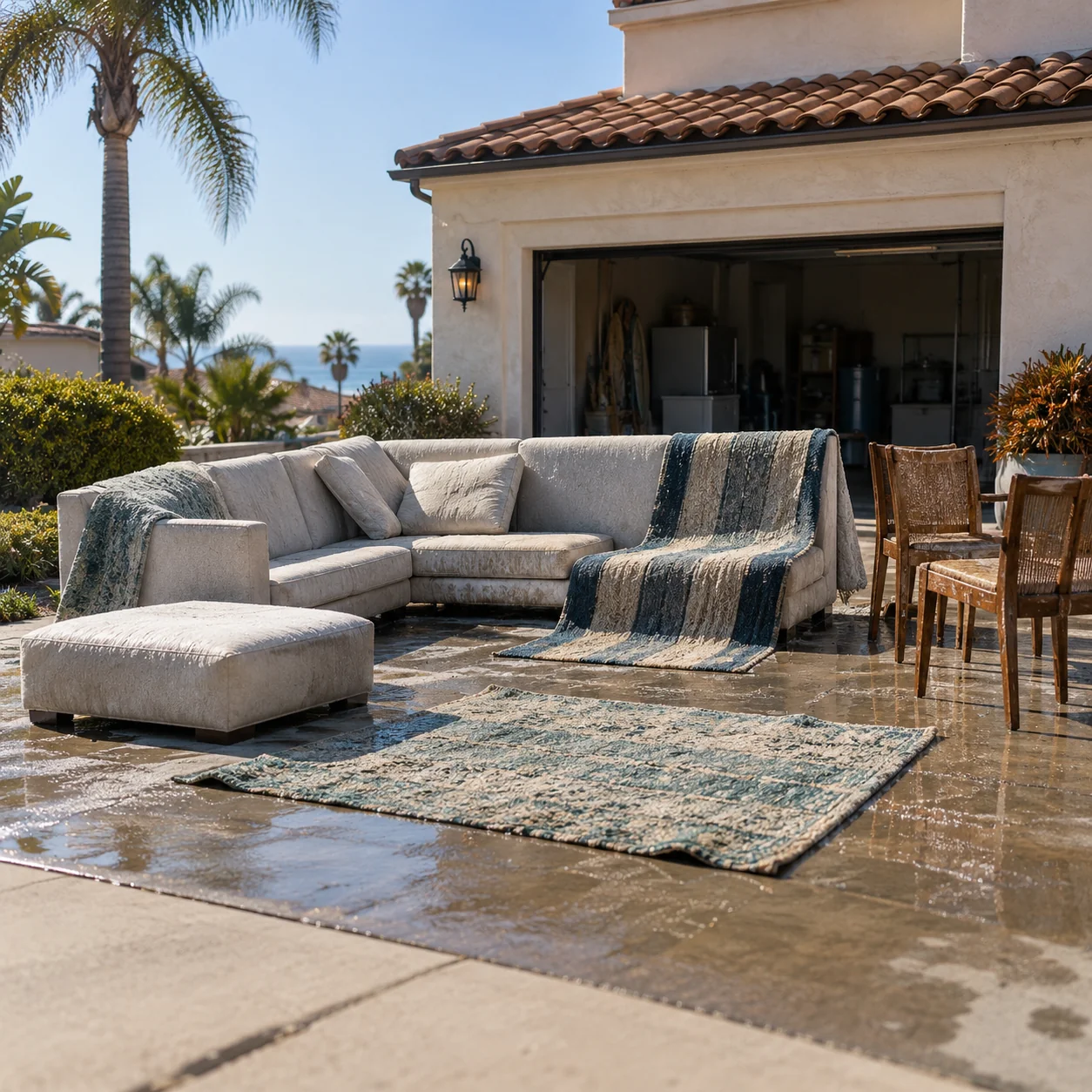
Call a contractor when the wet materials include anything on the "remove" side of the tables above, when the water was Category 2 or 3, or when more than a small clean spill has soaked into drywall, subfloor or a slab. Deciding what to keep is only useful if the drying that follows is done with equipment and readings.
HB Water Damage is an independent referral service, contractor-neutral: your call is answered and connected to an independent restoration contractor who serves Huntington Beach. To reach an independent restoration contractor in Huntington Beach, start on the home page, and use what to do after water damage for the first-hour steps.
Water in your home right now? Call and get connected to an independent restoration contractor who covers your street.
Drywall can be dried in place if there is no obvious swelling and the seams are intact, according to the EPA's water damage table. Swollen, sagging or seam-split panels, or any drywall touched by sewage or flood water, are removed and replaced.
Carpet wet with clean water and extracted and dried quickly can often be kept. The pad underneath holds water and is usually replaced. Carpet soaked with gray or black water, or left wet for days, is removed.
Both cellulose and fiberglass insulation are on the EPA's discard-and-replace list. Once wet, insulation loses its loft, holds moisture against the framing and cannot be dried reliably inside a wall.
Photocopy or photograph anything important, then freeze the originals in a freezer, which the EPA lists as a way to stop damage until a conservator can help. Discard papers that are replaceable.
The mitigation contractor recommends removal based on readings and the water category, you approve it, and the insurer reviews the scope. Photograph everything before it is removed so the decision can be checked later.
One call reaches an independent restoration contractor who covers your area. The contractor handles the inspection, the estimate and the work.
Independent line. No charge to you. Calls may be recorded.