
They are slow to notice
A leak inside a wall drips through drywall within hours or days. A slab leak can run for weeks.
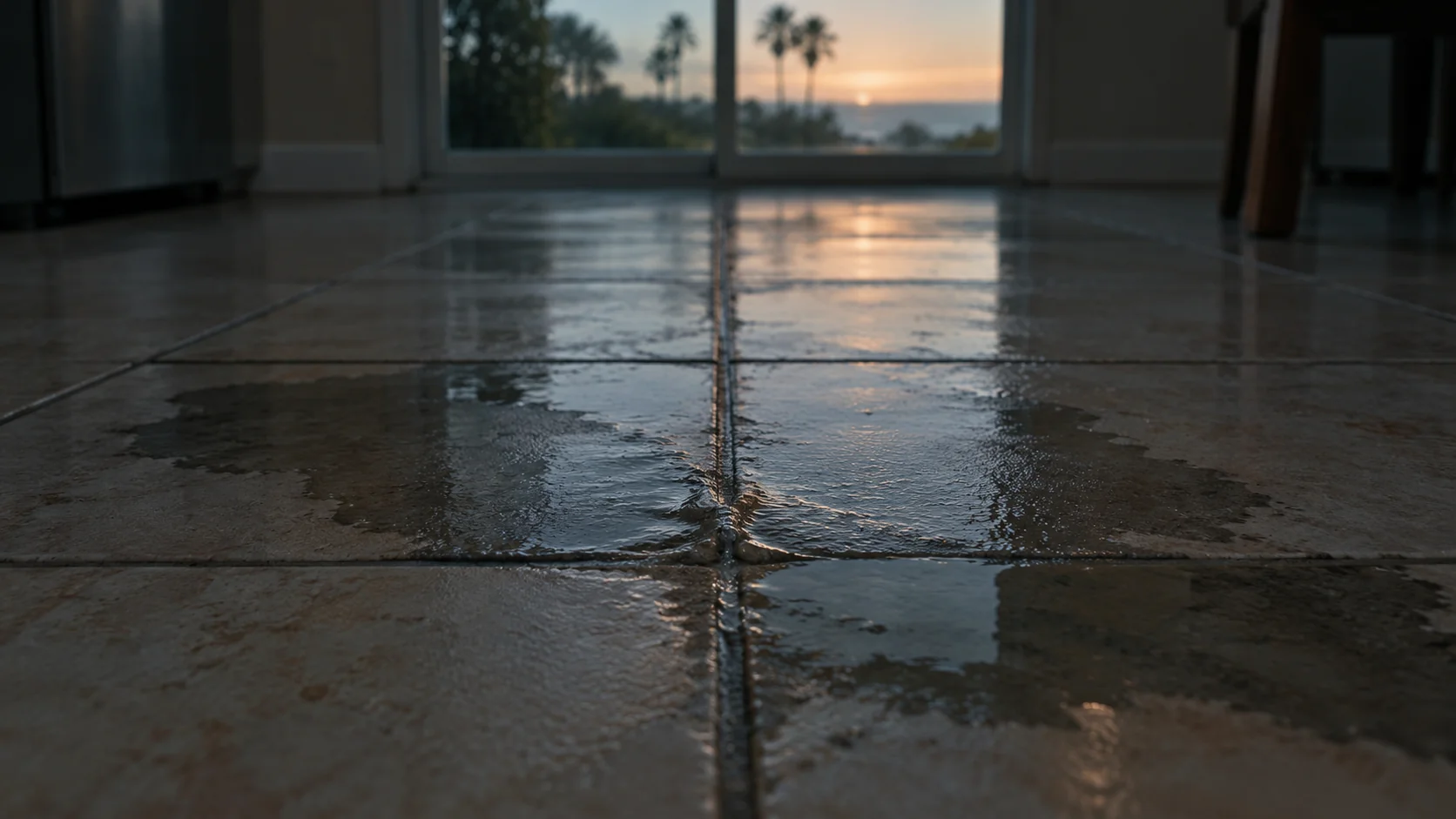
Your floor has a warm spot, the water bill jumped, or you hear water running when every tap is off.
Those are the classic signs of a slab leak, one of the harder-to-spot causes of water damage in a single-story home.
IndependentNot owned by a contractor.
Check any licenseVerify at cslb.ca.gov.
Answered daily7 a.m. to 11 p.m. Pacific
Huntington Beach areaPlus 20 nearby cities
In short
A slab leak is a leak in a water pipe under a home's concrete slab foundation. The pipe is buried, so the water soaks into the soil and slab first and shows up as a warm floor, a damp patch, a higher bill or the sound of running water.
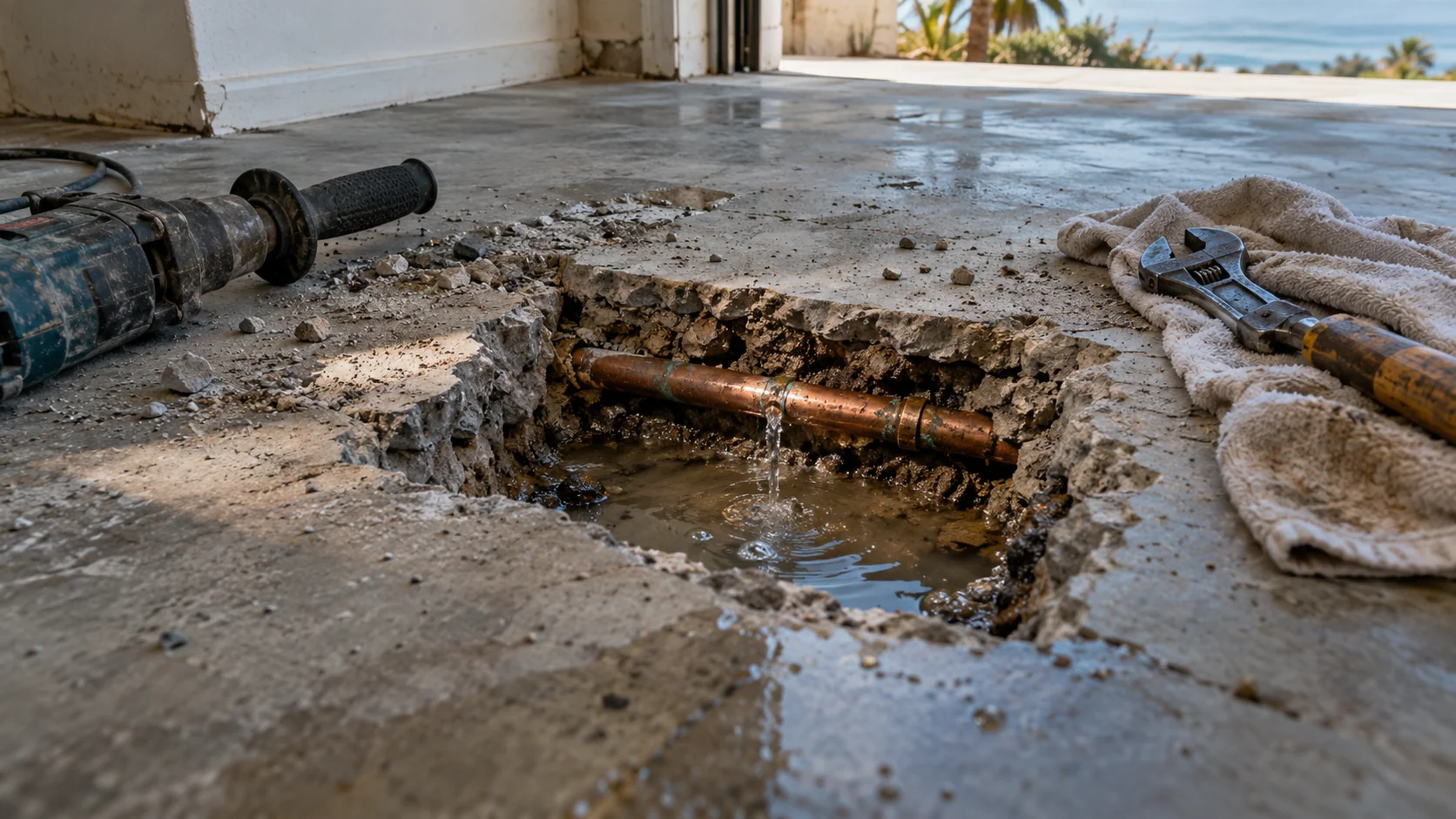
A slab leak is a break or pinhole in a supply or drain pipe that sits beneath the concrete slab your house is built on. Many homes built from the 1950s onward have no crawl space. The slab is poured on the ground, and the copper or galvanized supply lines and the cast iron or clay drain lines run through or under it.
When one of those pipes fails, the water has nowhere obvious to go. It seeps into the soil, wicks up through the concrete, and eventually reaches the flooring. A hot-water line leak warms the floor. A cold-water line leak shows up as a damp or dark patch, or as nothing at all until the bill arrives.
Two things make slab leaks different from a burst pipe in a wall:
A leak inside a wall drips through drywall within hours or days. A slab leak can run for weeks.
Fixing the pipe means going through the slab, going around it, or replacing the line.
The most reliable signs are a water bill that rises with no change in use, a meter that keeps moving with every fixture off, and a warm or damp spot on the floor.
| Sign | What it usually means |
|---|---|
| Warm spot on tile, laminate or wood | Hot-water line leaking under that area |
| Damp patch, dark grout or mildew smell with no visible source | Cold-water or drain line leaking under the floor |
| Sound of running water when every tap and appliance is off | Pressurized supply line leaking somewhere |
| Water bill up with no change in use | Continuous leak on the supply side |
| Water heater running more than usual | Hot-water line losing water and being refilled |
| Flooring that cups, lifts or buckles | Moisture coming up through the slab |
| Cracks in tile or the slab, or doors that stick | Soil under the slab shifting as it gets wet and dries |
| Low pressure at every fixture | Large leak on the main supply |
You can confirm a supply-side leak yourself with the water meter. The EPA WaterSense program's advice is to check your water meter before and after a two-hour period when no water is being used. If the reading changes, something is leaking. The same EPA page says the average household's leaks waste more than 9,300 gallons a year, and that nine percent of homes have leaks wasting 50 gallons or more a day.
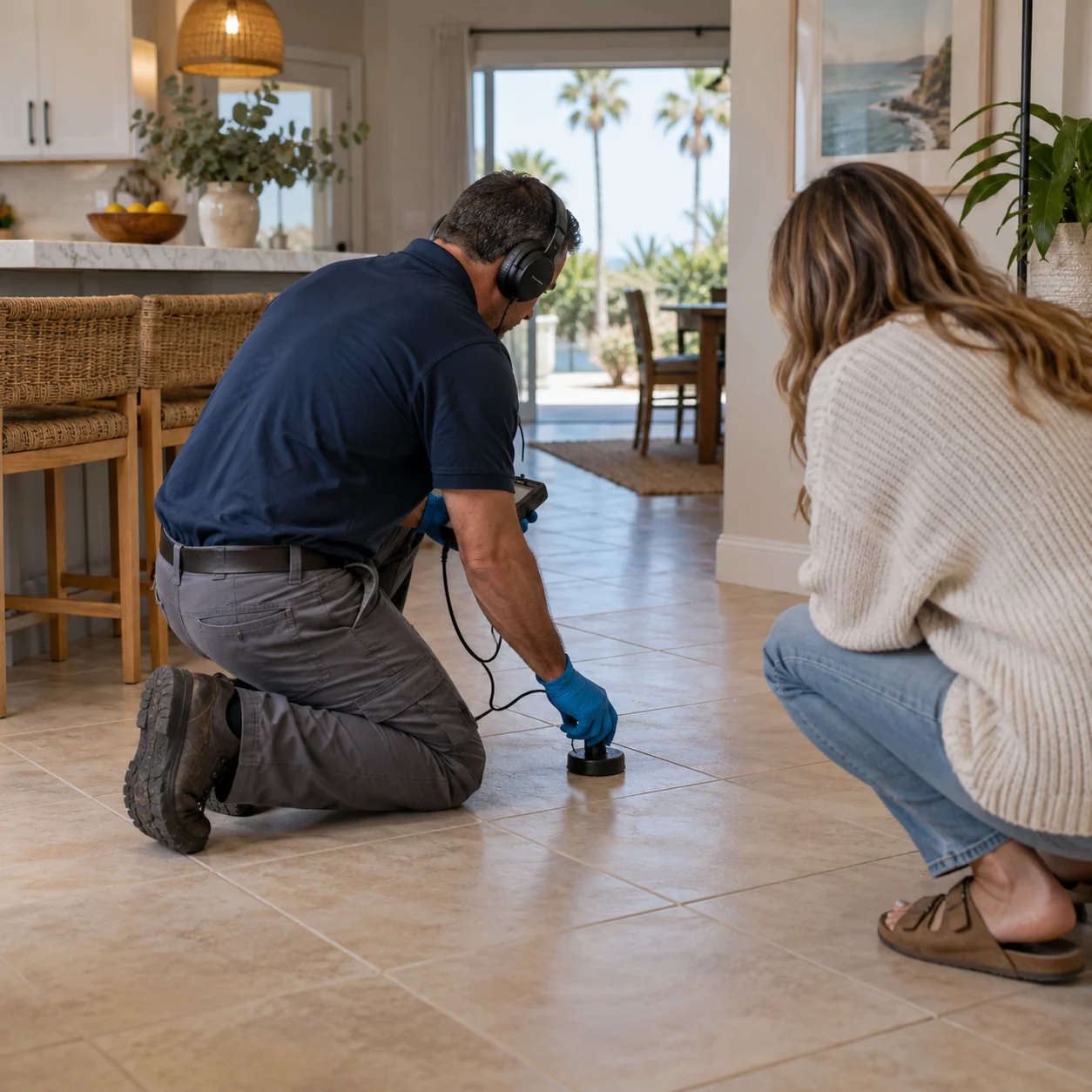
The meter test tells you a leak exists, not where it is. Check the easy suspects first: toilet flappers, the water heater drain valve, hose bibs and irrigation valves. If those are dry and the meter still moves, a slab leak is likely. A plumber or leak-detection specialist then pinpoints it with pressure testing and listening equipment.
Most slab leaks in older homes come from aging pipe: copper that has thinned from the inside, galvanized steel that has rusted, and joints that have moved with the soil.
The main causes, roughly in order of how often plumbers find them:

Often you can, because most slab leak repairs today route a new line around the slab instead of cutting through it.
A plumber will usually offer one of four options once the leak is located:
| Repair option | What it involves | When it fits |
|---|---|---|
| Spot repair through the slab | Break a section of concrete, repair the pipe, patch the slab | One known leak, accessible spot, sound pipe elsewhere |
| Reroute | Abandon the leaking line and run a new one through walls, the attic or along the ceiling | The most common choice for hot-water lines in older homes |
| Epoxy lining | Coat the inside of the existing pipe with a resin liner | Limited use for small supply lines; ask what warranty comes with it |
| Whole-house repipe | Replace every supply line with new copper or PEX, usually overhead | Several leaks already, or original pipe throughout |
A spot repair is the least work today but leaves the rest of the old line in place. If the pipe failed from corrosion, the next pinhole is usually not far away. That is why many plumbers steer owners of 1960s and 1970s homes toward a reroute or a repipe.
Two separate trades are involved:
Finds the leak and repairs, reroutes or replaces the pipe.
Dries the slab, flooring, baseboards and walls, removes what cannot be saved, and documents the moisture readings for your insurer.
Both should be licensed. In California you can check any contractor's license with the CSLB by license number, business name or personnel name, and see any complaint disclosure.
What you can safely do yourself: run the meter test, photograph the floor and the meter reading, move furniture and rugs off the wet area, and shut off the main if the leak is large. The line is the slab. Do not break concrete, and do not run a household fan on a wet floor and assume the slab underneath is dry.
Homeowners insurance usually covers the water damage from a sudden slab leak, but usually not the pipe repair itself, and usually not a leak that ran for a long time.
The California Department of Insurance residential guide lists "sudden and accidental water damage" among the perils a standard homeowners policy typically covers. The same guide lists "water damage caused by seepage or leaks" and "wear and tear" among the perils generally not covered.
In practice that splits a slab leak claim three ways:
The sudden-versus-gradual question is where slab leak claims most often go wrong. A California appeals court ruled in Brown v. Mid-Century Insurance Co. (2013) that a leak which discharged water over an extended period was not "sudden", even though the pipe failed at one moment. So the date you first noticed the problem matters, and so does how fast you acted. Note the date, keep the water bills, and report the loss promptly. Our California water damage insurance guide walks through what to document.
This section is general information, not legal advice. Your policy wording controls.
Huntington Beach housing is old enough for original slab plumbing to be near the end of its life. The city's median year built is 1974 according to Census ACS estimates. In the 92646 zip, about 78 percent of housing units were built between 1960 and 1979; in 92647 it is about 68 percent.
Groundwater adds a local twist. The city's 2023 Water Master Plan notes that high groundwater makes its asbestos cement mains brittle, and that its pipe replacement program starts in the highest-groundwater areas. The city's General Plan technical report places the area south of Adams Avenue in a liquefaction hazard zone tied to saturated soil and shallow groundwater, and describes peat and organic soils in the city's low-lying areas. Soil that is already damp hides a slab leak longer and slows drying once it is found.
Call once the meter test confirms a leak you cannot find, or as soon as flooring is wet, lifting or warm over more than a small patch. HB Water Damage is an independent referral service, contractor-neutral, and your call is answered and connected to an independent restoration contractor who can dry the slab and floors while a plumber handles the pipe. For what the drying work involves in a Huntington Beach home, see slab leak and burst pipe water damage help.
Water in your home right now? Call and get connected to an independent restoration contractor who covers your street.
If the leak is large and water is spreading now, close the main valve first. The steps are in what to do when a pipe bursts.
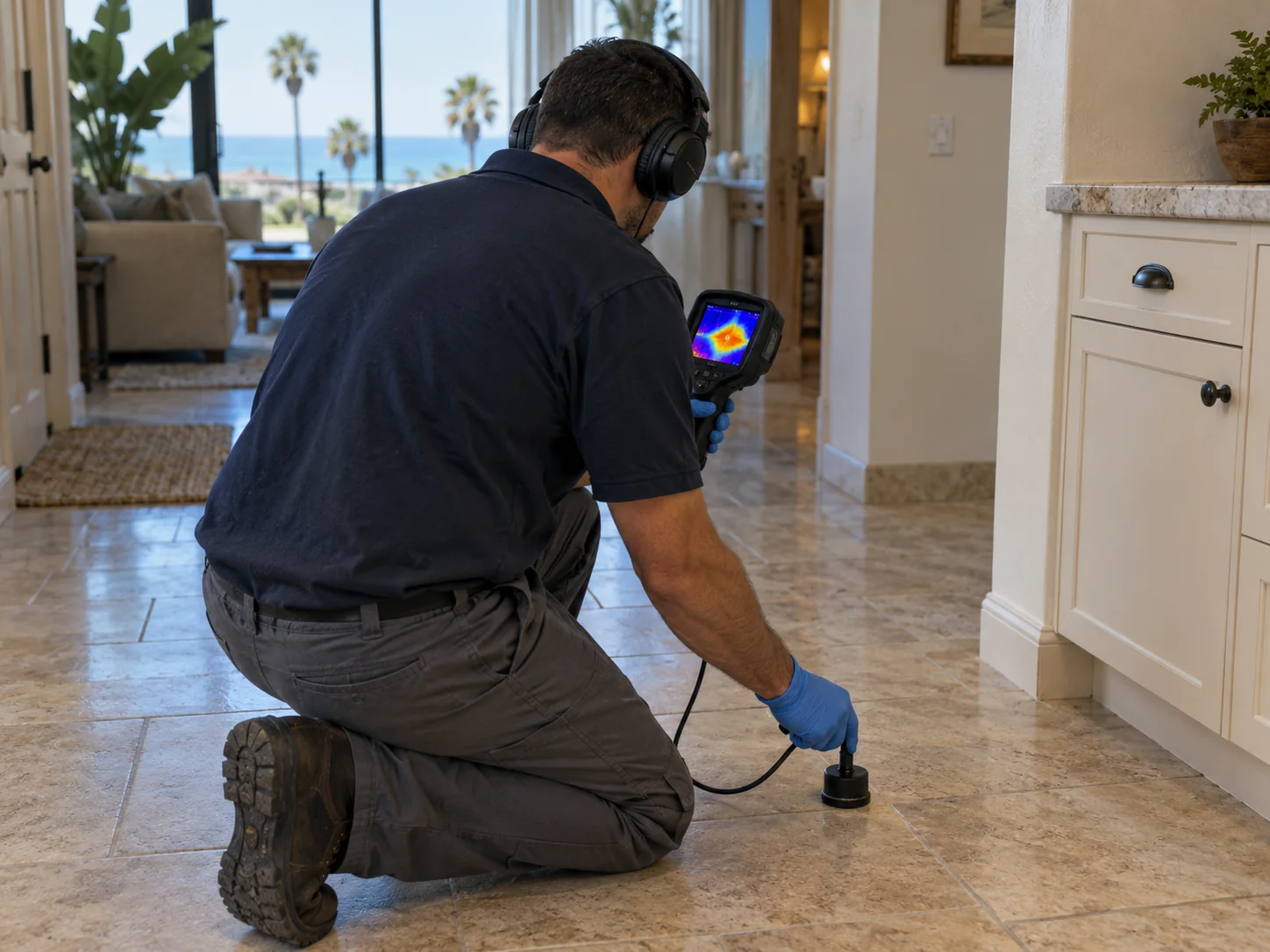
The three strongest signs are a water bill that rose with no change in use, a meter that moves with everything off, and a warm or damp spot on the floor. A plumber confirms the location with pressure and acoustic testing.
A slab leak is urgent but rarely a flood. Shut off the main if water is visible on the floor, then get the leak located. The longer it runs, the more the slab and flooring absorb, and the harder the insurance conversation becomes.
A long-running slab leak can wash out or soften the soil under the slab, which leads to settling and cracks. Most slab leaks caught within weeks do not harm the foundation, but wet soil and cracked tile are reasons to act quickly.
Both, in sequence. A plumber or leak-detection specialist finds and repairs the pipe. A restoration contractor dries the slab, flooring and walls and removes materials that cannot be saved.
Concrete releases moisture slowly, so slab leak jobs often need more drying days than a burst pipe caught early. The EPA advises drying water-damaged areas within 24 to 48 hours to prevent mold, so drying should start before the pipe repair is finished.
Last reviewed October 1, 2026.
One call reaches an independent restoration contractor who covers your area. The contractor handles the inspection, the estimate and the work.
Independent line. No charge to you. Calls may be recorded.