
How much water, and how long it sat
A supply line that ran for an hour wets the floor. One that ran overnight wets the framing, the subfloor and the slab.
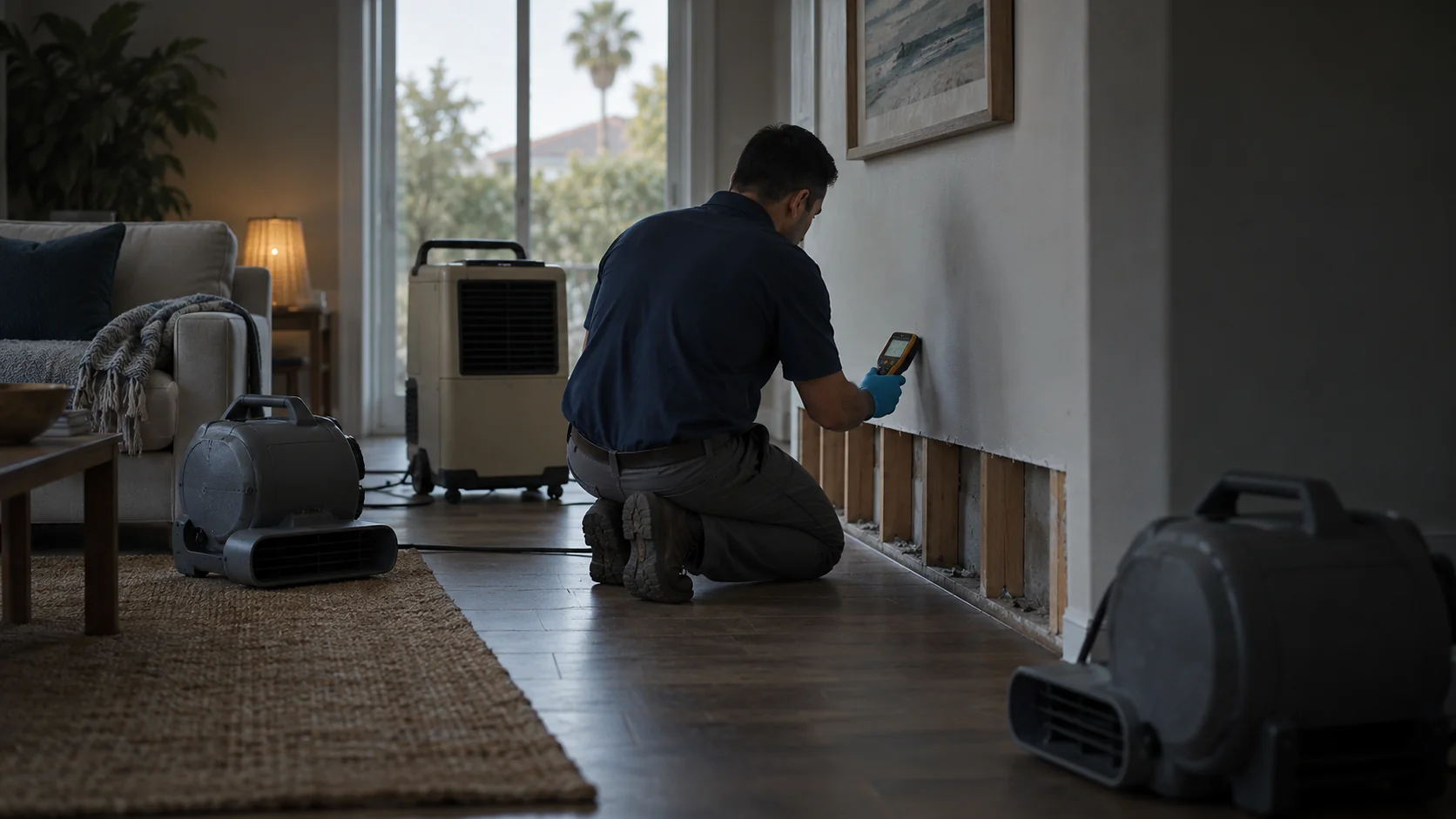
Water is on the floor, or an adjuster has just used the word "restoration" and you want to know what it covers before anyone starts work.
This guide explains what water damage restoration is, what happens at each step, how the timeline is set and who does which part. It is the starting point for the water damage guides on this site.
IndependentNot owned by a contractor.
Check any licenseVerify at cslb.ca.gov.
Answered daily7 a.m. to 11 p.m. Pacific
Huntington Beach areaPlus 20 nearby cities
In short
Water damage restoration is the process of removing water, drying the structure, cleaning or discarding damaged materials and rebuilding what was removed. It follows the ANSI/IICRC S500 standard. Drying ends when moisture readings hit their targets, not on a set day, and the rebuild is a separate scope.
Water damage restoration runs in a set order: stop the source, inspect, extract, remove what cannot be saved, dry, clean, then rebuild. Each step has to finish before the next one starts, because drying a wall that still has a live leak behind it wastes days.
Here is what a typical job looks like from your side of the door.
Stop the source. Shut the main valve or the fixture valve, or call a plumber. The industry standard for this work, ANSI/IICRC S500, assumes that finding and fixing the cause of the water is the property owner's responsibility, not the restorer's. A restoration contractor dries the building. A plumber fixes the pipe.
Removal of materials that cannot be saved. Swollen drywall, wet insulation, soaked carpet pad and anything touched by contaminated water is cut out and bagged. See what can be saved after water damage for the rules by material.
Steps 1 to 6 are usually called mitigation. Step 7 is the rebuild. The line between them matters for your invoice and your claim, and the water mitigation vs restoration guide explains where it falls.
Who does what
| Who | What they do | What they do not do |
|---|---|---|
| You | Shut off the water, move belongings, take photos, call your insurer, keep receipts | Cut open walls or run drying equipment you cannot monitor |
| Plumber | Finds and repairs the source of the water | Dry the building |
| Mitigation contractor | Extracts water, removes wet materials, dries, documents moisture readings | Rebuild, unless also licensed and hired for it |
| Rebuild contractor | Replaces drywall, flooring, cabinets, paint and trim | Emergency drying |
| Insurer or adjuster | Reviews the cause, scope and cost against your policy | Choose your contractor for you |
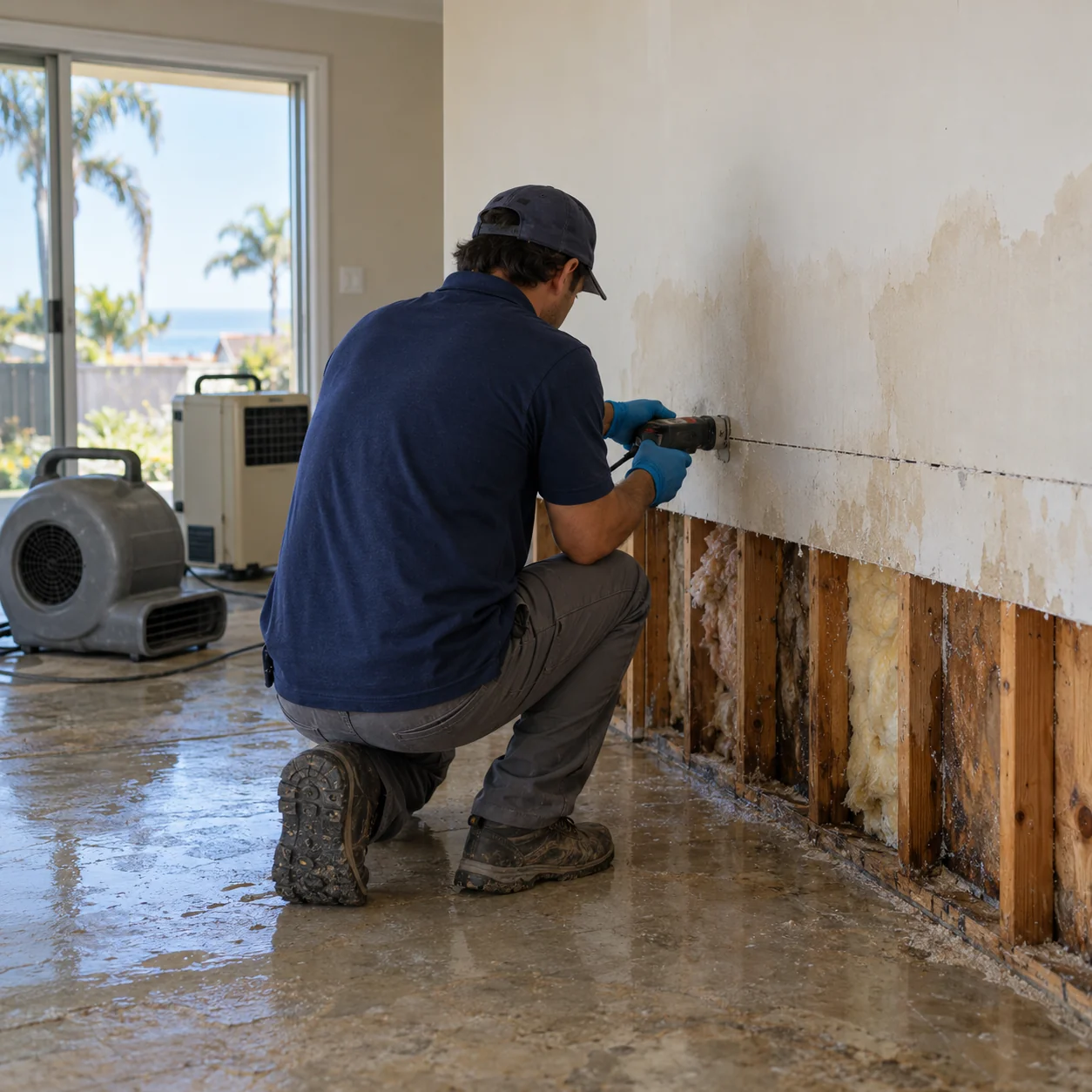
Restoration takes as long as the drying log says it does, plus the rebuild, so an honest contractor gives you a drying target and a rebuild schedule rather than one fixed date. The drying phase is measured in days. The rebuild is measured in weeks, because it waits on drying, on your insurer's approval of the scope and on materials.
Five things set the length of the drying phase:
A supply line that ran for an hour wets the floor. One that ran overnight wets the framing, the subfloor and the slab.
Tile over a slab dries differently from hardwood over plywood. Plaster holds water longer than drywall.
Contaminated water means more removal and less drying in place, which changes the whole plan.
Dehumidifiers work against the moisture already in the room air, and coastal air carries plenty of it.
The EPA says that if wet materials are dried within 24 to 48 hours after a leak, in most cases mold will not grow. Miss that window and the job often grows to include mold work.
A contractor declares the structure dry when moisture readings match unaffected areas of the same material, not when the surface feels dry to the touch. Ask to see the daily readings. They are also the record your insurer wants.
The ANSI/IICRC S500 is the Standard for Professional Water Damage Restoration, and it is the document a competent contractor follows on every water job. The Institute of Inspection, Cleaning and Restoration Certification publishes it. The current version is the fifth edition, released in 2021, and it is an American National Standard, which means it went through the ANSI consensus process rather than being one company's method. The IICRC's S500 page lists 17 subject areas, including water damage principles, microbiology, building science, drying technology, safety, structural and HVAC restoration and the evaluation of contents.
Two ideas from the standard show up in every estimate you will read. Categories describe how contaminated the water is. Classes describe how much water the materials have absorbed and how hard the space will be to dry.
| Category | What it means | Common sources |
|---|---|---|
| Category 1 | Water from a sanitary source | Supply line, water heater tank, rain through a roof |
| Category 2 | Significantly contaminated, often called gray water | Washer or dishwasher discharge, toilet overflow with urine, clean water that sat and degraded |
| Category 3 | Grossly contaminated, often called black water | Sewage, rising flood water, water that reached Category 3 by sitting |
Category 1 water does not stay clean. Left in a building for 24 to 48 hours it can degrade to Category 2, which is why a delayed call changes the scope even when the source was a clean pipe.
The four classes run from Class 1, little water absorbed and easy to dry, to Class 4, water bound deep inside materials such as hardwood, plaster or concrete that need specialized drying. You do not need to memorise them. You need to know that the class on the estimate should match what you saw, and that a contractor who cannot explain it should not be running the job.
Fast cleanup matters because water damage compounds: the longer materials stay wet, the more of them have to be removed rather than dried, and the more likely mold becomes. The EPA's 24 to 48 hour guidance is the clearest line. Inside that window, most materials can be dried in place. Past it, absorbent or porous materials such as ceiling tiles and carpet may have to be thrown away if they become moldy.
Three costs rise with every day of delay:
Mold. A drying job becomes a drying and remediation job. See mold after water damage for how fast that happens and what it involves.
Insurance friction. The California Department of Insurance lists sudden and accidental water damage as covered under a standard homeowners policy, and water damage caused by seepage or leaks, and flood, as not covered. A loss that sat for days before anyone acted invites questions about which side of that line it falls on. The insurance guide covers the details.
What you can do in the first hour is covered step by step in what to do after water damage: shut the water off, cut power to wet areas, move what you can, photograph everything, then make the call.
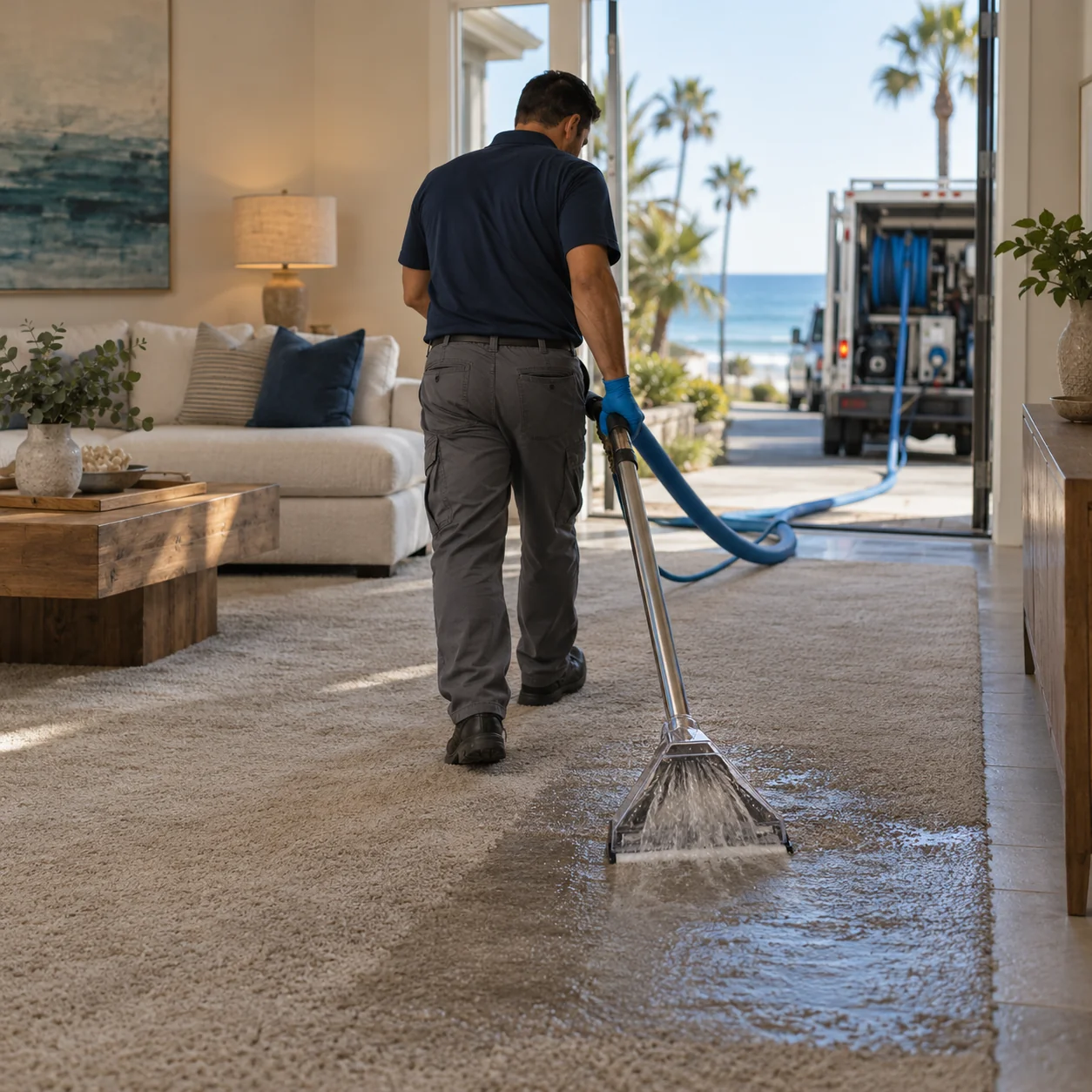
Huntington Beach has a large stock of homes from the same era, and the water mains under them are of the same era too. The city's 2023 Water Master Plan update reports about 610 miles of water pipe, 76 percent of it asbestos cement, with nearly 465 miles of that pipe mostly 45 to 55 years old. The plan notes that asbestos cement pipe becomes brittle and loses strength in high groundwater, and it schedules about 200 miles of replacement over 20 years, starting in the areas with the highest groundwater. That is the public side of the system. The private side, the supply lines and drains inside a 1960s or 1970s tract home, is the same age, and it is the side a restoration contractor will be drying out.
Call a restoration contractor when water has gone somewhere you cannot dry within 24 to 48 hours, when it came from a contaminated source, or when it has reached a ceiling, a wall cavity, a subfloor or a slab. A wet bath mat is a towel job. A wet wall is not.
Signs the job has passed safe DIY:
In California, construction work is licensed by the Contractors State License Board, and rebuilding after water damage is normally done under a CSLB license. You can check any license by license number, business name or personnel name, and the lookup includes complaint disclosure. Do it before the first cut into a wall, not after.
HB Water Damage is an independent referral service, contractor-neutral: your call is answered and connected to an independent restoration contractor who serves Huntington Beach. If you need an independent contractor for water damage restoration in Huntington Beach, that is where to start.
Water in your home right now? Call and get connected to an independent restoration contractor who covers your street.
Mitigation is the first part of restoration: stopping the spread, extracting water and drying the structure. Restoration in full also includes the rebuild. Contractors and insurers often use "restoration" for the whole job and "mitigation" for the emergency phase.
Small clean-water spills you can dry within 24 to 48 hours are a reasonable DIY job. Once water is inside walls, under flooring, contaminated, or older than a day, the drying needs equipment and moisture readings you do not have at home.
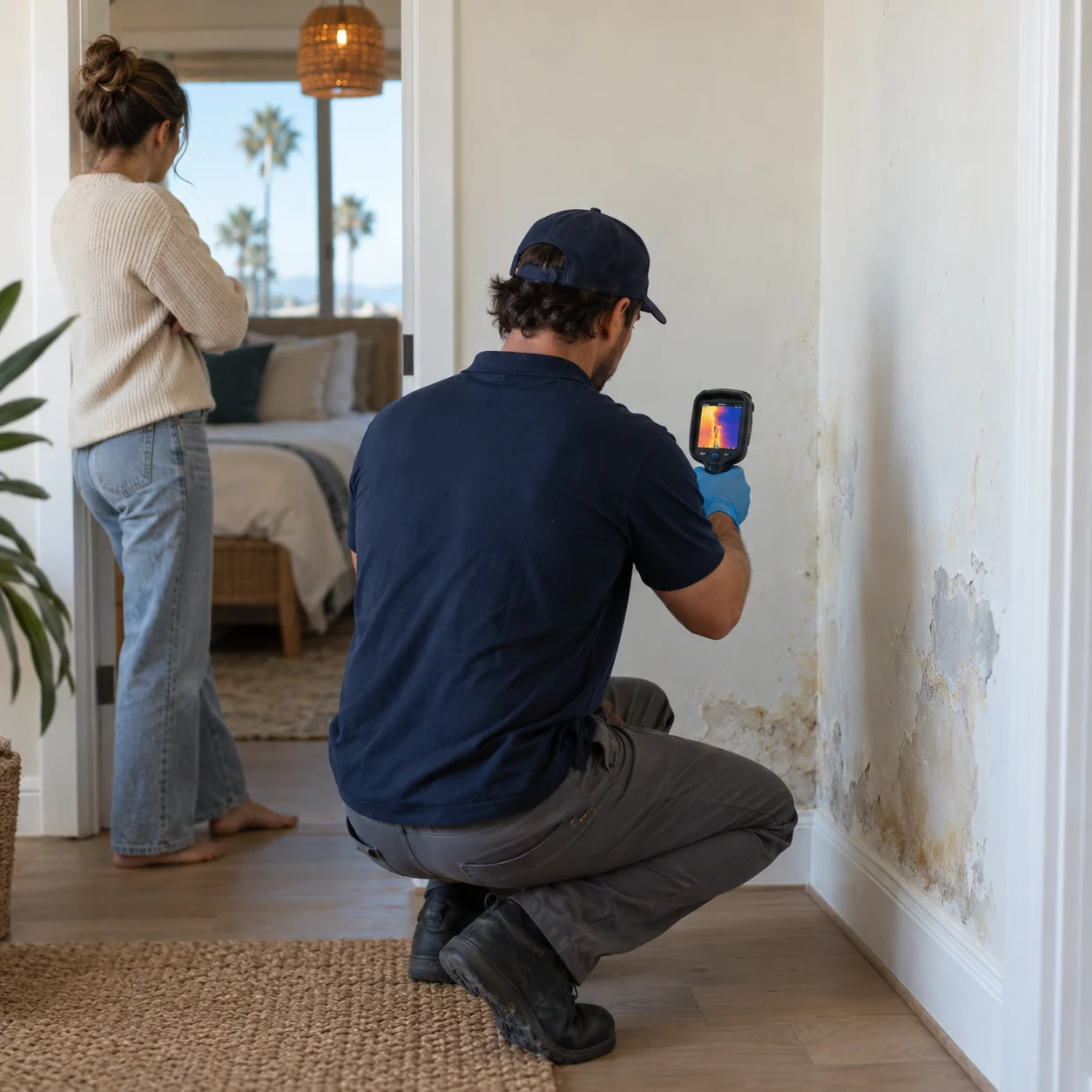
The first visit is an inspection with a moisture meter to map how far the water went, followed by extraction of standing water and removal of anything that cannot be dried. Drying equipment goes in on the same visit.
Restoration contractors dry and rebuild; they do not usually repair plumbing. The S500 standard treats finding and fixing the source as the owner's responsibility, so expect to call a plumber as well.
The contractor's moisture readings on the wet materials should match readings from unaffected areas of the same material. Ask for the drying log. Surface feel and the absence of a smell are not enough.
Standard California policies cover sudden and accidental water damage and exclude seepage, gradual leaks and flood. Coverage turns on the cause and your policy wording, so report the loss early and keep every receipt.
Last reviewed October 1, 2026.
One call reaches an independent restoration contractor who covers your area. The contractor handles the inspection, the estimate and the work.
Independent line. No charge to you. Calls may be recorded.