
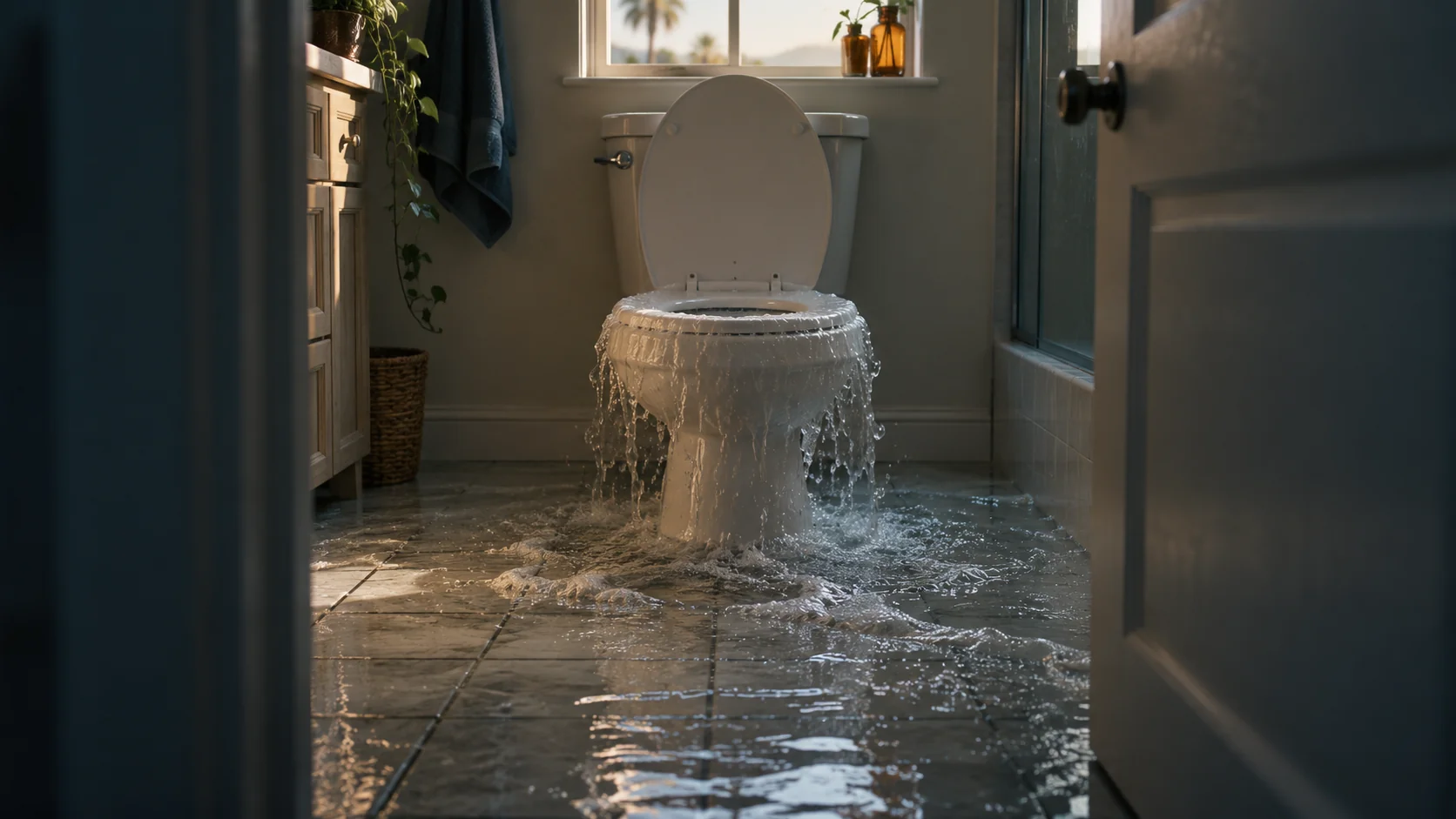
Toilet Overflowing? What to Do in the First Five Minutes
The bowl is rising and you have seconds.
Do the first step now and read the rest after: lift the tank lid and push the rubber flapper down over the hole at the bottom of the tank. This guide is part of the series on the common causes of water damage at home.
IndependentNot owned by a contractor.
Check any licenseVerify at cslb.ca.gov.
Answered daily7 a.m. to 11 p.m. Pacific
Huntington Beach areaPlus 20 nearby cities
In short
When a toilet overflows, stop the water first: push the flapper closed inside the tank, then turn the supply valve behind the toilet clockwise until it stops. Do not flush again. Then find the cause, a clog or a drain backup, and treat any water that carried waste as contaminated.
What do you do when a toilet is overflowing?
Stop the water at the tank, then at the supply valve, and do not flush again until you know why it overflowed. The bowl only rises while the tank is emptying into it, so closing the flapper ends the flood at once.
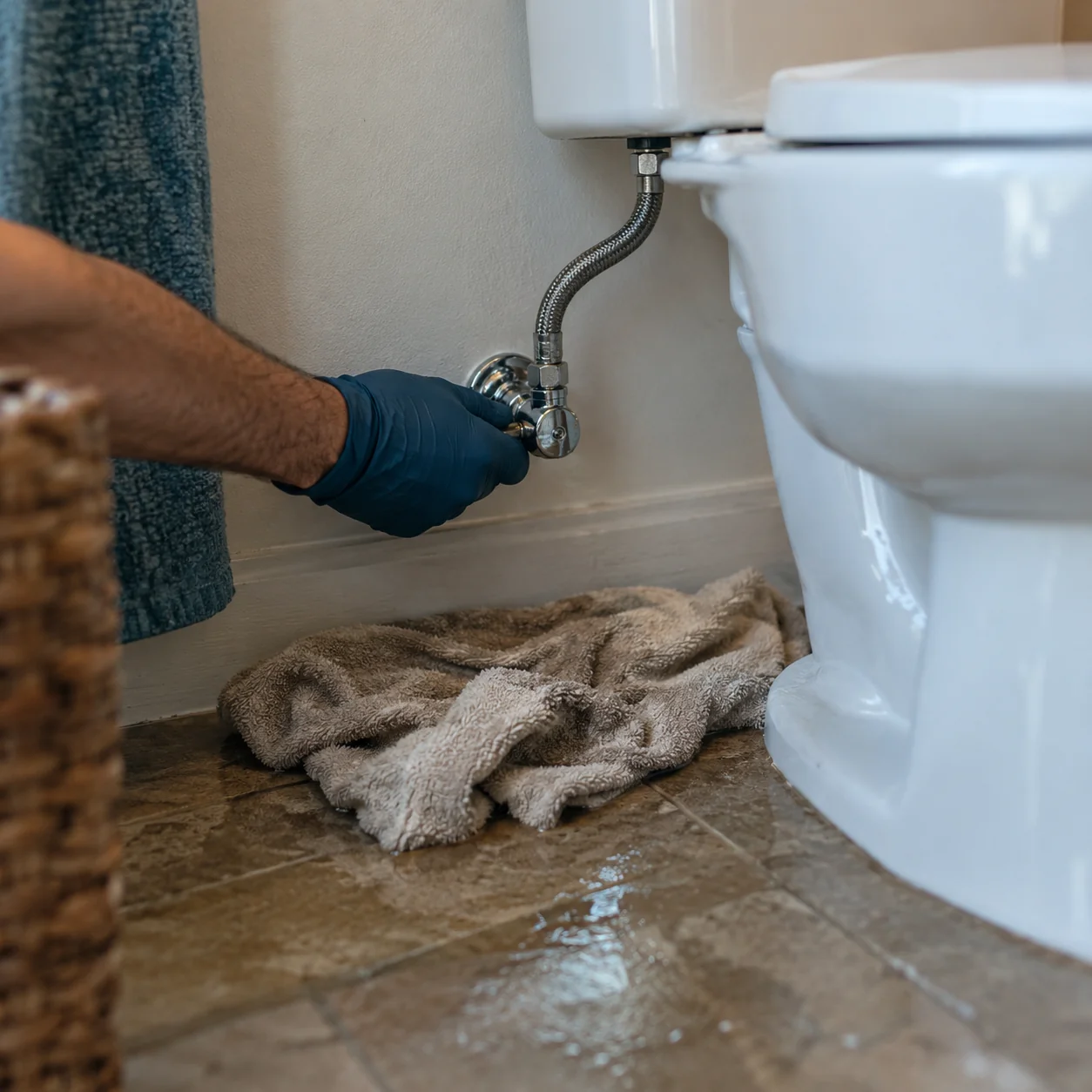
- Close the flapper. Lift the tank lid and press the rubber flapper down over the opening at the bottom. The water in the tank is clean. If you cannot find it, lift the float so the tank stops filling.
- Close the supply valve on the wall or floor behind the toilet. Turn it clockwise until it stops.
- Do not flush. A second flush adds another tank of water to a bowl with nowhere to send it.
- Lower the bowl before you plunge. If the water is at the rim, bail some into a bucket first.
- Get the water off the floor with towels or a wet vacuum. Water runs under vinyl, laminate and the vanity, so dry the edges of the room, not just the puddle.
- Check below and next door. Look at the ceiling under the bathroom and the carpet in the hallway.
- Look at the tub and shower. If water rose in them too, that is a drain backup, not a clog. Read the next section before you do anything else.
- Then plunge. Use a flange plunger, the kind with the rubber sleeve. Push slowly, pull sharply, repeat. Once the bowl drains, open the supply valve and flush with your hand ready on the flapper.
Why is my toilet overflowing if it is not clogged?
A toilet that overflows without a clog in the bowl is usually backing up from a blockage further down: the drain line under the house, the private sewer lateral, or the city main. The toilet is the lowest open fixture in most homes, so water from the shower or the washer comes up there first.
| What you notice | Likely cause | What to do |
|---|---|---|
| Water rises in the tub or shower when the toilet is flushed | Blocked drain line or sewer lateral | Stop using every drain in the house; call a plumber or drain contractor |
| Gurgling from the tub or sink when the toilet flushes | Partial blockage, or a blocked roof vent | Plumber; do not keep flushing |
| Water rising from the toilet or floor drain when the washer drains | Blocked lateral or main | Stop the washer; see the sewer backup guide |
| The bowl slowly rises with a weak flush | Partial clog in the trap, or too much paper in a low-flow toilet | Plunge or use a closet auger |
| More than one house on the street has the problem | City main | Report it to the City; keep drains unused until it clears |
A clog is your problem and a plunger fixes it. A backup means the line is blocked somewhere you cannot reach, and until it is cleared, every drop of water used in the house comes back up through the lowest opening.
How do you clean up overflowed toilet water safely?
Treat overflow water as contaminated: wear gloves and washable boots, throw away anything absorbent it soaked, and disinfect every hard surface it touched. The EPA's flooded homes guidance says contaminated water may contain microorganisms such as bacteria, and that exposure can cause wound infections and rash. OSHA calls water contaminated by untreated raw sewage a biohazard and calls for gloves, boots and, where mold is involved, an N-95 respirator.
For a small overflow that stayed on a tile floor, the cleanup is yours:
- Cut the power if water reached an outlet. OSHA's rule is to turn off the power at the main breaker if water has been anywhere near electrical circuits, and never to touch electrical equipment while the ground is wet.
- Put on waterproof gloves and boots. Keep children and pets out.
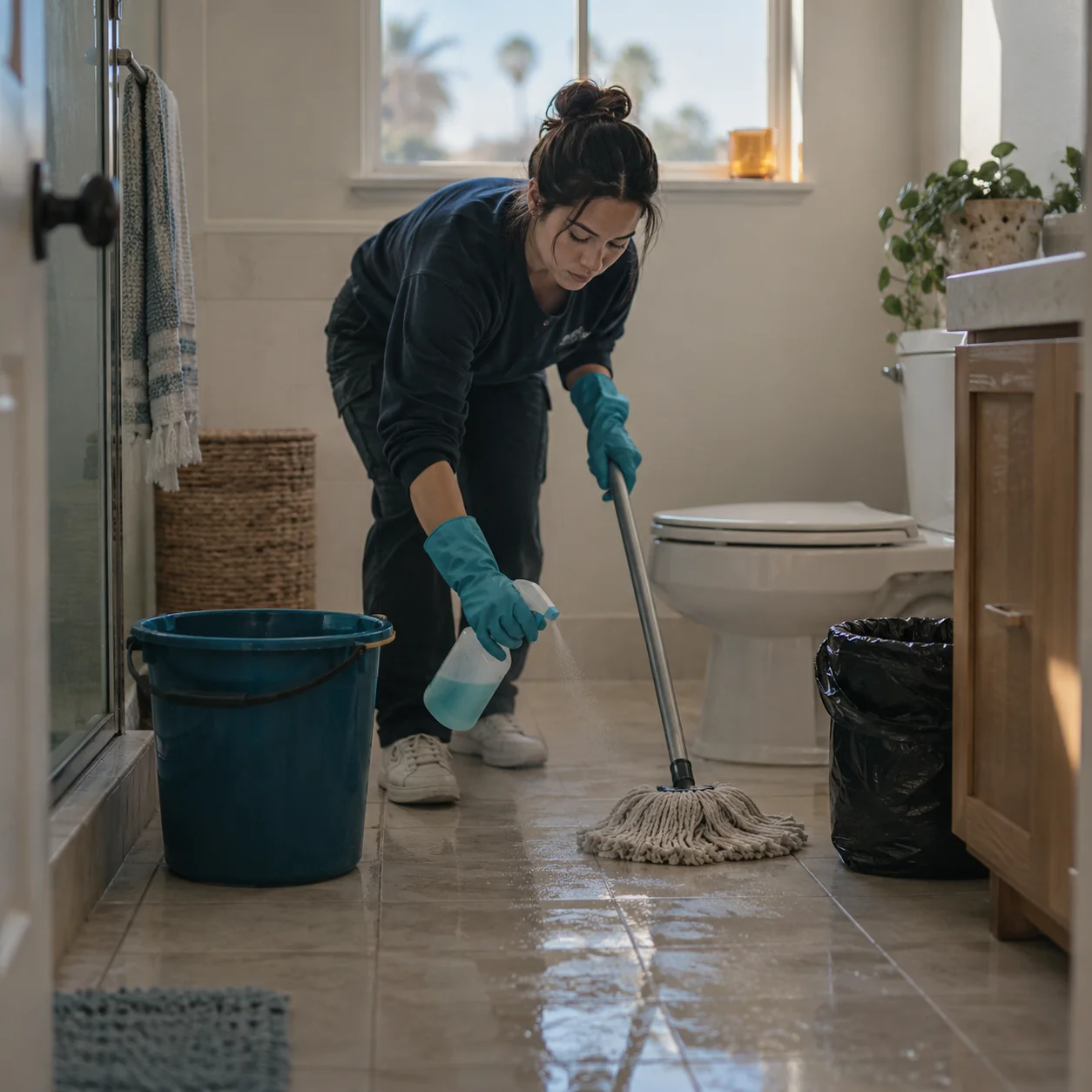
- Remove the water with a wet vacuum or a mop, emptied into the toilet.
- Wash, then disinfect. Hot soapy water on the floor, the toilet base, the baseboards and the vanity, then a household disinfectant used as its label directs.
- Sort the soft items. Towels that only touched clean tank water go in a hot wash. A rug or carpet that soaked up water carrying waste is thrown away.
Dry the room. Window open, fan running. The EPA says wet areas and items should be dried within 24 to 48 hours to prevent mold, and it lists the underside of carpets and pads as a place mold grows out of sight.
- Wash your hands and your boots.
If the water carried waste and reached carpet, a cabinet base, a wall or the ceiling below, it is no longer a mop job. Those materials soak the water up and cannot be disinfected in place.
When does toilet water count as sewage?
Toilet water counts as sewage as soon as it has carried waste or has come back up from beyond the toilet's trap. The IICRC S500 standard that restoration contractors follow sorts water into three categories for exactly this reason.
| Where the water came from | Category | What that means |
|---|---|---|
| The tank or the supply line | Category 1, clean | Dry it; ordinary cleaning |
| The bowl, overflowing with urine only | Category 2, significantly contaminated | Disinfect hard surfaces; absorbent items it soaked are usually discarded |
| The bowl with solid waste, or water that came back up from the drain | Category 3, grossly contaminated | Sewage: porous materials removed, area disinfected, protective gear, occupants out of the room |
Water that rose from the drain is Category 3 no matter how clear it looks, because it has been in the sewer line. And clean water does not stay clean: the standard treats Category 1 water that has sat for a day or two as degraded. Category 3 is where a homeowner cleanup stops. Carpet and pad, drywall that wicked water up from the floor, particleboard vanity bases and insulation cannot be disinfected in place. A contractor removes them, then cleans and dries what remains, as the sewage backup cleanup page explains.
What this means in Huntington Beach
When the toilet is backing up rather than clogging, the blockage is in a line that has an owner. The City's Sewer Lateral Program says the City is responsible for the portion of the sewer lateral from the City-owned sewer main to the private property line, including the public right-of-way, and the property owner is responsible for all repair and maintenance of the portion on private property. The City says a blocked line is a job for a qualified plumber or sewer contractor, and problems on the public side can be reported to the Public Works Utilities Division at (714) 536-5921. American Community Survey estimates put the median year built for Huntington Beach housing at 1974, and the lateral under a house of that age is often original, so a toilet that backs up more than once is worth a camera inspection.
When to call a contractor
Call a restoration contractor when the water carried waste and reached anything it could soak into, or when it came back up from the drain at all. HB Water Damage is an independent referral service: a call connects you with an independent restoration contractor for sewage backup cleanup in Huntington Beach. The site does not do the work or set the price. Have a plumber clear the line at the same time, or the bathroom backs up again the next time someone runs the washer.
Water in your home right now? Call and get connected to an independent restoration contractor who covers your street.
Questions homeowners ask about an overflowing toilet
Can I use the toilet after it overflowed?
Once the clog is cleared and a test flush drains cleanly, it is back in service. If it backed up from the drain rather than clogging, keep every fixture in the house unused until the line has been cleared.
Is toilet overflow water dangerous?
Water that carried waste, or that came up from the drain, can contain bacteria. The EPA says exposure to contaminated water can cause wound infections and rash. Wear gloves, keep children and pets out, and wash your hands afterwards.
Does homeowners insurance cover a toilet overflow?
An overflow caused by a sudden clog is often treated as sudden and accidental discharge. A backup from the sewer or drain line is commonly excluded unless you bought an endorsement. The insurance guide explains both.
How do I stop the toilet from overflowing again?
Flush only waste and toilet paper; wipes and hygiene products block traps and laterals. Fix a weak flush before it becomes a clog. If it has backed up from the drain more than once, have the lateral inspected with a camera.
Related guides
Last reviewed October 1, 2026.
Water in your home? Talk to someone now.
One call reaches an independent restoration contractor who covers your area. The contractor handles the inspection, the estimate and the work.
Independent line. No charge to you. Calls may be recorded.
Sources
- EPA, Flooded Homes: Protecting Your Healthepa.gov
- EPA, A Brief Guide to Mold, Moisture and Your Homeepa.gov
- OSHA, Flood Response and Recoveryosha.gov
- IICRC, ANSI/IICRC S500 Standard for Professional Water Damage Restorationiicrc.org
- City of Huntington Beach, Sewer Lateral Programhuntingtonbeachca.gov
- U.S. Census Bureau, American Community Survey 2020-2024 (year built, via Census Reporter)api.censusreporter.org